
Lebanon and Israel sign security annex for Hezbollah disarmament and military coordination group

Lebanon and Israel sign security annex for Hezbollah disarmament and military coordination group

A trilateral framework brokered in Washington ties Israeli withdrawal from southern Lebanon to verified disarmament of Hezbollah, but the militant group is already calling it a non-starter.

Lebanon and Israel just put pen to paper on what might be the most consequential Middle Eastern security agreement in years. The trilateral framework, co-signed with the United States in Washington, establishes a sequenced process for Israel’s military withdrawal from southern Lebanon, contingent on the verified disarmament of Hezbollah and other non-state armed groups operating in the region.

What the framework actually says

The agreement, signed on June 26, 2026, builds on the cessation of hostilities that took hold in November 2024. It draws heavily from UN Security Council Resolution 1701, the 2006 measure that called for the disarmament of non-state armed groups in Lebanon but was never fully implemented.

Under the framework, the Lebanese Armed Forces will gradually assume sovereignty over key areas in southern Lebanon, starting with designated pilot zones. As the LAF moves in, the Israel Defense Forces redeploy outward. The sequencing is deliberate: no withdrawal without corresponding disarmament, no disarmament without corresponding LAF deployment.

Advertisement

A Military Coordination Group, backed by the US, will serve as the implementation watchdog alongside a non-public security annex. The framework also lacks a specific timeline for full Israeli withdrawal.

Hezbollah’s response: hard no

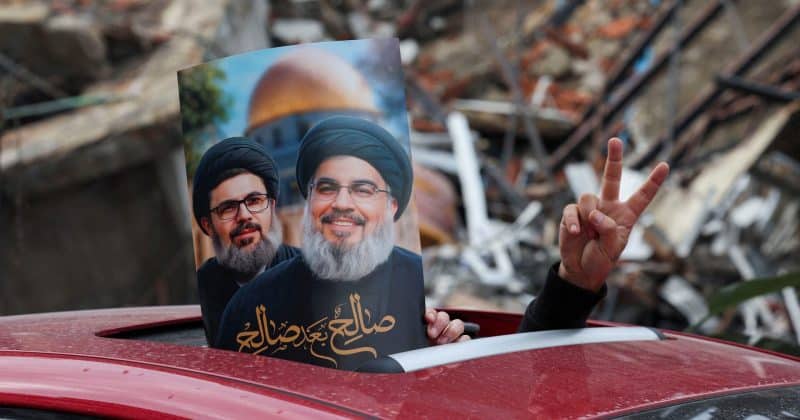
Hezbollah has publicly characterized the framework’s terms as tantamount to surrender. The group’s position is straightforward: Israel must withdraw unconditionally before any discussion of disarmament can begin.

Lebanese authorities have been working since 2025 to establish what amounts to a state monopoly on armed force within their borders. The framework is designed to support those efforts. But Hezbollah operates as both a political party within Lebanon’s parliament and a military force with capabilities that rival the state’s own army in certain respects.

Historical context and why this matters

Resolution 1701, which ended the 2006 war between Israel and Hezbollah, called for Hezbollah to disarm and for the Lebanese army to deploy throughout southern Lebanon. Neither happened in any meaningful way. UNIFIL, the UN peacekeeping force in the region, maintained a presence but lacked the mandate or muscle to enforce disarmament.

The LAF pilot zone approach attempts to learn from that failure. Rather than demanding comprehensive nationwide disarmament, the framework starts with specific areas transitioning first, creating proof-of-concept zones intended to build confidence for broader implementation.

Disclosure: This article was edited by Editorial Team. For more information on how we create and review content, see our Editorial Policy.

Lebanon and Israel sign security annex for Hezbollah disarmament and military coordination group

Lebanon and Israel sign security annex for Hezbollah disarmament and military coordination group

A trilateral framework brokered in Washington ties Israeli withdrawal from southern Lebanon to verified disarmament of Hezbollah, but the militant group is already calling it a non-starter.

Lebanon and Israel just put pen to paper on what might be the most consequential Middle Eastern security agreement in years. The trilateral framework, co-signed with the United States in Washington, establishes a sequenced process for Israel’s military withdrawal from southern Lebanon, contingent on the verified disarmament of Hezbollah and other non-state armed groups operating in the region.

What the framework actually says

The agreement, signed on June 26, 2026, builds on the cessation of hostilities that took hold in November 2024. It draws heavily from UN Security Council Resolution 1701, the 2006 measure that called for the disarmament of non-state armed groups in Lebanon but was never fully implemented.

Under the framework, the Lebanese Armed Forces will gradually assume sovereignty over key areas in southern Lebanon, starting with designated pilot zones. As the LAF moves in, the Israel Defense Forces redeploy outward. The sequencing is deliberate: no withdrawal without corresponding disarmament, no disarmament without corresponding LAF deployment.

Advertisement

A Military Coordination Group, backed by the US, will serve as the implementation watchdog alongside a non-public security annex. The framework also lacks a specific timeline for full Israeli withdrawal.

Hezbollah’s response: hard no

Hezbollah has publicly characterized the framework’s terms as tantamount to surrender. The group’s position is straightforward: Israel must withdraw unconditionally before any discussion of disarmament can begin.

Lebanese authorities have been working since 2025 to establish what amounts to a state monopoly on armed force within their borders. The framework is designed to support those efforts. But Hezbollah operates as both a political party within Lebanon’s parliament and a military force with capabilities that rival the state’s own army in certain respects.

Historical context and why this matters

Resolution 1701, which ended the 2006 war between Israel and Hezbollah, called for Hezbollah to disarm and for the Lebanese army to deploy throughout southern Lebanon. Neither happened in any meaningful way. UNIFIL, the UN peacekeeping force in the region, maintained a presence but lacked the mandate or muscle to enforce disarmament.

The LAF pilot zone approach attempts to learn from that failure. Rather than demanding comprehensive nationwide disarmament, the framework starts with specific areas transitioning first, creating proof-of-concept zones intended to build confidence for broader implementation.

Disclosure: This article was edited by Editorial Team. For more information on how we create and review content, see our Editorial Policy.