
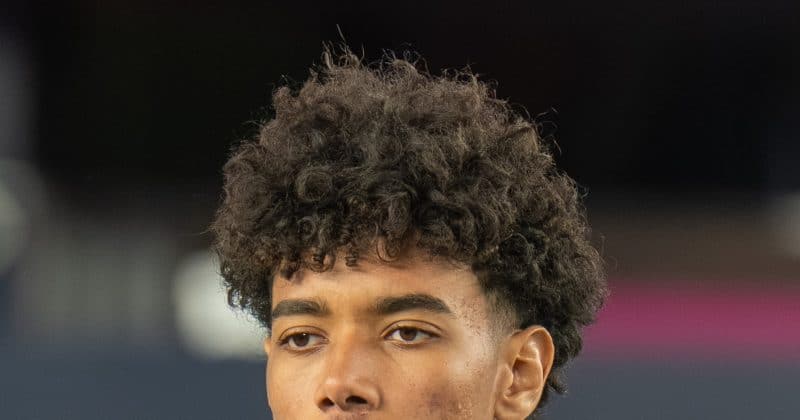
Lucas Herrington becomes youngest Australian to start a World Cup match, and crypto is already along for the ride

Lucas Herrington becomes youngest Australian to start a World Cup match, and crypto is already along for the ride

The 18-year-old defender's meteoric rise has sparked Barcelona transfer rumors, fresh interest in the $BAR fan token, and the inevitable Solana meme coins.

An 18-year-old central defender just walked into a World Cup starting lineup, helped Australia grind out a 0-0 draw against Paraguay, and secured his country’s spot in the knockout round. Lucas Herrington, born September 5, 2007, is now the youngest Australian ever to start a FIFA World Cup match.

That alone would be a headline. But the crypto angle materialized almost immediately: Barcelona transfer rumors, fan tokens, and yes, Solana meme coins with his name on them.

The match and the milestone

Herrington took the field on June 25, 2026, in Australia’s Group D closer against Paraguay. The result, a goalless draw, was exactly what the Socceroos needed to finish second in their group and advance.

Advertisement

Herrington is under contract with the Rapids through at least 2029, which gives the club significant leverage in any transfer negotiations. FC Barcelona reportedly submitted a bid for Herrington that the Rapids rejected, signaling the MLS club’s belief that the defender’s value is climbing fast.

The $BAR token and Barcelona’s crypto footprint

Barcelona’s interest in Herrington matters for crypto because Barcelona has one of the most established fan token ecosystems in professional sports. The club’s $BAR token, issued on the Chiliz platform, has historically generated millions through fan offerings and remains one of the highest-profile sports tokens in the market.

Fan tokens like $BAR give holders voting rights on minor club decisions, access to exclusive rewards, and a speculative asset tied to the club’s cultural relevance.

Meme coins, because of course

A token called $LUCAS HERRINGTON appeared on the Solana blockchain, carrying a market capitalization of roughly $2,000. Another token, $POPOVIC, seemingly named after Australia’s head coach Tony Popovic, also emerged amid the World Cup buzz.

What this means for investors

Herrington himself has no crypto affiliations. The Colorado Rapids have no blockchain partnerships of note. The Socceroos’ federation isn’t tokenized.

The investable angle runs through Barcelona’s existing crypto infrastructure. If the transfer materializes, $BAR could see a modest uptick in trading volume as Australian fans engage with the token for the first time. Chiliz-based fan tokens have historically shown correlation with transfer window activity.

For anyone considering the meme token route: tokens with $2,000 market caps are essentially lottery tickets with worse odds. Liquidity is virtually nonexistent, meaning getting in might be easy, but getting out at any reasonable price is another matter entirely.

Disclosure: This article was edited by Editorial Team. For more information on how we create and review content, see our Editorial Policy.

Lucas Herrington becomes youngest Australian to start a World Cup match, and crypto is already along for the ride

Lucas Herrington becomes youngest Australian to start a World Cup match, and crypto is already along for the ride

The 18-year-old defender's meteoric rise has sparked Barcelona transfer rumors, fresh interest in the $BAR fan token, and the inevitable Solana meme coins.

An 18-year-old central defender just walked into a World Cup starting lineup, helped Australia grind out a 0-0 draw against Paraguay, and secured his country’s spot in the knockout round. Lucas Herrington, born September 5, 2007, is now the youngest Australian ever to start a FIFA World Cup match.

That alone would be a headline. But the crypto angle materialized almost immediately: Barcelona transfer rumors, fan tokens, and yes, Solana meme coins with his name on them.

The match and the milestone

Herrington took the field on June 25, 2026, in Australia’s Group D closer against Paraguay. The result, a goalless draw, was exactly what the Socceroos needed to finish second in their group and advance.

Advertisement

Herrington is under contract with the Rapids through at least 2029, which gives the club significant leverage in any transfer negotiations. FC Barcelona reportedly submitted a bid for Herrington that the Rapids rejected, signaling the MLS club’s belief that the defender’s value is climbing fast.

The $BAR token and Barcelona’s crypto footprint

Barcelona’s interest in Herrington matters for crypto because Barcelona has one of the most established fan token ecosystems in professional sports. The club’s $BAR token, issued on the Chiliz platform, has historically generated millions through fan offerings and remains one of the highest-profile sports tokens in the market.

Fan tokens like $BAR give holders voting rights on minor club decisions, access to exclusive rewards, and a speculative asset tied to the club’s cultural relevance.

Meme coins, because of course

A token called $LUCAS HERRINGTON appeared on the Solana blockchain, carrying a market capitalization of roughly $2,000. Another token, $POPOVIC, seemingly named after Australia’s head coach Tony Popovic, also emerged amid the World Cup buzz.

What this means for investors

Herrington himself has no crypto affiliations. The Colorado Rapids have no blockchain partnerships of note. The Socceroos’ federation isn’t tokenized.

The investable angle runs through Barcelona’s existing crypto infrastructure. If the transfer materializes, $BAR could see a modest uptick in trading volume as Australian fans engage with the token for the first time. Chiliz-based fan tokens have historically shown correlation with transfer window activity.

For anyone considering the meme token route: tokens with $2,000 market caps are essentially lottery tickets with worse odds. Liquidity is virtually nonexistent, meaning getting in might be easy, but getting out at any reasonable price is another matter entirely.

Disclosure: This article was edited by Editorial Team. For more information on how we create and review content, see our Editorial Policy.