
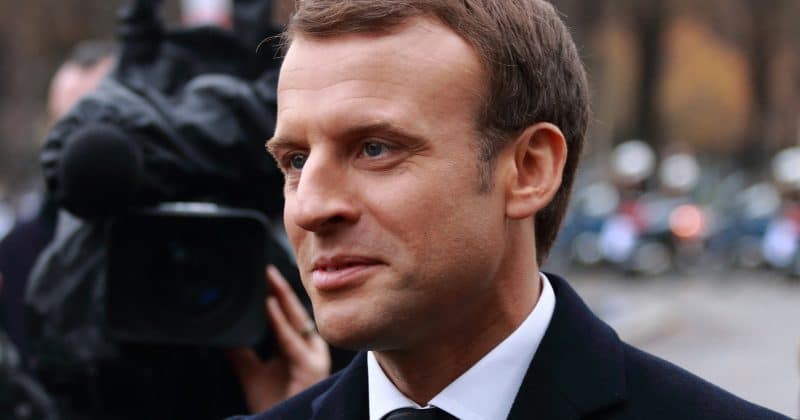
Macron says Hormuz mission could deploy within 2-3 days after US-Iran agreement
A France-UK-led multinational naval force involving up to 15 countries stands ready for defensive escort and mine-clearing operations in the strait that controls a massive share of global oil shipments
French President Emmanuel Macron is putting the world on notice: the moment Washington and Tehran shake hands on a deal, a multinational armada is ready to move. The mission, co-led by France and the United Kingdom, has been quietly assembled with contributions from up to 15 countries. Its purpose is straightforward: defensive escort of commercial vessels and mine-clearing operations in the Strait of Hormuz, the narrow waterway that functions as the jugular vein of global energy markets.
Why the Strait of Hormuz matters to everyone
The Strait of Hormuz serves as a crucial chokepoint for approximately 20% of the world’s oil consumption. The current crisis traces back to escalating Middle East hostilities in 2026, which triggered blockades targeting commercial shipping routes. Those disruptions have rippled across global commodity markets, rattled supply chains, and injected a persistent risk premium into oil and gas prices.
The diplomatic calculus
Macron has framed this as a moment that demands urgency. His public messaging has centered on seizing the current diplomatic window with the US and Iran, advocating for a ceasefire and the immediate reopening of the strait without preconditions.
The multinational mission is designed to operate under international law as a neutral entity, distancing itself from the direct conflicts between belligerent nations.
Macron’s public comments appear calculated to apply pressure from multiple directions simultaneously. By announcing readiness, he’s signaling to Iran that international enforcement will follow any agreement almost immediately, reducing the window for post-deal backsliding. He’s also signaling to the US that European allies are prepared to shoulder operational burden, potentially sweetening the deal dynamics for American negotiators.
What this means for markets and investors
Separately, Macron’s administration has also been vocal about cryptocurrency regulation, with the French president characterizing the current digital asset landscape as a “new Wild West” and pushing for tighter oversight. His government has explicitly stated there is no connection between the maritime initiative and the crypto regulatory push.
Investors watching this space should pay close attention to three things: the pace of US-Iran negotiations, any confirmed deployment orders for the multinational force, and oil futures markets. The latter will be the fastest indicator of whether traders believe the strait is genuinely on track to reopen.