
Meta plans cloud infrastructure business to compete with AWS, Azure, Google Cloud

Meta plans cloud infrastructure business to compete with AWS, Azure, Google Cloud

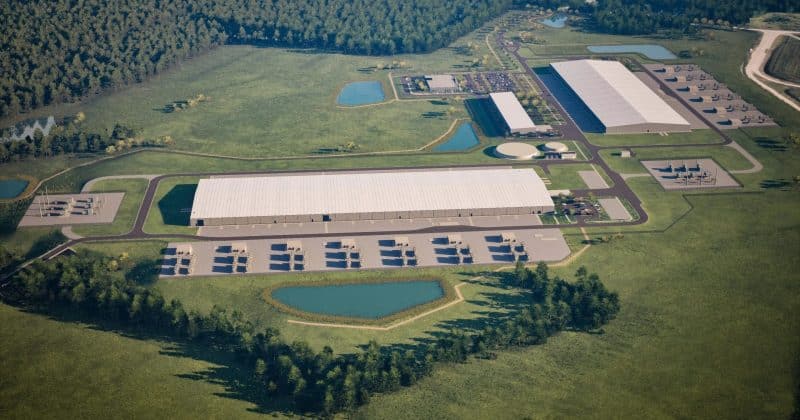
Mark Zuckerberg says leasing AI server capacity to outside companies is 'definitely on the table' as Meta spends up to $135 billion on infrastructure this year

Meta wants to sell cloud computing power to other companies, a move that would pit it directly against Amazon Web Services, Microsoft Azure, and Google Cloud in one of tech’s most lucrative markets.

CEO Mark Zuckerberg floated the idea during Meta’s annual shareholders meeting on May 27, saying that entering the cloud market to lease AI servers and sell excess compute is “definitely on the table” if the company overbuilds capacity.

The math behind Meta’s cloud ambitions

Meta’s capital expenditure guidance for 2026 sits between $115 billion and $135 billion, with the vast majority earmarked for AI infrastructure.

Meta currently uses all of its available computing capacity. But when you’re spending north of $100 billion on infrastructure, the possibility of ending up with surplus capacity isn’t just theoretical.

Advertisement

According to Zuckerberg’s comments, external companies have been approaching Meta on a weekly basis asking about API services or purchasing compute at a premium.

The cloud play would also help Meta diversify beyond its advertising-dominated revenue model. For a company that generates the overwhelming majority of its income from ads on Facebook, Instagram, and WhatsApp, a cloud computing division would represent a genuinely new business line.

Meta is already deep in the cloud ecosystem

Meta is simultaneously one of the cloud industry’s biggest customers. In August 2025, the company signed a $10 billion, six-year deal with Google Cloud to support its AI infrastructure needs. It also expanded its partnership with CoreWeave, the GPU cloud provider, to $21 billion with commitments extending through December 2032.

It’s worth noting that Zuckerberg’s comments frame this as contingent on Meta expanding its data center footprint significantly. The cloud business isn’t launching next quarter. This is a medium-term play that depends on Meta successfully building out infrastructure at a pace that outstrips its own internal consumption.

What this means for the cloud market

The cloud infrastructure market has been dominated by the same three players for years. AWS leads, Azure has been gaining ground steadily, and Google Cloud has carved out its own position, particularly in data analytics and AI workloads.

Meta wouldn’t be competing across the entire cloud stack, at least not initially. The company’s advantage is specifically in AI compute: the GPUs, the custom silicon, the infrastructure optimized for training and running large language models.

There’s also the question of whether Meta’s enterprise customers will be comfortable sending their data and workloads to a company whose primary business is consumer social media and advertising. Trust matters in cloud computing, and Meta’s track record on data privacy isn’t exactly its strongest selling point.

The $115 billion to $135 billion capex figure for 2026 signals that the AI infrastructure buildout is accelerating, not slowing down, regardless of whether the cloud business materializes. Companies supplying GPUs, networking equipment, and data center construction services stand to benefit either way.

Disclosure: This article was edited by Editorial Team. For more information on how we create and review content, see our Editorial Policy.

Meta plans cloud infrastructure business to compete with AWS, Azure, Google Cloud

Meta plans cloud infrastructure business to compete with AWS, Azure, Google Cloud

Mark Zuckerberg says leasing AI server capacity to outside companies is 'definitely on the table' as Meta spends up to $135 billion on infrastructure this year

Meta wants to sell cloud computing power to other companies, a move that would pit it directly against Amazon Web Services, Microsoft Azure, and Google Cloud in one of tech’s most lucrative markets.

CEO Mark Zuckerberg floated the idea during Meta’s annual shareholders meeting on May 27, saying that entering the cloud market to lease AI servers and sell excess compute is “definitely on the table” if the company overbuilds capacity.

The math behind Meta’s cloud ambitions

Meta’s capital expenditure guidance for 2026 sits between $115 billion and $135 billion, with the vast majority earmarked for AI infrastructure.

Meta currently uses all of its available computing capacity. But when you’re spending north of $100 billion on infrastructure, the possibility of ending up with surplus capacity isn’t just theoretical.

Advertisement

According to Zuckerberg’s comments, external companies have been approaching Meta on a weekly basis asking about API services or purchasing compute at a premium.

The cloud play would also help Meta diversify beyond its advertising-dominated revenue model. For a company that generates the overwhelming majority of its income from ads on Facebook, Instagram, and WhatsApp, a cloud computing division would represent a genuinely new business line.

Meta is already deep in the cloud ecosystem

Meta is simultaneously one of the cloud industry’s biggest customers. In August 2025, the company signed a $10 billion, six-year deal with Google Cloud to support its AI infrastructure needs. It also expanded its partnership with CoreWeave, the GPU cloud provider, to $21 billion with commitments extending through December 2032.

It’s worth noting that Zuckerberg’s comments frame this as contingent on Meta expanding its data center footprint significantly. The cloud business isn’t launching next quarter. This is a medium-term play that depends on Meta successfully building out infrastructure at a pace that outstrips its own internal consumption.

What this means for the cloud market

The cloud infrastructure market has been dominated by the same three players for years. AWS leads, Azure has been gaining ground steadily, and Google Cloud has carved out its own position, particularly in data analytics and AI workloads.

Meta wouldn’t be competing across the entire cloud stack, at least not initially. The company’s advantage is specifically in AI compute: the GPUs, the custom silicon, the infrastructure optimized for training and running large language models.

There’s also the question of whether Meta’s enterprise customers will be comfortable sending their data and workloads to a company whose primary business is consumer social media and advertising. Trust matters in cloud computing, and Meta’s track record on data privacy isn’t exactly its strongest selling point.

The $115 billion to $135 billion capex figure for 2026 signals that the AI infrastructure buildout is accelerating, not slowing down, regardless of whether the cloud business materializes. Companies supplying GPUs, networking equipment, and data center construction services stand to benefit either way.

Disclosure: This article was edited by Editorial Team. For more information on how we create and review content, see our Editorial Policy.