
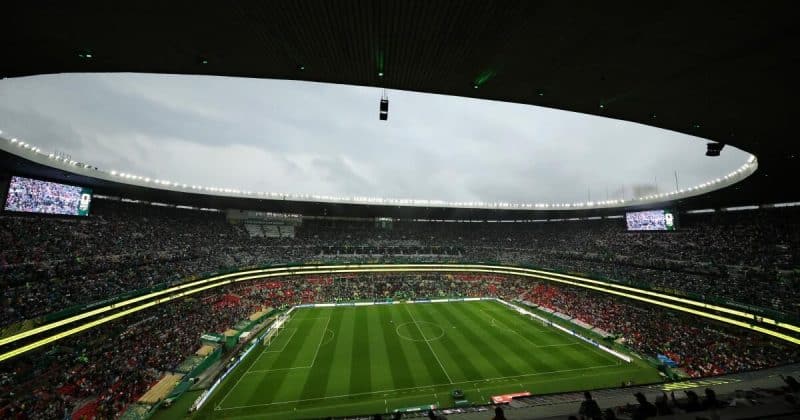
Mexico and England share a football legacy that dates back to 1824, just in time for World Cup 2026

Mexico and England share a football legacy that dates back to 1824, just in time for World Cup 2026

Cornish miners didn't just dig for silver in Real del Monte, they planted the seeds of Mexico's football obsession

Two hundred years before England and Mexico meet on the pitch at the 2026 FIFA World Cup, a group of Cornish miners stepped off boats in central Mexico carrying pickaxes, a taste for meat-filled pastries, and the rules to a game that would reshape an entire nation’s identity.

The miners who changed everything

In 1824, just three years after Mexico won its independence from Spain, British engineer John Taylor recruited Cornish miners to travel across the Atlantic. Their destination was Real del Monte, a small town in the state of Hidalgo perched high in the mountains, where silver mines that had enriched the Spanish Empire for centuries were in desperate need of modernization.

Advertisement

In the dirt yards outside the mine shafts, during breaks and after shifts, the Cornish workers organized football matches. Documented organized games in Real del Monte date back to as early as 1900. By that point, the sport had already seeped into the local community. Mexican workers watched, then joined, then took ownership.

Real del Monte is still referred to as “Mexico’s Little Cornwall” thanks to the cultural fingerprints left behind by the miners. The local cuisine features pastes, the Mexican adaptation of the Cornish pasty, a hand-held meat pie that miners would carry underground for lunch. Walk through Real del Monte today and you’ll find paste shops on nearly every corner, serving fillings that range from traditional beef and potato to mole and pineapple.

Pachuca and the birth of Mexican club football

Pachuca CF, known as Los Tuzos, traces its origins to this era. The club represents one of the oldest football traditions in the Americas, and its founding story is inseparable from the British mining community that settled in the region.

Why this matters now

The 2026 FIFA World Cup is being co-hosted by Mexico, the United States, and Canada. As England prepares to play knockout matches on Mexican soil, the historical connection between the two nations’ football cultures is getting renewed attention from outlets including Reuters and BBC Sport.

The commemorations happening in Real del Monte, where locals and historians are celebrating the miners’ legacy as World Cup fever builds, underscore the enduring cultural legacy of that original mining community, recognized today in local food traditions and commemorative plaques honoring early football matches.

Disclosure: This article was edited by Editorial Team. For more information on how we create and review content, see our Editorial Policy.

Mexico and England share a football legacy that dates back to 1824, just in time for World Cup 2026

Mexico and England share a football legacy that dates back to 1824, just in time for World Cup 2026

Cornish miners didn't just dig for silver in Real del Monte, they planted the seeds of Mexico's football obsession

Two hundred years before England and Mexico meet on the pitch at the 2026 FIFA World Cup, a group of Cornish miners stepped off boats in central Mexico carrying pickaxes, a taste for meat-filled pastries, and the rules to a game that would reshape an entire nation’s identity.

The miners who changed everything

In 1824, just three years after Mexico won its independence from Spain, British engineer John Taylor recruited Cornish miners to travel across the Atlantic. Their destination was Real del Monte, a small town in the state of Hidalgo perched high in the mountains, where silver mines that had enriched the Spanish Empire for centuries were in desperate need of modernization.

Advertisement

In the dirt yards outside the mine shafts, during breaks and after shifts, the Cornish workers organized football matches. Documented organized games in Real del Monte date back to as early as 1900. By that point, the sport had already seeped into the local community. Mexican workers watched, then joined, then took ownership.

Real del Monte is still referred to as “Mexico’s Little Cornwall” thanks to the cultural fingerprints left behind by the miners. The local cuisine features pastes, the Mexican adaptation of the Cornish pasty, a hand-held meat pie that miners would carry underground for lunch. Walk through Real del Monte today and you’ll find paste shops on nearly every corner, serving fillings that range from traditional beef and potato to mole and pineapple.

Pachuca and the birth of Mexican club football

Pachuca CF, known as Los Tuzos, traces its origins to this era. The club represents one of the oldest football traditions in the Americas, and its founding story is inseparable from the British mining community that settled in the region.

Why this matters now

The 2026 FIFA World Cup is being co-hosted by Mexico, the United States, and Canada. As England prepares to play knockout matches on Mexican soil, the historical connection between the two nations’ football cultures is getting renewed attention from outlets including Reuters and BBC Sport.

The commemorations happening in Real del Monte, where locals and historians are celebrating the miners’ legacy as World Cup fever builds, underscore the enduring cultural legacy of that original mining community, recognized today in local food traditions and commemorative plaques honoring early football matches.

Disclosure: This article was edited by Editorial Team. For more information on how we create and review content, see our Editorial Policy.