
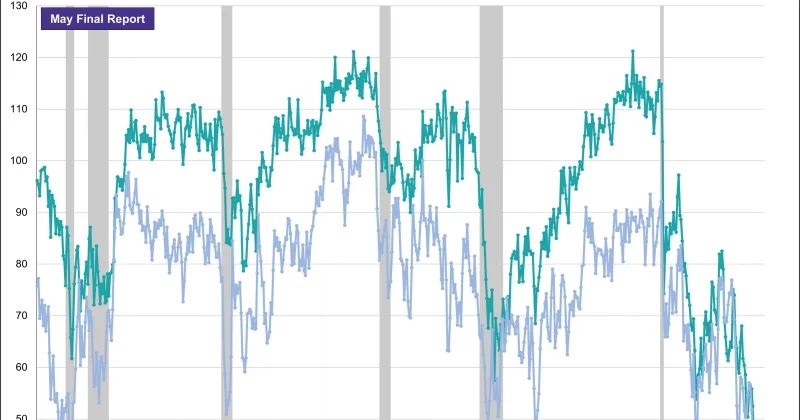
Michigan consumer sentiment index drops to all-time low of 44.8
The University of Michigan's closely watched gauge of consumer confidence just posted its worst reading in the survey's 74-year history, driven by gas prices and inflation fears.
American consumers haven’t felt this gloomy since, well, ever. The University of Michigan’s Consumer Sentiment Index plunged to 44.8 in its final May 2026 reading, marking the lowest level since the survey began in 1952.
To put that in perspective, the previous all-time low was set in June 2022, when the index hit roughly 50.5 during that era’s inflation spike. The new reading doesn’t just break the record. It demolishes it.
The numbers behind the nosedive
The final May figure was revised sharply downward from a preliminary reading of 48.2, which itself was already alarming. April’s final reading of 49.8 had set a prior low just weeks earlier, meaning the index has now broken its own record twice in consecutive months.
Both major subcomponents of the index posted historic lows as well. The current economic conditions gauge fell to 45.8, while the expectations component dropped to 44.1.
One-third of respondents cited gasoline prices as their chief concern affecting sentiment. Roughly 30% mentioned tariffs as a contributing factor to their economic worries.
Joanne Hsu, director of the survey, said consumers feel “buffeted by cost pressures, led by soaring prices at the pump.”
The news moving money, markets, and the world—before your day starts.
Daily. Free. Join 34,000+ readers across crypto, finance, and policy.
The gasoline price anxiety is tied to geopolitical tensions in the Middle East, particularly the ongoing conflict involving Iran, which has disrupted energy markets and pushed fuel costs higher.
Inflation expectations are climbing too
Year-ahead inflation expectations ticked up to 4.8%, from 4.7% in the prior reading.
The more concerning shift is in long-run inflation expectations, which climbed to 3.9% from 3.5%. The Federal Reserve generally targets 2% inflation, so consumers now expect prices to grow at nearly double that rate over the long haul.
What this means for investors
Consumer spending accounts for roughly two-thirds of US GDP. When this many people are this unhappy about the economic outlook, it tends to show up in actual spending data with a lag of a few months.
For the crypto market specifically, digital assets haven’t seen a direct, measurable impact from the sentiment data in terms of trading volume or token performance. Bitcoin has historically traded as a risk asset during periods of macroeconomic stress, despite its narrative as a hedge.
Investors should watch two things from here. First, whether June’s preliminary sentiment reading shows any stabilization or continues the freefall. Second, whether the jump in long-term inflation expectations from 3.5% to 3.9% accelerates further, because that’s the data point most likely to influence Fed policy.