
Micron CEO forecasts multi-decade memory demand cycle driven by humanoid robots

Micron CEO forecasts multi-decade memory demand cycle driven by humanoid robots

Sanjay Mehrotra says humanoid robots will need ten times more memory than autonomous vehicles, kicking off a sustained demand wave later this decade

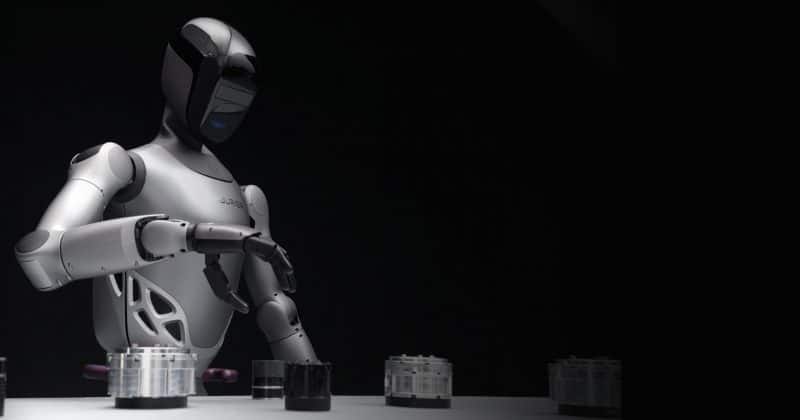
Micron Technology CEO Sanjay Mehrotra is making a bet that sounds like science fiction but carries very real implications for the semiconductor supply chain. Humanoid robots, he says, will require roughly ten times more memory than today’s Level 2+ autonomous vehicles. And that demand wave is set to begin before the decade is out.

The numbers behind the forecast

To understand the scale Mehrotra is describing, start with vehicles. Higher-autonomy cars are expected to exceed 300 GB of DRAM per vehicle by 2026. Now multiply that by roughly ten. That’s the memory footprint Mehrotra envisions for a single humanoid robot.

The automotive ramp alone is substantial. L2+ and higher-autonomy vehicles are forecast to make up over 20% of the market mix by 2026, with that figure surpassing 40% by 2030.

Advertisement

Mehrotra frames this as the beginning of a multi-decade demand cycle. Not a one-time bump. Not a cyclical peak. A structural shift in how much memory the world needs, starting in the latter half of this decade and extending well beyond.

On the AI infrastructure side, global AI server shipments are projected to grow in the high-teens percentage range for calendar 2026, exceeding earlier forecasts.

Supply constraints aren’t going anywhere

The company anticipates that demand for both DRAM and NAND will significantly outstrip supply, with tight market conditions expected to persist beyond 2027. Next-generation production nodes aren’t projected to enter volume manufacturing until the second half of that year, creating a multi-year window where demand growth outpaces capacity expansion.

The bottleneck is partly technical. High-bandwidth memory, or HBM, the type of DRAM most critical for AI workloads, involves stacking multiple memory dies vertically and connecting them with through-silicon vias.

Why humanoid robots change the calculus

That’s why the 10x multiplier over L2+ vehicles isn’t as outlandish as it sounds. These machines will likely need to run large inference models locally, maintain detailed spatial maps that update continuously, and process multimodal sensor data from cameras, lidar, force sensors, and microphones all at once.

What this means for investors

The supply constraints projected through at least 2027 suggest that memory pricing should remain favorable for producers in the near term. For Micron specifically, the ability to serve high-value segments like HBM for AI and high-capacity DRAM for autonomous systems positions the company in the premium tier of the market rather than competing purely on commodity volumes.

The competitive landscape adds another layer. Samsung and SK Hynix are both racing to capture HBM market share, and capacity expansion decisions by any of the big three memory producers could alter the supply picture.

Disclosure: This article was edited by Editorial Team. For more information on how we create and review content, see our Editorial Policy.

Micron CEO forecasts multi-decade memory demand cycle driven by humanoid robots

Micron CEO forecasts multi-decade memory demand cycle driven by humanoid robots

Sanjay Mehrotra says humanoid robots will need ten times more memory than autonomous vehicles, kicking off a sustained demand wave later this decade

Micron Technology CEO Sanjay Mehrotra is making a bet that sounds like science fiction but carries very real implications for the semiconductor supply chain. Humanoid robots, he says, will require roughly ten times more memory than today’s Level 2+ autonomous vehicles. And that demand wave is set to begin before the decade is out.

The numbers behind the forecast

To understand the scale Mehrotra is describing, start with vehicles. Higher-autonomy cars are expected to exceed 300 GB of DRAM per vehicle by 2026. Now multiply that by roughly ten. That’s the memory footprint Mehrotra envisions for a single humanoid robot.

The automotive ramp alone is substantial. L2+ and higher-autonomy vehicles are forecast to make up over 20% of the market mix by 2026, with that figure surpassing 40% by 2030.

Advertisement

Mehrotra frames this as the beginning of a multi-decade demand cycle. Not a one-time bump. Not a cyclical peak. A structural shift in how much memory the world needs, starting in the latter half of this decade and extending well beyond.

On the AI infrastructure side, global AI server shipments are projected to grow in the high-teens percentage range for calendar 2026, exceeding earlier forecasts.

Supply constraints aren’t going anywhere

The company anticipates that demand for both DRAM and NAND will significantly outstrip supply, with tight market conditions expected to persist beyond 2027. Next-generation production nodes aren’t projected to enter volume manufacturing until the second half of that year, creating a multi-year window where demand growth outpaces capacity expansion.

The bottleneck is partly technical. High-bandwidth memory, or HBM, the type of DRAM most critical for AI workloads, involves stacking multiple memory dies vertically and connecting them with through-silicon vias.

Why humanoid robots change the calculus

That’s why the 10x multiplier over L2+ vehicles isn’t as outlandish as it sounds. These machines will likely need to run large inference models locally, maintain detailed spatial maps that update continuously, and process multimodal sensor data from cameras, lidar, force sensors, and microphones all at once.

What this means for investors

The supply constraints projected through at least 2027 suggest that memory pricing should remain favorable for producers in the near term. For Micron specifically, the ability to serve high-value segments like HBM for AI and high-capacity DRAM for autonomous systems positions the company in the premium tier of the market rather than competing purely on commodity volumes.

The competitive landscape adds another layer. Samsung and SK Hynix are both racing to capture HBM market share, and capacity expansion decisions by any of the big three memory producers could alter the supply picture.

Disclosure: This article was edited by Editorial Team. For more information on how we create and review content, see our Editorial Policy.