
Nexo Earn with Nexo
Microsoft launches Discovery platform for scientific R&D with Ginkgo Bioworks partnership

Microsoft launches Discovery platform for scientific R&D with Ginkgo Bioworks partnership

The new platform combines agentic AI workflows with autonomous lab capabilities to accelerate research in biology, chemistry, and materials science.

Microsoft just made its biggest bet yet on AI-powered science. The tech giant’s Discovery platform, designed to let researchers build and run AI-enabled experiments across biology, chemistry, materials science, and pharmaceuticals, is now generally available as of June 2, 2026.

The headline partnership here is with Ginkgo Bioworks, one of the most prominent names in synthetic biology. Together, they’re connecting AI-generated hypotheses directly to real-world lab execution, a workflow that could meaningfully compress R&D timelines in drug discovery and beyond.

What Microsoft Discovery actually does

The platform combines what Microsoft calls the Discovery Engine, a system for building agentic workflows, with high-performance computing, knowledge management tools, and simulation capabilities.

Researchers can use AI agents to sift through literature, generate hypotheses, design experiments, and then validate results, all within a single governed environment. Microsoft has built in human oversight and reproducibility safeguards. The platform supports what Microsoft describes as evidence-to-hypothesis loops. An AI agent reviews existing data and published research, proposes a hypothesis, designs an experiment to test it, and then feeds the results back into the loop for further refinement.

Advertisement

A companion Microsoft Discovery app also entered preview on the same date. This desktop application gives researchers a lighter-weight entry point for exploring literature and creating hypotheses before they need the full platform’s capabilities.

The Ginkgo Bioworks collaboration

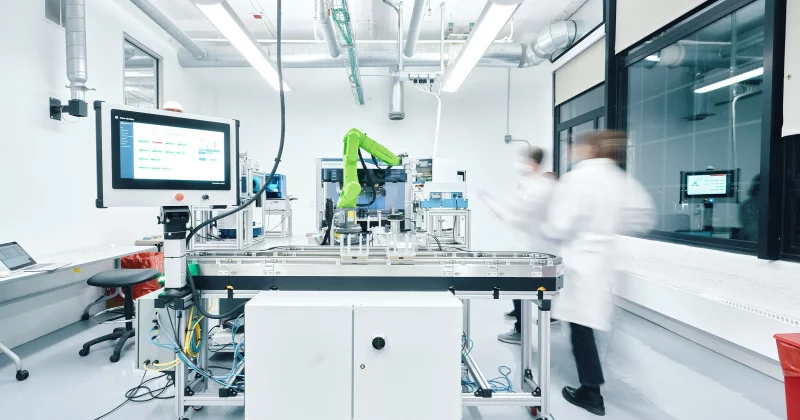
Ginkgo Bioworks operates what it calls Cloud Lab, an autonomous laboratory infrastructure that can execute biological experiments at scale without requiring researchers to maintain their own physical automation setups.

The Microsoft Discovery integration means AI agents can now analyze biological datasets, generate experimental hypotheses, and execute those experiments directly within Ginkgo’s Cloud Lab, allowing researchers to seamlessly plan and execute experiments without the necessity for in-house automation.

Jason Kelly, Ginkgo’s CEO, said the combination of agentic AI and autonomous laboratories will “revolutionize every aspect of the scientific process.”

Ginkgo has progressively expanded its autonomous lab capacity and previously explored AI collaborations with other major players, including OpenAI. The Microsoft partnership layers agentic workflow orchestration on top of Ginkgo’s existing infrastructure.

Beyond biotech: other partners and use cases

Ginkgo is the marquee name, but it’s not the only institution plugging into Microsoft Discovery. Yale Engineering is using the platform for battery materials research. Georgia Tech has applied it to origins-of-life research. Pacific Northwest National Laboratory is leveraging it for work in energy and biosystems.

The platform’s journey to general availability wasn’t rushed. Microsoft first showed it during a private preview at Build 2025 in May of last year. Expanded preview access followed in April 2026.

What this means for investors

For Ginkgo Bioworks specifically, the partnership positions the company as critical infrastructure in the emerging AI-science stack. If Microsoft Discovery gains meaningful adoption, Ginkgo’s Cloud Lab becomes the default execution layer for a growing number of AI-generated experiments.

The competitive landscape here is worth watching closely. Google DeepMind has made high-profile advances in protein structure prediction. Amazon Web Services has its own life sciences offerings. But none have announced a comparable end-to-end pipeline that connects AI hypothesis generation directly to autonomous lab execution.

Disclosure: This article was edited by Editorial Team. For more information on how we create and review content, see our Editorial Policy.

Microsoft launches Discovery platform for scientific R&D with Ginkgo Bioworks partnership

Microsoft launches Discovery platform for scientific R&D with Ginkgo Bioworks partnership

The new platform combines agentic AI workflows with autonomous lab capabilities to accelerate research in biology, chemistry, and materials science.

Microsoft just made its biggest bet yet on AI-powered science. The tech giant’s Discovery platform, designed to let researchers build and run AI-enabled experiments across biology, chemistry, materials science, and pharmaceuticals, is now generally available as of June 2, 2026.

The headline partnership here is with Ginkgo Bioworks, one of the most prominent names in synthetic biology. Together, they’re connecting AI-generated hypotheses directly to real-world lab execution, a workflow that could meaningfully compress R&D timelines in drug discovery and beyond.

What Microsoft Discovery actually does

The platform combines what Microsoft calls the Discovery Engine, a system for building agentic workflows, with high-performance computing, knowledge management tools, and simulation capabilities.

Researchers can use AI agents to sift through literature, generate hypotheses, design experiments, and then validate results, all within a single governed environment. Microsoft has built in human oversight and reproducibility safeguards. The platform supports what Microsoft describes as evidence-to-hypothesis loops. An AI agent reviews existing data and published research, proposes a hypothesis, designs an experiment to test it, and then feeds the results back into the loop for further refinement.

Advertisement

A companion Microsoft Discovery app also entered preview on the same date. This desktop application gives researchers a lighter-weight entry point for exploring literature and creating hypotheses before they need the full platform’s capabilities.

The Ginkgo Bioworks collaboration

Ginkgo Bioworks operates what it calls Cloud Lab, an autonomous laboratory infrastructure that can execute biological experiments at scale without requiring researchers to maintain their own physical automation setups.

The Microsoft Discovery integration means AI agents can now analyze biological datasets, generate experimental hypotheses, and execute those experiments directly within Ginkgo’s Cloud Lab, allowing researchers to seamlessly plan and execute experiments without the necessity for in-house automation.

Jason Kelly, Ginkgo’s CEO, said the combination of agentic AI and autonomous laboratories will “revolutionize every aspect of the scientific process.”

Ginkgo has progressively expanded its autonomous lab capacity and previously explored AI collaborations with other major players, including OpenAI. The Microsoft partnership layers agentic workflow orchestration on top of Ginkgo’s existing infrastructure.

Beyond biotech: other partners and use cases

Ginkgo is the marquee name, but it’s not the only institution plugging into Microsoft Discovery. Yale Engineering is using the platform for battery materials research. Georgia Tech has applied it to origins-of-life research. Pacific Northwest National Laboratory is leveraging it for work in energy and biosystems.

The platform’s journey to general availability wasn’t rushed. Microsoft first showed it during a private preview at Build 2025 in May of last year. Expanded preview access followed in April 2026.

What this means for investors

For Ginkgo Bioworks specifically, the partnership positions the company as critical infrastructure in the emerging AI-science stack. If Microsoft Discovery gains meaningful adoption, Ginkgo’s Cloud Lab becomes the default execution layer for a growing number of AI-generated experiments.

The competitive landscape here is worth watching closely. Google DeepMind has made high-profile advances in protein structure prediction. Amazon Web Services has its own life sciences offerings. But none have announced a comparable end-to-end pipeline that connects AI hypothesis generation directly to autonomous lab execution.

Disclosure: This article was edited by Editorial Team. For more information on how we create and review content, see our Editorial Policy.