
Microsoft unveils Majorana 2 quantum computing chip amid US push for innovation
The new chip boasts 1,000x reliability gains while Trump signs executive orders to accelerate quantum development, raising fresh questions about crypto's cryptographic foundations.
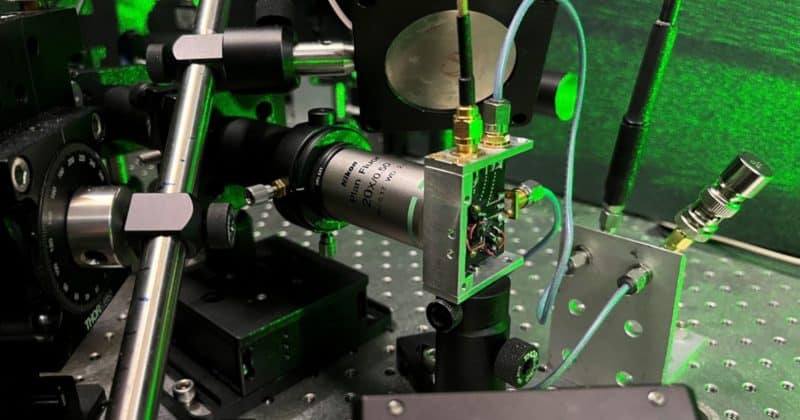
Microsoft dropped its next-generation quantum chip, Majorana 2, at the Build conference on June 2, claiming a 1,000-fold improvement in qubit reliability over its predecessor. Three weeks later, President Trump signed two executive orders designed to turbocharge US quantum computing and force federal systems onto post-quantum cryptography.
What Majorana 2 actually does
The original Majorana 1 chip relied on aluminum-based superconductors. Majorana 2 swaps in a redesigned materials stack built around lead-based superconductors, a shift Microsoft says was guided by AI-assisted materials science.
The result is an average coherence time of roughly 20 seconds for the chip’s qubits. Coherence time measures how long a qubit holds its quantum state before errors creep in. Twenty seconds may not sound impressive until you consider that many competing platforms measure coherence in microseconds.
Microsoft now says it expects to deliver a scalable, fault-tolerant quantum computer by 2029. That effectively halves the company’s previous timeline.
Skepticism around Microsoft’s topological qubit approach hasn’t evaporated. Some physicists still question whether the underlying Majorana particle theory translates into practical, reliable computing. The original Majorana chip faced similar controversies, including a high-profile retraction of a related research paper in 2021.
Trump’s quantum executive orders
On June 22, Trump signed two executive orders targeting quantum computing. One focuses on accelerating US quantum development in competition with China. The other mandates that federal agencies begin migrating to post-quantum cryptography, or PQC.
The PQC migration order acknowledges what cryptographers have warned about for years: algorithms like RSA and elliptic-curve cryptography, which underpin everything from banking to blockchain, won’t survive a sufficiently powerful quantum computer. The National Institute of Standards and Technology has already published its first set of post-quantum cryptographic standards, and the federal government is now putting deadlines on adoption.
Why crypto should be paying attention
Experts from both Coinbase and BlackRock have publicly emphasized the need for the crypto industry to begin transitioning to quantum-resistant cryptographic schemes now rather than waiting until the threat is imminent. Estimates from multiple research groups suggest quantum machines capable of breaching current cryptographic standards could arrive as early as the 2030s.
Elliptic-curve cryptography secures wallet addresses, transaction signatures, and consensus mechanisms across Bitcoin, Ethereum, and virtually every major blockchain. The Ethereum community has already begun exploring quantum-resistant signature schemes. Bitcoin’s development culture tends to move more slowly, though proposals for post-quantum upgrades exist in various stages of discussion. Neither network has announced a concrete migration timeline.