
Microsoft unveils seven new MAI models as in house AI push accelerates

Microsoft unveils seven new MAI models as in house AI push accelerates

The largest single expansion of Microsoft's in-house AI lineup spans reasoning, coding, image editing, and more, signaling a clear pivot away from OpenAI dependence.


Microsoft just dropped seven AI models in a single day.

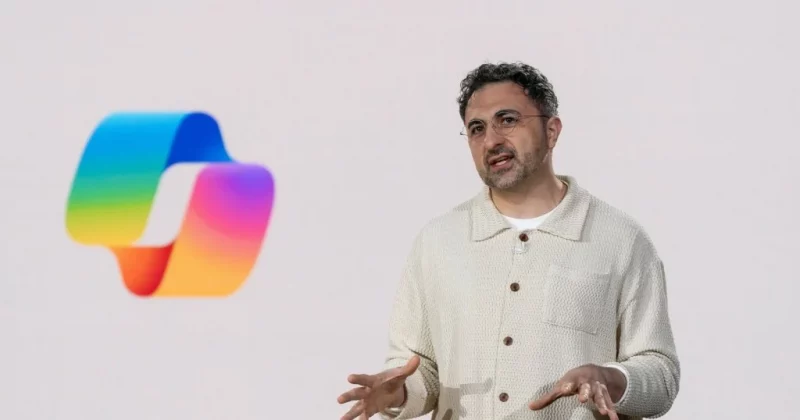
Announced on June 2 at Build 2026 in San Francisco, the new models mark the company’s biggest expansion yet of its in house AI lineup. The releases cover reasoning, image generation and editing, coding, voice, and transcription, all built under the Microsoft AI brand led by Mustafa Suleyman.

What Microsoft actually shipped

The flagship release is MAI Thinking 1, Microsoft’s first dedicated reasoning model. The system is built to work through complex multi step problems, with a focus on software engineering and enterprise use cases.

Microsoft also introduced MAI Image 2.5, which handles image generation and editing, and MAI Code 1 Flash, a lightweight coding model designed for faster, lower cost inference inside GitHub Copilot and Visual Studio Code.

The lineup also includes updated voice and transcription models, extending the MAI stack across the main formats businesses use every day: text, code, images, speech, and audio.

Advertisement

The models will be delivered through Microsoft Foundry and related platforms, giving enterprise customers a way to test and deploy Microsoft built models inside existing workflows.

The Suleyman factor and the OpenAI question

The new releases sharpen one of the biggest questions in enterprise AI: how far Microsoft wants to go beyond OpenAI.

For years, Microsoft’s AI strategy centered on backing OpenAI, integrating GPT models into products, and monetizing usage through Azure and Copilot. That strategy is still intact, but the MAI releases show Microsoft is building a more independent model stack under Suleyman.

Microsoft AI launched three MAI models in April: MAI Transcribe 1, MAI Voice 1, and MAI Image 2. Those models are already available through Foundry and MAI Playground. With seven more announced at Build, Microsoft has added ten MAI models in roughly two months.

That pace matters. The more models Microsoft owns, the more control it has over cost, performance, product timing, and enterprise customization. It also gives the company more leverage as it continues working with OpenAI while building alternatives for specific workloads.

What this means for the enterprise AI market

The MAI models are aimed at enterprise and developer use cases where Microsoft already controls the distribution layer. Copilot is embedded across Microsoft 365, GitHub, Windows, and Azure, giving Microsoft a direct path to place its own models inside products customers already use.

That lets Microsoft optimize the full stack without depending entirely on third party model releases. A coding model can be tuned for GitHub. A reasoning model can be routed into enterprise workflows. Image, voice, and transcription models can support Microsoft 365 and Copilot experiences at lower cost.

The result is not a clean break from OpenAI. It is a hedge. Microsoft can keep using OpenAI’s frontier models where they are strongest while routing more tasks to its own MAI models when cost, speed, privacy, or customization matter more.

Microsoft has been ramping up proprietary AI development under the MAI label since 2025, beginning with MAI 1 preview and MAI Voice 1, followed by MAI Image 1 and the April 2026 Foundry releases. The Build announcements show that the effort is moving from experiment to strategy.

Disclosure: This article was edited by Editorial Team. For more information on how we create and review content, see our Editorial Policy.

Microsoft unveils seven new MAI models as in house AI push accelerates

Microsoft unveils seven new MAI models as in house AI push accelerates

The largest single expansion of Microsoft's in-house AI lineup spans reasoning, coding, image editing, and more, signaling a clear pivot away from OpenAI dependence.

Share

Add us on Google

Microsoft just dropped seven AI models in a single day.

Announced on June 2 at Build 2026 in San Francisco, the new models mark the company’s biggest expansion yet of its in house AI lineup. The releases cover reasoning, image generation and editing, coding, voice, and transcription, all built under the Microsoft AI brand led by Mustafa Suleyman.

What Microsoft actually shipped

The flagship release is MAI Thinking 1, Microsoft’s first dedicated reasoning model. The system is built to work through complex multi step problems, with a focus on software engineering and enterprise use cases.

Microsoft also introduced MAI Image 2.5, which handles image generation and editing, and MAI Code 1 Flash, a lightweight coding model designed for faster, lower cost inference inside GitHub Copilot and Visual Studio Code.

The lineup also includes updated voice and transcription models, extending the MAI stack across the main formats businesses use every day: text, code, images, speech, and audio.

Advertisement

The models will be delivered through Microsoft Foundry and related platforms, giving enterprise customers a way to test and deploy Microsoft built models inside existing workflows.

The Suleyman factor and the OpenAI question

The new releases sharpen one of the biggest questions in enterprise AI: how far Microsoft wants to go beyond OpenAI.

For years, Microsoft’s AI strategy centered on backing OpenAI, integrating GPT models into products, and monetizing usage through Azure and Copilot. That strategy is still intact, but the MAI releases show Microsoft is building a more independent model stack under Suleyman.

Microsoft AI launched three MAI models in April: MAI Transcribe 1, MAI Voice 1, and MAI Image 2. Those models are already available through Foundry and MAI Playground. With seven more announced at Build, Microsoft has added ten MAI models in roughly two months.

That pace matters. The more models Microsoft owns, the more control it has over cost, performance, product timing, and enterprise customization. It also gives the company more leverage as it continues working with OpenAI while building alternatives for specific workloads.

What this means for the enterprise AI market

The MAI models are aimed at enterprise and developer use cases where Microsoft already controls the distribution layer. Copilot is embedded across Microsoft 365, GitHub, Windows, and Azure, giving Microsoft a direct path to place its own models inside products customers already use.

That lets Microsoft optimize the full stack without depending entirely on third party model releases. A coding model can be tuned for GitHub. A reasoning model can be routed into enterprise workflows. Image, voice, and transcription models can support Microsoft 365 and Copilot experiences at lower cost.

The result is not a clean break from OpenAI. It is a hedge. Microsoft can keep using OpenAI’s frontier models where they are strongest while routing more tasks to its own MAI models when cost, speed, privacy, or customization matter more.

Microsoft has been ramping up proprietary AI development under the MAI label since 2025, beginning with MAI 1 preview and MAI Voice 1, followed by MAI Image 1 and the April 2026 Foundry releases. The Build announcements show that the effort is moving from experiment to strategy.

Disclosure: This article was edited by Editorial Team. For more information on how we create and review content, see our Editorial Policy.