
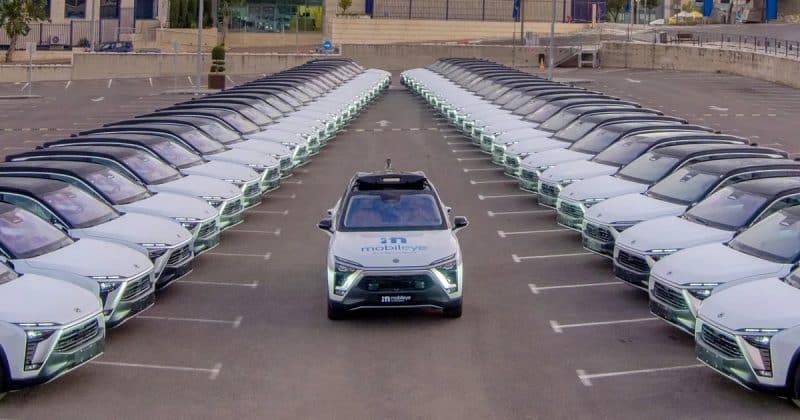
Mobileye to launch robotaxi business in US next year
The Intel-backed autonomous driving company is shifting from tech supplier to fleet operator, starting with 100 driverless vehicles in a major US city
Mobileye Global, the NASDAQ-listed autonomous driving company, announced plans to launch a vertically integrated robotaxi business in a major US metropolitan area by 2027. The initial fleet will consist of approximately 100 fully driverless vehicles, with ambitions to scale to roughly 17,000 vehicles over the following five years.
The stock responded favorably, climbing around 5% after the June 16 announcement.
From supplier to operator
Mobileye’s traditional business makes the technology that helps cars see the road. Its chips and software sit inside vehicles built by other manufacturers. By going vertically integrated, Mobileye would control the technology stack, the vehicles, and the customer-facing service.
CEO Amnon Shashua has framed 2026 as a critical year for proving the commercial viability of Mobileye’s autonomous tech. The company is working to remove safety drivers from its partnership fleets, including those operated with Volkswagen’s mobility subsidiary MOIA. A separate integration with Lyft involving Mobileye-powered vehicles in Dallas is also targeting operational milestones as early as 2026.
Mobileye has described the robotaxi venture as complementary to its existing relationships with automakers and mobility providers.
AI, tech, and the markets they move—in one daily briefing.
Daily. Free. Join 34,000+ readers across crypto, finance, and policy.
The competitive landscape is getting crowded
Waymo, Alphabet’s autonomous driving unit, has been operating commercial robotaxi services in multiple US cities. Tesla has also been telegraphing its robotaxi ambitions, with CEO Elon Musk repeatedly promising an autonomous ride-hailing network. In China, companies like Baidu’s Apollo Go and Pony.ai have been scaling autonomous ride-hailing.
Mobileye’s EyeQ chips are already embedded in hundreds of millions of vehicles worldwide for advanced driver-assistance systems. Starting with 100 vehicles is deliberately conservative. Waymo’s fleet across its operational cities numbers in the thousands. Mobileye’s five-year target of 17,000 vehicles would represent a substantial fleet if achieved.
What this means for investors
If Mobileye can simultaneously supply technology to other automakers while running its own competing fleet, automakers partnering with Mobileye might start wondering whether they’re funding a future competitor. That tension has played out in tech before, most notably with Amazon Web Services serving companies that compete directly with Amazon’s retail business.