
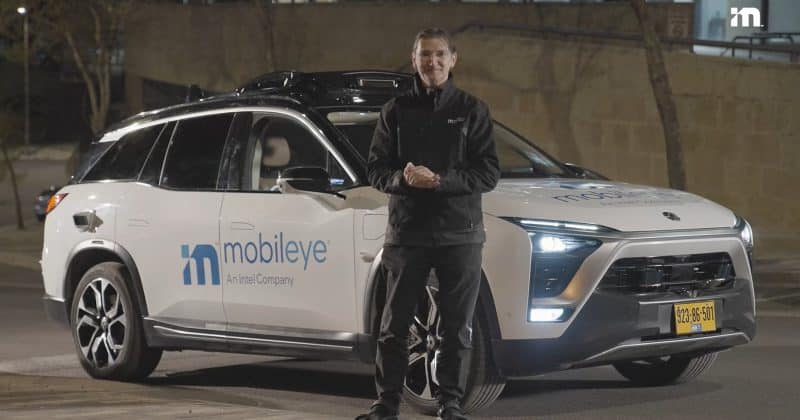
Mobileye plans US robotaxi service for 2027 with 17,000-vehicle ambition
Intel's autonomous driving subsidiary is shifting from tech supplier to fleet operator, starting with 100 driverless cars in a major metro area
Mobileye Global, the autonomous driving company majority-owned by Intel, announced plans to launch its own fully driverless robotaxi service in a major US city starting in 2027. The company isn’t just building the brains for self-driving cars anymore. It wants to run the whole operation.
The initial rollout will feature roughly 100 vehicles, with plans to scale the fleet to approximately 17,000 over the following five years. Shares of Mobileye (MBLY) climbed 4-6% in premarket trading on the news.
From supplier to operator
Mobileye’s EyeQ chips sit inside over 230 million vehicles worldwide, feeding advanced driver-assistance features to automakers. Partnerships with Volkswagen and a previous collaboration with Lyft kept Mobileye firmly in the technology supplier role.
The 2027 robotaxi service will combine Mobileye Drive, the company’s proprietary autonomous driving stack, with Moovit, the mobility-as-a-service platform that Mobileye’s parent ecosystem acquired. Moovit claims 1.7 billion users globally, giving the robotaxi venture a built-in audience for rider services and fleet management.
CEO Prof. Amnon Shashua framed the move as complementary rather than competitive to Mobileye’s existing partnerships. The direct operations will enable “better operational learnings,” he said, while showcasing the platform’s capabilities at a larger scale. Shashua also emphasized that existing client commitments would remain intact.
The robotaxi arms race heats up
Mobileye is entering a market that’s gotten considerably more crowded since Waymo first started ferrying passengers around Phoenix. Alphabet’s autonomous vehicle subsidiary has expanded its footprint across multiple US cities. Tesla continues to promise a robotaxi future. Amazon-backed Zoox is testing its purpose-built vehicles. And Chinese players like Baidu’s Apollo Go are scaling rapidly in their home market.
AI, tech, and the markets they move—in one daily briefing.
Daily. Free. Join 34,000+ readers across crypto, finance, and policy.
The 100-vehicle starting fleet is modest by comparison to Waymo’s current operations, but the five-year target of 17,000 vehicles signals serious ambition. The choice of launch city hasn’t been disclosed yet, though the company specified it would be a major US metro area.
What this means for investors
The premarket price reaction tells one story: investors are cautiously optimistic. A 4-6% bump is meaningful but not euphoric.
Mobileye has been building autonomous technology for over two decades. It has the chips, the software stack, the mapping data, and now the mobility platform through Moovit. Vertical integration lets the company capture economics at every layer, from silicon to rider fare, instead of settling for a per-unit licensing fee from automakers.
Operating a robotaxi fleet is a fundamentally different business than selling semiconductor chips. It’s capital-intensive, operationally complex, and comes with liability exposure that a pure technology supplier never faces. Waymo has burned through billions of dollars to reach its current scale, and it still operates in a handful of cities. Cruise, General Motors’ autonomous vehicle unit, suffered a high-profile setback after a pedestrian-dragging incident in San Francisco that led to a temporary suspension of its permit.
There’s also the question of Intel’s ownership stake. Mobileye went public in 2022, but Intel remains the majority shareholder. Any strategic decision of this magnitude likely has Intel’s fingerprints on it, and Intel’s own financial pressures could influence how much capital flows into the robotaxi venture versus Mobileye’s core chip business.