
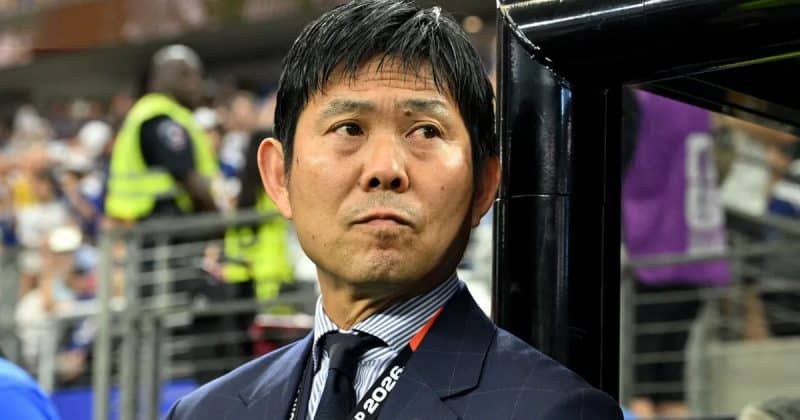
Hajime Moriyasu apologizes to Japanese fans after World Cup elimination
Japan's World Cup exit at the hands of Brazil prompts an emotional response from the national team's longtime coach
Japan’s World Cup campaign came to an end against Brazil, and head coach Hajime Moriyasu did what few coaches in global football ever do. He apologized.
Moriyasu, who has led the Japanese national team since 2019, addressed fans following the loss with a public display of accountability that has become something of a signature move.
A familiar scene for Moriyasu
This isn’t the first time Moriyasu has bowed to supporters after a tournament exit. On December 5, 2022, he delivered a nearly identical apology after Japan was eliminated by Croatia on penalties in the round of 16 at the Qatar World Cup. That moment resonated globally, turning a heartbreaking loss into a viral display of sportsmanship.
The 2026 edition played out with a similar emotional arc. Japan had advanced to the round of 32, where they drew a match against Brazil, one of the most decorated teams in World Cup history. The result sent Japan home, and Moriyasu once again took personal responsibility for the outcome.
The fan token question nobody is asking
In an era where nearly every major sporting event gets threaded through a crypto narrative, Japan’s World Cup run is notable for what’s absent. There has been no meaningful intersection between the team’s campaign and the digital asset space. No fan token pumps. No betting token surges. No NFT drops timed to match results.
The news moving money, markets, and the world—before your day starts.
Daily. Free. Join 34,000+ readers across crypto, finance, and policy.
Fan tokens, the crypto assets that promise holders voting rights and engagement perks with their favorite sports teams, were supposed to be a bridge between athletic fandom and blockchain adoption. Platforms like Socios and Chiliz built entire ecosystems around this premise, partnering with clubs across European football, Formula 1, and other leagues.
Yet when a genuinely emotional, globally watched moment like Moriyasu’s apology captures attention, crypto is nowhere in the conversation. The fan engagement is happening entirely through traditional channels: social media posts, broadcast replays, and heartfelt press conferences.
What this means for crypto-sports convergence
For investors watching the fan token sector, the complete absence of crypto buzz around one of the World Cup’s most talked-about storylines should raise questions. Fan tokens thrive on engagement, and engagement peaks during exactly these kinds of high-emotion moments.
The broader Chiliz ecosystem, which underpins most major fan tokens, has struggled to maintain momentum outside of token launch events and partnership announcements. Real, organic demand tied to actual sporting moments remains elusive. Japan’s World Cup storyline is a case study in that disconnect.