
Morocco targets diaspora players to boost World Cup competitiveness, and crypto-powered fan tokens are watching

Morocco targets diaspora players to boost World Cup competitiveness, and crypto-powered fan tokens are watching

The Atlas Lions' aggressive recruitment of European-born talent highlights how national team identity is evolving, with implications for the growing sports tokenization market.

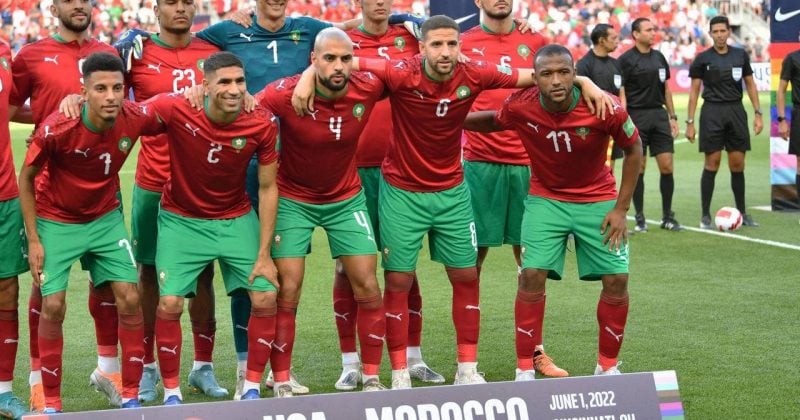
Morocco just fielded an entirely foreign-born starting lineup in their 2026 World Cup opener against Brazil. Every single player on the pitch wearing an Atlas Lions jersey was born outside Morocco. The match ended 1-1, but the real story isn’t the scoreline. It’s the strategy behind it.

The Royal Moroccan Football Federation has turned diaspora recruitment into an art form. Of the 26-man squad selected for the 2026 World Cup, 19 players were born abroad, with 18 of those coming from European nations like France, Spain, the Netherlands, and Belgium. For context, during Morocco’s fairy-tale semifinal run at the 2022 World Cup, 14 of their 26 players were foreign-born. The program has only accelerated since then.

The eligibility switch pipeline

The crown jewel of this recruitment push is Ayyoub Bouaddi, an 18-year-old midfielder who received FIFA approval to switch his national allegiance from France to Morocco on May 15, 2026. Eleven days later, he was named to the World Cup squad. He then started against Brazil.

Bouaddi isn’t an isolated case. Since March 2025, the FRMF has successfully processed 16 eligibility switches for diaspora players. That’s roughly one switch per month, a cadence that suggests this isn’t opportunistic poaching but a systematic, institutional strategy.

Advertisement

Not every target says yes. Lamine Yamal, the Spanish winger of Moroccan descent born on July 13, 2007, was approached by the FRMF. Federation president Fouzi Lekjaa acknowledged the interactions publicly. Yamal ultimately chose Spain.

Why the crypto and tokenization world should care

Fan tokens, the crypto assets that give holders voting rights and perks tied to specific sports teams, have become a meaningful market segment. Platforms like Socios.com and Chiliz have built entire ecosystems around the idea that fans will pay for a stake in their team’s identity. Several national football federations already have active fan token programs, and the World Cup historically drives massive spikes in trading volume for these assets.

Morocco’s diaspora strategy creates a fascinating wrinkle in this market. When a team’s roster is drawn from communities scattered across half a dozen European countries, the potential fan base, and token holder base, expands dramatically. A Moroccan-French midfielder like Bouaddi doesn’t just bring talent. He brings an audience in Lyon, Paris, and Marseille that might not otherwise engage with Moroccan football.

The 2022 World Cup demonstrated this effect in real time. Morocco’s run to the semifinals generated unprecedented engagement across North Africa and the European Moroccan diaspora.

The soft power play and what’s next

Morocco isn’t just building a football team. It’s running a soft power operation. The 2026 World Cup is being co-hosted by the US, Mexico, and Canada, putting the tournament in time zones and media markets that maximize exposure.

FIFA eligibility rules function a bit like protocol governance: there are defined rules for switching allegiance, cooldown periods, and approval processes. Morocco has simply gotten better than anyone else at navigating that system.

Algeria, Tunisia, Turkey, and several West African nations have significant diasporas in Europe and could replicate this playbook. If they do, the competition for dual-eligible talent will intensify, creating something resembling a transfer market for national team allegiance.

Disclosure: This article was edited by Editorial Team. For more information on how we create and review content, see our Editorial Policy.

Morocco targets diaspora players to boost World Cup competitiveness, and crypto-powered fan tokens are watching

Morocco targets diaspora players to boost World Cup competitiveness, and crypto-powered fan tokens are watching

The Atlas Lions' aggressive recruitment of European-born talent highlights how national team identity is evolving, with implications for the growing sports tokenization market.

Morocco just fielded an entirely foreign-born starting lineup in their 2026 World Cup opener against Brazil. Every single player on the pitch wearing an Atlas Lions jersey was born outside Morocco. The match ended 1-1, but the real story isn’t the scoreline. It’s the strategy behind it.

The Royal Moroccan Football Federation has turned diaspora recruitment into an art form. Of the 26-man squad selected for the 2026 World Cup, 19 players were born abroad, with 18 of those coming from European nations like France, Spain, the Netherlands, and Belgium. For context, during Morocco’s fairy-tale semifinal run at the 2022 World Cup, 14 of their 26 players were foreign-born. The program has only accelerated since then.

The eligibility switch pipeline

The crown jewel of this recruitment push is Ayyoub Bouaddi, an 18-year-old midfielder who received FIFA approval to switch his national allegiance from France to Morocco on May 15, 2026. Eleven days later, he was named to the World Cup squad. He then started against Brazil.

Bouaddi isn’t an isolated case. Since March 2025, the FRMF has successfully processed 16 eligibility switches for diaspora players. That’s roughly one switch per month, a cadence that suggests this isn’t opportunistic poaching but a systematic, institutional strategy.

Advertisement

Not every target says yes. Lamine Yamal, the Spanish winger of Moroccan descent born on July 13, 2007, was approached by the FRMF. Federation president Fouzi Lekjaa acknowledged the interactions publicly. Yamal ultimately chose Spain.

Why the crypto and tokenization world should care

Fan tokens, the crypto assets that give holders voting rights and perks tied to specific sports teams, have become a meaningful market segment. Platforms like Socios.com and Chiliz have built entire ecosystems around the idea that fans will pay for a stake in their team’s identity. Several national football federations already have active fan token programs, and the World Cup historically drives massive spikes in trading volume for these assets.

Morocco’s diaspora strategy creates a fascinating wrinkle in this market. When a team’s roster is drawn from communities scattered across half a dozen European countries, the potential fan base, and token holder base, expands dramatically. A Moroccan-French midfielder like Bouaddi doesn’t just bring talent. He brings an audience in Lyon, Paris, and Marseille that might not otherwise engage with Moroccan football.

The 2022 World Cup demonstrated this effect in real time. Morocco’s run to the semifinals generated unprecedented engagement across North Africa and the European Moroccan diaspora.

The soft power play and what’s next

Morocco isn’t just building a football team. It’s running a soft power operation. The 2026 World Cup is being co-hosted by the US, Mexico, and Canada, putting the tournament in time zones and media markets that maximize exposure.

FIFA eligibility rules function a bit like protocol governance: there are defined rules for switching allegiance, cooldown periods, and approval processes. Morocco has simply gotten better than anyone else at navigating that system.

Algeria, Tunisia, Turkey, and several West African nations have significant diasporas in Europe and could replicate this playbook. If they do, the competition for dual-eligible talent will intensify, creating something resembling a transfer market for national team allegiance.

Disclosure: This article was edited by Editorial Team. For more information on how we create and review content, see our Editorial Policy.