
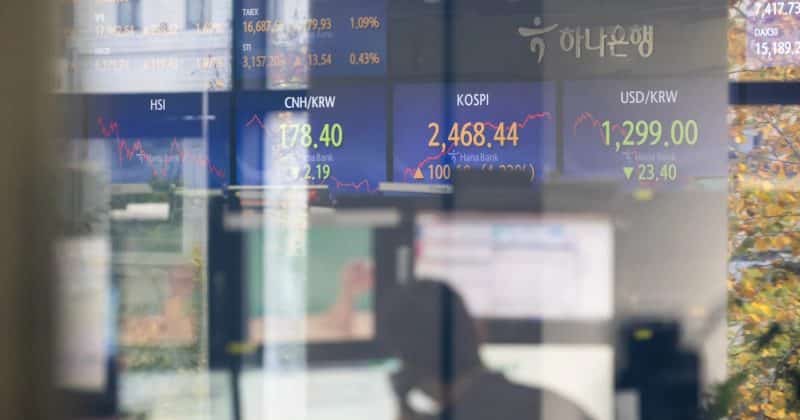
MSCI keeps South Korea in emerging-market index, refrains from upgrade

MSCI keeps South Korea in emerging-market index, refrains from upgrade

South Korea's three-decade quest for developed-market status hits another wall as MSCI declines to even start a formal review

South Korea has been classified as an emerging market by MSCI since 1992. More than 30 years later, nothing has changed.

The index provider announced it would maintain South Korea’s position in its emerging-markets index, declining to place the country on a watchlist for potential reclassification to developed-market status.

What happened and why it matters

MSCI’s market classification reviews can redirect tens of billions of dollars in global capital. When a country moves from emerging to developed status, passive funds that track MSCI’s developed-market indexes are essentially forced to buy in. Analysts have estimated that a South Korea upgrade could trigger passive investment inflows of up to $30B.

The decision not to even add South Korea to the watchlist means the upgrade process hasn’t formally begun. Countries typically need to spend at least a year on the watchlist before MSCI conducts a full reclassification review.

Advertisement

South Korea was previously on MSCI’s watchlist but got removed in 2014. The sticking points are structural: foreign-exchange accessibility, market infrastructure, and the operational ease with which international investors can move money in and out.

Seoul’s reform playbook

A reform roadmap released on January 9, 2026, specifically targets MSCI’s qualitative criteria, with the goal of earning a spot on the watchlist by June 2026. That timeline just got more complicated.

The reforms focus heavily on currency accessibility. South Korea has been extending onshore won trading hours, a direct response to longstanding complaints from foreign investors about limited access to the Korean currency outside of local business hours. A planned rollout of 24-hour FX trading is set to begin in July 2026, which would effectively eliminate one of the biggest barriers cited by MSCI.

Beyond currency mechanics, the broader 2026 growth strategy includes allowing spot Bitcoin ETFs as part of an effort to attract foreign capital and modernize market access.

The competitive landscape and what investors should watch

South Korean equities remain accessible primarily through emerging-market allocations. Funds benchmarked to MSCI’s developed-market indexes still have no structural reason to own Korean stocks, which can weigh on valuations. Samsung Electronics, SK Hynix, and other Korean blue chips trade at persistent discounts to developed-market peers.

The $30B in estimated passive inflows represents a structural shift in how global capital interacts with Korean equities should an upgrade occur.

The spot Bitcoin ETF angle is worth monitoring separately. If South Korea follows through on approvals, it would join a growing list of major economies embracing crypto investment vehicles, potentially serving as an alternative on-ramp to Korean financial markets for foreign investors already frustrated by currency access limitations.

Disclosure: This article was edited by Editorial Team. For more information on how we create and review content, see our Editorial Policy.

MSCI keeps South Korea in emerging-market index, refrains from upgrade

MSCI keeps South Korea in emerging-market index, refrains from upgrade

South Korea's three-decade quest for developed-market status hits another wall as MSCI declines to even start a formal review

South Korea has been classified as an emerging market by MSCI since 1992. More than 30 years later, nothing has changed.

The index provider announced it would maintain South Korea’s position in its emerging-markets index, declining to place the country on a watchlist for potential reclassification to developed-market status.

What happened and why it matters

MSCI’s market classification reviews can redirect tens of billions of dollars in global capital. When a country moves from emerging to developed status, passive funds that track MSCI’s developed-market indexes are essentially forced to buy in. Analysts have estimated that a South Korea upgrade could trigger passive investment inflows of up to $30B.

The decision not to even add South Korea to the watchlist means the upgrade process hasn’t formally begun. Countries typically need to spend at least a year on the watchlist before MSCI conducts a full reclassification review.

Advertisement

South Korea was previously on MSCI’s watchlist but got removed in 2014. The sticking points are structural: foreign-exchange accessibility, market infrastructure, and the operational ease with which international investors can move money in and out.

Seoul’s reform playbook

A reform roadmap released on January 9, 2026, specifically targets MSCI’s qualitative criteria, with the goal of earning a spot on the watchlist by June 2026. That timeline just got more complicated.

The reforms focus heavily on currency accessibility. South Korea has been extending onshore won trading hours, a direct response to longstanding complaints from foreign investors about limited access to the Korean currency outside of local business hours. A planned rollout of 24-hour FX trading is set to begin in July 2026, which would effectively eliminate one of the biggest barriers cited by MSCI.

Beyond currency mechanics, the broader 2026 growth strategy includes allowing spot Bitcoin ETFs as part of an effort to attract foreign capital and modernize market access.

The competitive landscape and what investors should watch

South Korean equities remain accessible primarily through emerging-market allocations. Funds benchmarked to MSCI’s developed-market indexes still have no structural reason to own Korean stocks, which can weigh on valuations. Samsung Electronics, SK Hynix, and other Korean blue chips trade at persistent discounts to developed-market peers.

The $30B in estimated passive inflows represents a structural shift in how global capital interacts with Korean equities should an upgrade occur.

The spot Bitcoin ETF angle is worth monitoring separately. If South Korea follows through on approvals, it would join a growing list of major economies embracing crypto investment vehicles, potentially serving as an alternative on-ramp to Korean financial markets for foreign investors already frustrated by currency access limitations.

Disclosure: This article was edited by Editorial Team. For more information on how we create and review content, see our Editorial Policy.