
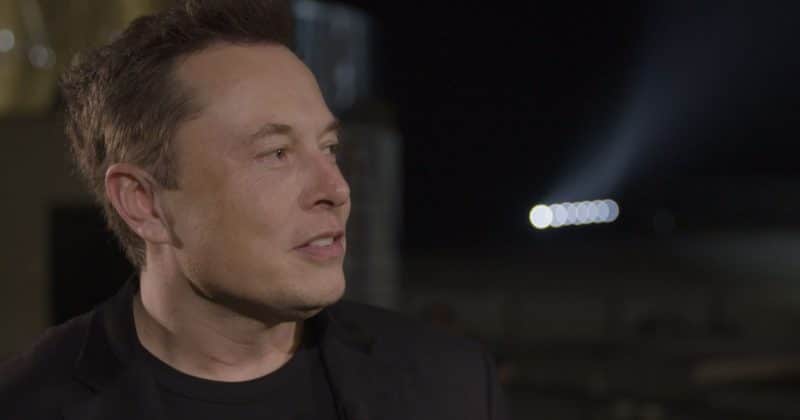
Elon Musk calls memory chip price jump biggest he’s seen

Elon Musk calls memory chip price jump biggest he’s seen

The Tesla CEO's warning comes as DRAM and high-bandwidth memory shortages fuel an industry-wide supply crisis driven by insatiable AI demand

Elon Musk has never been one for understatement. But when the man who builds rockets and electric cars says he’s never seen memory chip prices spike this hard, it’s worth paying attention.

The comment lands at a moment when the entire semiconductor supply chain is buckling under the weight of AI-driven demand. DRAM prices have surged dramatically, high-bandwidth memory (HBM) supplies are sold out through the remainder of the year, and chipmakers’ stock prices are doing things that make the 2021 meme stock era look quaint.

A crisis built on insatiable demand

DRAM, the workhorse memory found in everything from laptops to servers, has seen prices spike as AI-related demand overwhelms available supply. High-bandwidth memory, the specialized, stacked variety that sits next to GPUs and accelerators, is in even worse shape. HBM supplies are reportedly sold out for the rest of 2026.

Musk first flagged this problem back in late January 2026, warning Tesla about what he called a “chip wall.” That’s a term for the moment when chip shortages stop being a nuisance and start becoming an existential threat to production schedules.

Advertisement

Chipmakers are printing money

Sandisk shares have surged approximately 800% year-to-date as of mid-June 2026. The Global X Artificial Intelligence & Technology ETF has climbed about 140% over the same period.

Micron, one of the world’s largest memory manufacturers, posted blowout earnings that sent its stock up 16% in a single session. The company’s results reflected exactly what Musk is describing: memory demand is off the charts, pricing power has shifted decisively to suppliers, and there’s no indication the cycle is cooling.

This divergence is creating a clear split in the tech sector: companies that make the silicon are thriving, while companies that consume it are scrambling.

Musk’s $120 billion answer

Musk’s response to the chip wall is characteristically ambitious. He’s pushing forward with a project called Terafab, an in-house fabrication facility designed to give Tesla vertical control over its chip supply chain.

The projected investment is staggering: somewhere between $119 billion and $122 billion. The facility would produce AI chips and HBM-class memory internally, theoretically insulating Tesla from the kind of supply shocks Musk is currently complaining about.

Terafab’s impact isn’t expected to materialize until after 2030. Building a cutting-edge chip fab isn’t like opening a new Gigafactory. The equipment alone, specifically the extreme ultraviolet lithography machines made by ASML, has multi-year lead times.

What this means for investors

Micron, Samsung, and SK Hynix, the three companies that collectively control the vast majority of global DRAM and HBM production, sit in the most enviable position. They have pricing power, sold-out order books, and a demand curve that shows no signs of flattening.

For downstream companies, rising memory costs are a direct tax on margins. Companies that can’t pass those costs through to customers will see earnings compress. Investors holding positions in hardware makers, consumer electronics firms, or cloud providers with thin margins should watch memory pricing data closely.

Musk’s Terafab bet signals that at least one major buyer believes supply constraints will persist long enough to justify spending $120 billion on self-sufficiency.

Disclosure: This article was edited by Editorial Team. For more information on how we create and review content, see our Editorial Policy.

Elon Musk calls memory chip price jump biggest he’s seen

Elon Musk calls memory chip price jump biggest he’s seen

The Tesla CEO's warning comes as DRAM and high-bandwidth memory shortages fuel an industry-wide supply crisis driven by insatiable AI demand

Elon Musk has never been one for understatement. But when the man who builds rockets and electric cars says he’s never seen memory chip prices spike this hard, it’s worth paying attention.

The comment lands at a moment when the entire semiconductor supply chain is buckling under the weight of AI-driven demand. DRAM prices have surged dramatically, high-bandwidth memory (HBM) supplies are sold out through the remainder of the year, and chipmakers’ stock prices are doing things that make the 2021 meme stock era look quaint.

A crisis built on insatiable demand

DRAM, the workhorse memory found in everything from laptops to servers, has seen prices spike as AI-related demand overwhelms available supply. High-bandwidth memory, the specialized, stacked variety that sits next to GPUs and accelerators, is in even worse shape. HBM supplies are reportedly sold out for the rest of 2026.

Musk first flagged this problem back in late January 2026, warning Tesla about what he called a “chip wall.” That’s a term for the moment when chip shortages stop being a nuisance and start becoming an existential threat to production schedules.

Advertisement

Chipmakers are printing money

Sandisk shares have surged approximately 800% year-to-date as of mid-June 2026. The Global X Artificial Intelligence & Technology ETF has climbed about 140% over the same period.

Micron, one of the world’s largest memory manufacturers, posted blowout earnings that sent its stock up 16% in a single session. The company’s results reflected exactly what Musk is describing: memory demand is off the charts, pricing power has shifted decisively to suppliers, and there’s no indication the cycle is cooling.

This divergence is creating a clear split in the tech sector: companies that make the silicon are thriving, while companies that consume it are scrambling.

Musk’s $120 billion answer

Musk’s response to the chip wall is characteristically ambitious. He’s pushing forward with a project called Terafab, an in-house fabrication facility designed to give Tesla vertical control over its chip supply chain.

The projected investment is staggering: somewhere between $119 billion and $122 billion. The facility would produce AI chips and HBM-class memory internally, theoretically insulating Tesla from the kind of supply shocks Musk is currently complaining about.

Terafab’s impact isn’t expected to materialize until after 2030. Building a cutting-edge chip fab isn’t like opening a new Gigafactory. The equipment alone, specifically the extreme ultraviolet lithography machines made by ASML, has multi-year lead times.

What this means for investors

Micron, Samsung, and SK Hynix, the three companies that collectively control the vast majority of global DRAM and HBM production, sit in the most enviable position. They have pricing power, sold-out order books, and a demand curve that shows no signs of flattening.

For downstream companies, rising memory costs are a direct tax on margins. Companies that can’t pass those costs through to customers will see earnings compress. Investors holding positions in hardware makers, consumer electronics firms, or cloud providers with thin margins should watch memory pricing data closely.

Musk’s Terafab bet signals that at least one major buyer believes supply constraints will persist long enough to justify spending $120 billion on self-sufficiency.

Disclosure: This article was edited by Editorial Team. For more information on how we create and review content, see our Editorial Policy.