
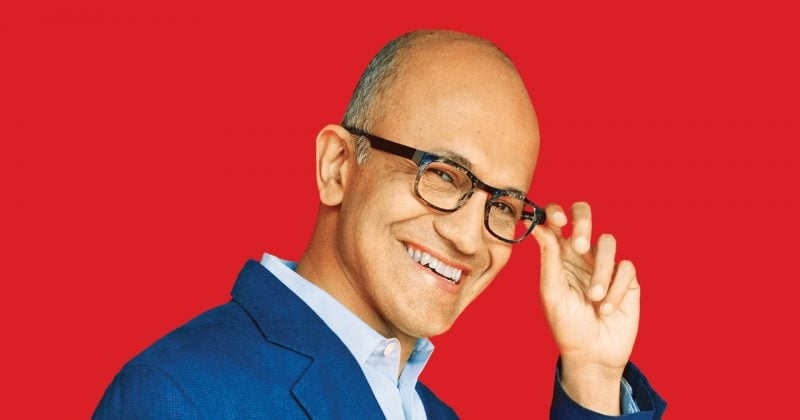
Microsoft CEO Satya Nadella calls Anthropic’s model restrictions illogical
Nadella's public criticism lands as U.S. export controls continue to limit access to Anthropic's most powerful models
Satya Nadella has a lot invested in Anthropic. Which is what makes his July 2026 criticism of the company’s practices so interesting to watch.
The Microsoft CEO publicly called out AI model providers, with Anthropic as his primary example, over what he described as a fundamental contradiction in how frontier AI companies treat data. His core argument: these companies claim fair-use rights over publicly available data when training their models, then turn around and restrict customers from using those same models for distillation, while also holding onto rights over customer interaction data.
The hypocrisy argument
Model distillation is the process of training a smaller, cheaper model by having it learn from a larger one. Anthropic, like most frontier AI labs, permits its models to learn from vast swaths of human-generated internet content under a fair-use rationale. These same companies then restrict what customers can do with model outputs, including using those outputs to train competing or internal models. Customer interaction data, meanwhile, may be retained by the provider under terms buried in enterprise agreements.
The export control backdrop
The timing of Nadella’s comments is not accidental. Anthropic ran into a wall in June 2026 when U.S. export controls forced the company to suspend advanced capabilities tied to two of its newest models, Claude Fable 5 and Mythos 5.
Those controls were partially lifted by the end of June. Global access to Claude Fable 5 was restored on July 1, 2026. Mythos 5, however, remains restricted to approved organizations operating within the United States.
That distinction matters. Mythos 5 is understood to be Anthropic’s most capable offering in that product line, and limiting it to a curated set of approved U.S. entities creates exactly the kind of access tiering that Nadella appears to be pushing back against.
AI, tech, and the markets they move—in one daily briefing.
Daily. Free. Join 34,000+ readers across crypto, finance, and policy.
Nadella explicitly flagged the risk of economic concentration in a small number of AI models. If a handful of frontier models become essential infrastructure for global business, and those models are subject to export controls, licensing restrictions, and provider-side data rights, the leverage held by model developers over enterprise customers becomes substantial.
Microsoft has been actively promoting its own in-house models as cheaper alternatives to premium offerings from OpenAI and Anthropic, both of which Microsoft has invested in.
What investors and enterprises should watch
For enterprise technology buyers, Nadella’s comments signal something real: the largest cloud providers are actively building narratives and products designed to reduce customer dependence on any single frontier AI model provider.
The more immediate market implication is competitive pressure on Anthropic’s enterprise pricing and terms. When your largest infrastructure partner publicly calls your model restrictions illogical, the next contract negotiation gets complicated.
Mythos 5’s ongoing access restrictions give that pressure a concrete edge. Until export controls are fully resolved and access is normalized, enterprise buyers evaluating Anthropic as a long-term AI partner are making decisions with real uncertainty on the table.