
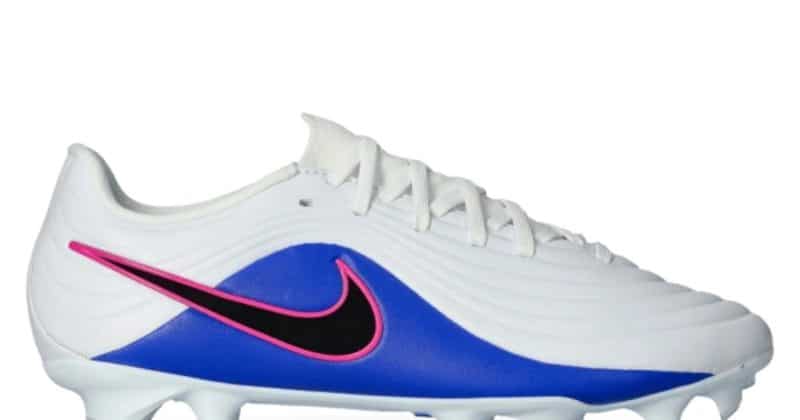
Nike invests heavily in World Cup to regain market share after brutal 30% stock decline

Nike invests heavily in World Cup to regain market share after brutal 30% stock decline

The sportswear giant is pouring enormous sums into its 'Rip The Script' campaign featuring Ronaldo and LeBron James, betting that football can reverse its fortunes

Nike is going all-in on the 2026 FIFA World Cup, launching a massive marketing blitz designed to claw back market share after one of the most painful stretches in the company’s recent history. With shares down more than 30% year-to-date, this isn’t just a branding exercise. It’s a survival play.

The campaign, called “Rip The Script,” features a roster of global stars including Cristiano Ronaldo, Kylian Mbappé, and LeBron James. The initiative is CEO Elliott Hill’s clearest bet yet that football, not basketball or lifestyle sneakers, is where Nike needs to win right now.

The playbook: kits, culture, and celebrity firepower

Here’s the thing about the World Cup: Nike isn’t even the official sponsor. That title belongs to Adidas, which has held FIFA sponsorship rights and historically dominated the football category. Projected FIFA sponsorship revenue for the 2026 cycle is expected to hit a record $2.8B, and Nike is trying to capture a significant slice of that attention without the official badge.

Nike is supplying kits for multiple powerhouse national teams, including France and Brazil, giving it enormous visibility every time those squads take the field. The company is also rolling out specialized merchandise drops tailored to specific markets, including items like the “Hollywood Keepers” goalkeeper jersey, a nod to the tournament’s North American host cities.

Advertisement

The spending has been described as “enormous sums” and “millions,” though Nike hasn’t disclosed exact figures.

The 2026 World Cup, which runs through late June, represents a rare convergence of factors that Nike desperately needs. The tournament is being held in North America for the first time in decades, putting it squarely in Nike’s home market.

A rough year demands a big swing

Nike’s aggressive World Cup push didn’t materialize out of thin air. That 30% year-to-date decline in share price tells the story of a brand wrestling with declining market share, intensifying competition, and a consumer base that’s been increasingly willing to shop elsewhere.

This approach marks a notable pivot from Nike’s recent forays into digital territory. The company previously explored NFTs and Web3 through its .Swoosh platform, which was built on the Polygon blockchain. Nike also acquired RTFKT, a digital collectibles studio that generated buzz but ultimately didn’t become the revenue engine some had hoped. The .Swoosh platform was sold in 2025, and RTFKT has been phased out. The current strategy is firmly rooted in traditional product engagement, physical merchandise, and old-school brand marketing.

What this means for investors

Some analysts have downgraded the stock, expressing concern that even a successful World Cup campaign may not be enough to offset the broader business headwinds Nike is facing, including competitive pressures from brands like Adidas, New Balance, and On Running, or the structural questions about Nike’s direct-to-consumer strategy.

There are some positive signals, though. The tactical shift toward football as a growth driver has caught the attention of analysts who see it as a smarter, more focused approach than the company’s recent scattershot strategy. Football is the world’s most popular sport, and Nike has historically underperformed Adidas in the category.

With $2.8B in projected FIFA sponsorship revenue on the line across the broader ecosystem, the stakes for every player in this space, Nike included, are as high as they’ve ever been.

Disclosure: This article was edited by Editorial Team. For more information on how we create and review content, see our Editorial Policy.

Nike invests heavily in World Cup to regain market share after brutal 30% stock decline

Nike invests heavily in World Cup to regain market share after brutal 30% stock decline

The sportswear giant is pouring enormous sums into its 'Rip The Script' campaign featuring Ronaldo and LeBron James, betting that football can reverse its fortunes

Nike is going all-in on the 2026 FIFA World Cup, launching a massive marketing blitz designed to claw back market share after one of the most painful stretches in the company’s recent history. With shares down more than 30% year-to-date, this isn’t just a branding exercise. It’s a survival play.

The campaign, called “Rip The Script,” features a roster of global stars including Cristiano Ronaldo, Kylian Mbappé, and LeBron James. The initiative is CEO Elliott Hill’s clearest bet yet that football, not basketball or lifestyle sneakers, is where Nike needs to win right now.

The playbook: kits, culture, and celebrity firepower

Here’s the thing about the World Cup: Nike isn’t even the official sponsor. That title belongs to Adidas, which has held FIFA sponsorship rights and historically dominated the football category. Projected FIFA sponsorship revenue for the 2026 cycle is expected to hit a record $2.8B, and Nike is trying to capture a significant slice of that attention without the official badge.

Nike is supplying kits for multiple powerhouse national teams, including France and Brazil, giving it enormous visibility every time those squads take the field. The company is also rolling out specialized merchandise drops tailored to specific markets, including items like the “Hollywood Keepers” goalkeeper jersey, a nod to the tournament’s North American host cities.

Advertisement

The spending has been described as “enormous sums” and “millions,” though Nike hasn’t disclosed exact figures.

The 2026 World Cup, which runs through late June, represents a rare convergence of factors that Nike desperately needs. The tournament is being held in North America for the first time in decades, putting it squarely in Nike’s home market.

A rough year demands a big swing

Nike’s aggressive World Cup push didn’t materialize out of thin air. That 30% year-to-date decline in share price tells the story of a brand wrestling with declining market share, intensifying competition, and a consumer base that’s been increasingly willing to shop elsewhere.

This approach marks a notable pivot from Nike’s recent forays into digital territory. The company previously explored NFTs and Web3 through its .Swoosh platform, which was built on the Polygon blockchain. Nike also acquired RTFKT, a digital collectibles studio that generated buzz but ultimately didn’t become the revenue engine some had hoped. The .Swoosh platform was sold in 2025, and RTFKT has been phased out. The current strategy is firmly rooted in traditional product engagement, physical merchandise, and old-school brand marketing.

What this means for investors

Some analysts have downgraded the stock, expressing concern that even a successful World Cup campaign may not be enough to offset the broader business headwinds Nike is facing, including competitive pressures from brands like Adidas, New Balance, and On Running, or the structural questions about Nike’s direct-to-consumer strategy.

There are some positive signals, though. The tactical shift toward football as a growth driver has caught the attention of analysts who see it as a smarter, more focused approach than the company’s recent scattershot strategy. Football is the world’s most popular sport, and Nike has historically underperformed Adidas in the category.

With $2.8B in projected FIFA sponsorship revenue on the line across the broader ecosystem, the stakes for every player in this space, Nike included, are as high as they’ve ever been.

Disclosure: This article was edited by Editorial Team. For more information on how we create and review content, see our Editorial Policy.