
Nomura pushes China RRR and rate cut forecasts to 2027, signaling prolonged monetary pause
The Japanese banking giant no longer expects Beijing to ease monetary policy this year, joining Goldman Sachs in a broader recalibration of China stimulus expectations.
Nomura Holdings just told investors to stop holding their breath for Chinese monetary easing. The firm pushed its forecasts for both a reserve requirement ratio (RRR) cut and a policy rate cut in China all the way out to 2027, scrapping earlier expectations that both would arrive this year.
The revision, made on April 29, 2026, marks a notable shift. Nomura had previously penciled in a 50-basis-point RRR reduction for Q2 2026 and a 10-basis-point policy rate cut for Q4 2026. Now, neither is expected to materialize until next year at the earliest.
Why Beijing’s confidence is everyone else’s patience
The catalyst for Nomura’s recalibration is straightforward: China’s Politburo has been telegraphing that it feels pretty good about where the economy sits. Recent communications from the top leadership body suggest a growing confidence in economic stability, which translates directly into less urgency to deploy fresh stimulus.
Nomura is not alone in reading the room this way. Goldman Sachs and other global banks have similarly softened their easing outlooks in response to the same Politburo signals.
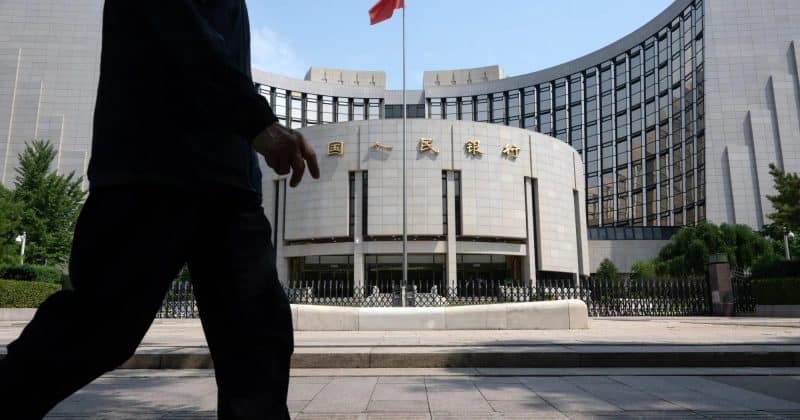
People’s Bank of China Governor Pan Gongsheng said in January 2026 that there was still “room for further RRR and interest rate cuts this year.” No RRR or rate cuts have been implemented since the previous easing cycle that concluded in 2025.
Macro, rates, and crypto—what moved markets and what matters next.
Daily. Free. Join 34,000+ readers across crypto, finance, and policy.
What the RRR delay actually means
For those unfamiliar with the mechanics: the reserve requirement ratio is the percentage of deposits that Chinese banks must hold in reserve rather than lend out. When the PBOC cuts the RRR, it frees up capital for lending, flooding the banking system with liquidity.
A 50-basis-point cut, which is what Nomura had originally expected, would have released a significant amount of lending capacity into an economy navigating the early stages of its 15th Five-Year Plan period running from 2026 to 2030.
The policy rate side tells a similar story. A 10-basis-point cut may sound modest, but in China’s tightly managed monetary framework, even small rate adjustments send significant signals about the direction of credit conditions. Pushing that signal out by a full year changes the calculus for anyone positioning around Chinese growth.
What this means for investors
For the yuan, a prolonged pause in monetary easing could provide relative stability. When a central bank isn’t cutting rates, its currency tends to hold up better against peers that are easing.
When Nomura and Goldman Sachs independently arrive at similar revisions, it’s not a coincidence. It’s a consensus forming in real time.