
North Korea tests nuclear-capable cruise missiles, and crypto is funding the program
Kim Jong Un's latest missile tests showcase AI-guided weapons, while North Korean hackers have allegedly stolen over $2 billion in digital assets in 2025 alone to bankroll the regime's military ambitions.
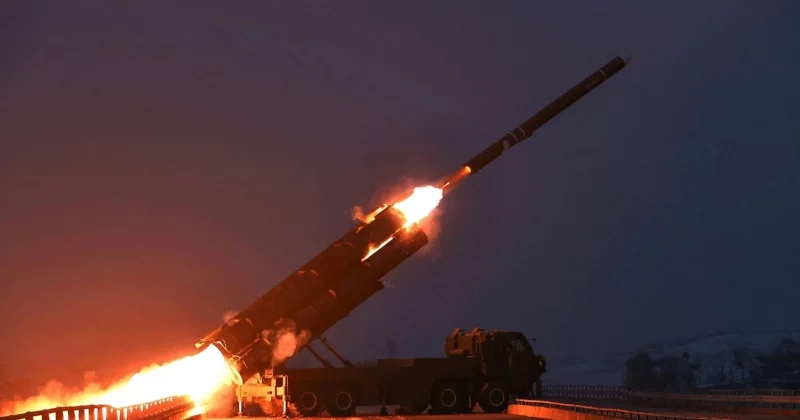
North Korea launched a barrage of missile tests on May 26, including tactical ballistic missiles, long-range artillery rockets, and AI-guided cruise missiles capable of striking targets up to 100 kilometers away. Leader Kim Jong Un personally supervised the tests, which state media framed as proof that these weapons are ready for deployment near the South Korean border.
For the crypto industry, this isn’t just a geopolitics story. It’s a funding story. North Korean hacking groups, most notably the Lazarus Group, have reportedly stolen more than $2 billion in digital assets in 2025 alone. The cumulative total over the years sits north of $6 billion. That money doesn’t vanish. It builds missiles.
What North Korea actually tested
The May 26 tests weren’t a single launch. They were a coordinated series involving three distinct weapon categories: tactical ballistic missiles, long-range artillery rockets, and what North Korean state media described as “precision tactical cruise missiles” guided by artificial intelligence.
The AI-guided cruise missiles are the headline grabber. These systems were specifically designed for frontline artillery units, and the tests reportedly validated the AI control systems that guide them to their targets. The 100-kilometer range puts a significant portion of South Korean military infrastructure within striking distance from forward-deployed positions.
Kim Jong Un’s presence at the tests was itself a message. Earlier, in March 2026, North Korea conducted separate naval exercises involving the newly commissioned Choe Hyon-class destroyer, which launched strategic cruise missiles and anti-ship missiles. Kim reportedly oversaw those tests remotely, alongside his daughter.
Macro, rates, and crypto—what moved markets and what matters next.
Daily. Free. Join 34,000+ readers across crypto, finance, and policy.
The crypto connection no one can ignore
North Korean hacking groups have reportedly secured more than $2 billion in digital assets during 2025 alone. Cumulative estimates put the total haul at over $6 billion stolen from global crypto networks over the years.
The Lazarus Group remains the most prominent actor in this space. The North Korean state-sponsored hacking collective has been linked to some of the largest crypto heists in history, targeting exchanges, DeFi protocols, and cross-chain bridges.
What this means for crypto investors
Every major North Korean crypto heist strengthens the case for tighter regulation of exchanges, stricter KYC requirements, and more aggressive enforcement against mixing services. The US Treasury’s Office of Foreign Assets Control has already sanctioned multiple entities and wallet addresses tied to North Korean operations.
If North Korean hackers are netting $2 billion in a single year, that means the industry’s defenses aren’t keeping pace with the threat. Cross-chain bridges, which have been favorite targets, remain structurally vulnerable. Exchanges that rely on hot wallets continue to present attractive targets.