
Norway oil service lockout disrupts offshore drilling, threatens 12,000 barrels per day

Norway oil service lockout disrupts offshore drilling, threatens 12,000 barrels per day

Employers escalate labor dispute by locking out roughly 1,000 union workers across major offshore service providers

Norway’s offshore oil sector just got a lot quieter. Offshore Norway, the employers’ association representing the country’s oil services industry, initiated a lockout on June 27 that has sidelined approximately 1,000 members of the SAFE union, escalating a labor conflict that was already disrupting drilling operations across the Norwegian continental shelf.

The lockout follows a strike that began around June 15, when several hundred SAFE union members walked off the job demanding better wages. That initial action halted work on at least two rigs and several vessels. The employers’ response: lock out roughly 1,000 of the union’s approximately 1,770 members, effectively grinding a significant chunk of Norway’s offshore service operations to a halt.

What’s at stake for oil production

Early industry estimates peg the potential production loss at up to 12,000 barrels of oil equivalent per day. For context, Norway typically produces around 2 million barrels per day, making it one of Western Europe’s largest oil producers.

Advertisement

The list of affected companies reads like a who’s who of global oilfield services. SLB, Halliburton, Baker Hughes, Subsea 7, DOF Subsea, Weatherford, and DeepOcean all have operations caught up in the dispute.

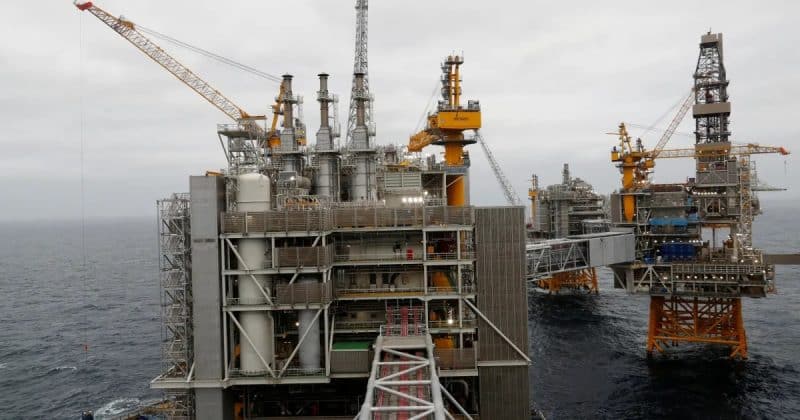
Multiple rigs and vessels have been rendered inactive. Some safety-critical roles have been exempted from the lockout, which is standard practice in Norway’s tightly regulated offshore sector.

The broader concern is what this does to 2026 production targets. Well deliveries are expected to face delays, and operators that were counting on new production coming online later this year may need to revise their timelines.

Why Norway’s oil labor disputes hit differently

Norway’s oil and gas sector is uniquely dependent on specialized contractors. Unlike some producing nations where national oil companies handle most operations in-house, Norway’s model relies heavily on a network of service providers for everything from drilling to subsea construction.

The escalation from strike to lockout signals that both sides are digging in. Lockouts are a more aggressive employer tactic, extending the adverse effects to a larger group of workers beyond those initially striking. Wage negotiations for the 2026 settlement period broke down, leading the SAFE union to initiate the walkout in mid-June.

What this means for energy markets and investors

The companies directly caught in the crossfire face lost revenue and idle assets. SLB, Halliburton, and Baker Hughes are publicly traded multinationals with diversified operations. For smaller, more regionally focused companies like DOF Subsea and DeepOcean, the financial impact could be more meaningful relative to their overall operations.

Norway’s government has historically stepped in when strikes or lockouts threaten significant economic harm in the energy sector, through compulsory arbitration. Whether this dispute reaches that threshold depends on how long it drags on and how much production is actually lost.

Disclosure: This article was edited by Editorial Team. For more information on how we create and review content, see our Editorial Policy.

Norway oil service lockout disrupts offshore drilling, threatens 12,000 barrels per day

Norway oil service lockout disrupts offshore drilling, threatens 12,000 barrels per day

Employers escalate labor dispute by locking out roughly 1,000 union workers across major offshore service providers

Norway’s offshore oil sector just got a lot quieter. Offshore Norway, the employers’ association representing the country’s oil services industry, initiated a lockout on June 27 that has sidelined approximately 1,000 members of the SAFE union, escalating a labor conflict that was already disrupting drilling operations across the Norwegian continental shelf.

The lockout follows a strike that began around June 15, when several hundred SAFE union members walked off the job demanding better wages. That initial action halted work on at least two rigs and several vessels. The employers’ response: lock out roughly 1,000 of the union’s approximately 1,770 members, effectively grinding a significant chunk of Norway’s offshore service operations to a halt.

What’s at stake for oil production

Early industry estimates peg the potential production loss at up to 12,000 barrels of oil equivalent per day. For context, Norway typically produces around 2 million barrels per day, making it one of Western Europe’s largest oil producers.

Advertisement

The list of affected companies reads like a who’s who of global oilfield services. SLB, Halliburton, Baker Hughes, Subsea 7, DOF Subsea, Weatherford, and DeepOcean all have operations caught up in the dispute.

Multiple rigs and vessels have been rendered inactive. Some safety-critical roles have been exempted from the lockout, which is standard practice in Norway’s tightly regulated offshore sector.

The broader concern is what this does to 2026 production targets. Well deliveries are expected to face delays, and operators that were counting on new production coming online later this year may need to revise their timelines.

Why Norway’s oil labor disputes hit differently

Norway’s oil and gas sector is uniquely dependent on specialized contractors. Unlike some producing nations where national oil companies handle most operations in-house, Norway’s model relies heavily on a network of service providers for everything from drilling to subsea construction.

The escalation from strike to lockout signals that both sides are digging in. Lockouts are a more aggressive employer tactic, extending the adverse effects to a larger group of workers beyond those initially striking. Wage negotiations for the 2026 settlement period broke down, leading the SAFE union to initiate the walkout in mid-June.

What this means for energy markets and investors

The companies directly caught in the crossfire face lost revenue and idle assets. SLB, Halliburton, and Baker Hughes are publicly traded multinationals with diversified operations. For smaller, more regionally focused companies like DOF Subsea and DeepOcean, the financial impact could be more meaningful relative to their overall operations.

Norway’s government has historically stepped in when strikes or lockouts threaten significant economic harm in the energy sector, through compulsory arbitration. Whether this dispute reaches that threshold depends on how long it drags on and how much production is actually lost.

Disclosure: This article was edited by Editorial Team. For more information on how we create and review content, see our Editorial Policy.