
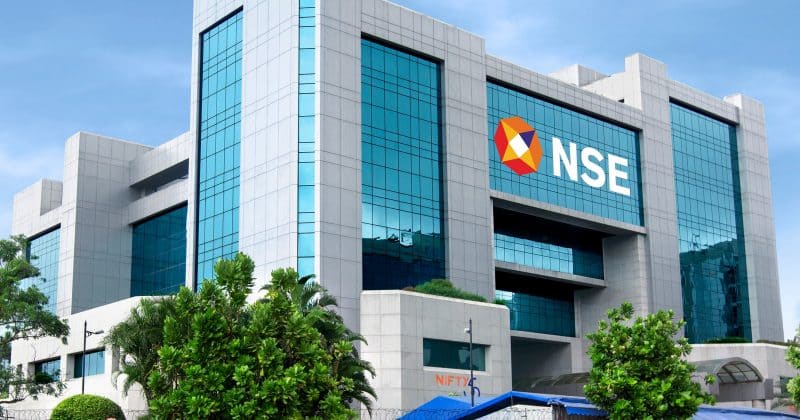
National Stock Exchange plans landmark IPO, boosting market momentum

National Stock Exchange plans landmark IPO, boosting market momentum

India's largest exchange is finally going public after nearly a decade of regulatory hurdles, targeting a valuation north of $55 billion

The National Stock Exchange of India, the country’s largest bourse by trading volume, is preparing what would be India’s biggest-ever initial public offering. After nine years of regulatory limbo, the exchange received a no-objection certificate from the Securities and Exchange Board of India (SEBI) in late January 2026, clearing the path for a listing that could reshape how investors access the backbone of Indian capital markets.

The NSE’s board approved the IPO plan on February 6, 2026, and the exchange is targeting a Draft Red Herring Prospectus (DRHP) filing with SEBI by mid-June 2026. The goal is to list before December 2026.

The numbers behind the listing

The IPO is expected to raise between ₹21,000 and ₹25,000 crore, roughly $2.5 billion. That would make it the largest public offering in Indian history by a comfortable margin.

The potential valuation exceeds ₹4.7-5 lakh crore, somewhere north of $55 billion, which would place the NSE among the most valuable exchange operators on the planet.

Advertisement

The NSE handles a daily turnover exceeding ₹4 lakh crore in derivatives trading alone, making it one of the world’s largest exchanges by volume.

The IPO is structured as a pure offer-for-sale. No fresh capital is being raised. Existing shareholders are simply selling their stakes to public investors.

Unlisted share prices for the NSE were recently hovering around ₹1,935, giving a rough preview of where private market participants have been pricing the exchange ahead of its public debut.

Why it took nine years

A $160 million settlement proposal with SEBI in 2025 helped clear a significant regulatory overhang. The no-objection certificate that followed in late January 2026 was the clearest signal yet that the regulator was finally comfortable letting the exchange proceed.

The DRHP filing is specifically targeted for around June 15-16, or by the end of that month at the latest.

What this means for investors

The NSE’s dominance in Indian derivatives, where daily turnover regularly exceeds ₹4 lakh crore, makes it a particularly compelling example of the exchange business model, which collects fees on every trade and benefits from rising market activity.

That said, the listing is not a done deal. It remains contingent on SEBI’s review of the DRHP and prevailing market conditions. Market volatility or unexpected regulatory developments could delay the process further.

The Bombay Stock Exchange, India’s other major exchange, is already publicly listed, giving investors a benchmark for comparison.

Disclosure: This article was edited by Editorial Team. For more information on how we create and review content, see our Editorial Policy.

National Stock Exchange plans landmark IPO, boosting market momentum

National Stock Exchange plans landmark IPO, boosting market momentum

India's largest exchange is finally going public after nearly a decade of regulatory hurdles, targeting a valuation north of $55 billion

The National Stock Exchange of India, the country’s largest bourse by trading volume, is preparing what would be India’s biggest-ever initial public offering. After nine years of regulatory limbo, the exchange received a no-objection certificate from the Securities and Exchange Board of India (SEBI) in late January 2026, clearing the path for a listing that could reshape how investors access the backbone of Indian capital markets.

The NSE’s board approved the IPO plan on February 6, 2026, and the exchange is targeting a Draft Red Herring Prospectus (DRHP) filing with SEBI by mid-June 2026. The goal is to list before December 2026.

The numbers behind the listing

The IPO is expected to raise between ₹21,000 and ₹25,000 crore, roughly $2.5 billion. That would make it the largest public offering in Indian history by a comfortable margin.

The potential valuation exceeds ₹4.7-5 lakh crore, somewhere north of $55 billion, which would place the NSE among the most valuable exchange operators on the planet.

Advertisement

The NSE handles a daily turnover exceeding ₹4 lakh crore in derivatives trading alone, making it one of the world’s largest exchanges by volume.

The IPO is structured as a pure offer-for-sale. No fresh capital is being raised. Existing shareholders are simply selling their stakes to public investors.

Unlisted share prices for the NSE were recently hovering around ₹1,935, giving a rough preview of where private market participants have been pricing the exchange ahead of its public debut.

Why it took nine years

A $160 million settlement proposal with SEBI in 2025 helped clear a significant regulatory overhang. The no-objection certificate that followed in late January 2026 was the clearest signal yet that the regulator was finally comfortable letting the exchange proceed.

The DRHP filing is specifically targeted for around June 15-16, or by the end of that month at the latest.

What this means for investors

The NSE’s dominance in Indian derivatives, where daily turnover regularly exceeds ₹4 lakh crore, makes it a particularly compelling example of the exchange business model, which collects fees on every trade and benefits from rising market activity.

That said, the listing is not a done deal. It remains contingent on SEBI’s review of the DRHP and prevailing market conditions. Market volatility or unexpected regulatory developments could delay the process further.

The Bombay Stock Exchange, India’s other major exchange, is already publicly listed, giving investors a benchmark for comparison.

Disclosure: This article was edited by Editorial Team. For more information on how we create and review content, see our Editorial Policy.