
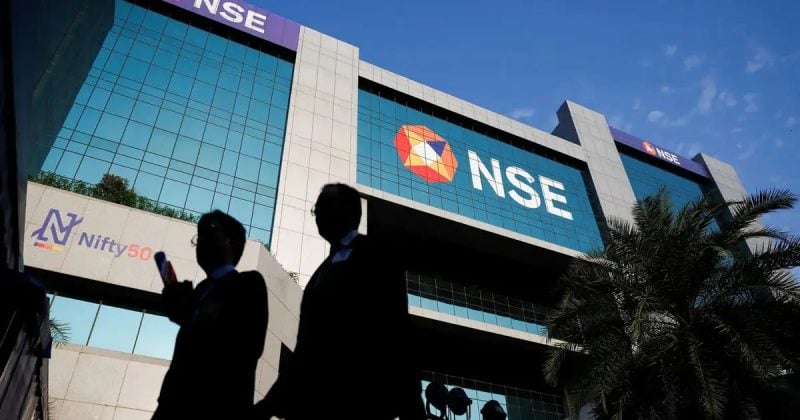
National Stock Exchange of India gets rare sell recommendation ahead of record-breaking IPO

National Stock Exchange of India gets rare sell recommendation ahead of record-breaking IPO

Dolat Capital warns of regulatory headwinds for the world's largest derivatives exchange as it prepares for a $57 billion listing

Getting a sell rating before your stock even hits the public market is a bit like getting a one-star Yelp review before your restaurant opens. It’s not ideal. Yet that’s exactly what happened to the National Stock Exchange of India, which just received a bearish call from Dolat Capital Market Pvt. while preparing for what would be India’s largest-ever initial public offering.

The brokerage initiated a “sell” recommendation on July 17, 2026, targeting NSE’s unlisted shares that have been trading privately in the range of 1,900 to 2,400 rupees. The core concern: potential regulatory changes from SEBI, India’s securities regulator, that could take a sledgehammer to the derivatives trading volumes that underpin NSE’s business model.

The IPO that could reshape Indian capital markets

NSE filed its Draft Red Herring Prospectus with SEBI on June 17, 2026, laying out plans for a pure offer-for-sale of approximately 1.489 billion equity shares. The exchange is targeting a raise between $3 billion and $3.3 billion, which would value the company at close to $57 billion.

To put that in perspective, this would place NSE’s listing alongside Reliance Jio as one of India’s most significant public market debuts ever. We’re talking about a company that operates as the world’s largest derivatives exchange by trading volume.

Advertisement

The selling shareholder list reads like a who’s who of institutional finance. The State Bank of India and Canada Pension Plan Investment Board are among those offloading shares. Temasek, Singapore’s sovereign wealth fund, is also part of the sale.

One notable holdout: Life Insurance Corporation of India, which owns roughly 10.72% of NSE, has decided not to sell a single share.

Why a sell rating matters here

Here’s the thing about Dolat Capital’s bearish stance. It’s not a commentary on NSE’s current financial health, which is objectively strong. The exchange posted a profit of 103 billion rupees for the fiscal year ending March 2026. That’s a substantial number by any measure.

But it also represents a 15% decline compared to the previous year. And that’s where the concern starts to crystallize.

Dolat Capital’s warning centers on SEBI’s potential crackdown on high-frequency trading, which is a critical revenue engine for NSE. If the regulator imposes restrictions, the volume of trades flowing through NSE’s systems could drop meaningfully. Fewer trades means less fee revenue. Less fee revenue on a $57 billion valuation makes the math uncomfortable.

What this means for investors

The unlisted share price range of 1,900 to 2,400 rupees suggests that private market participants have already been pricing in significant optimism. A sell recommendation at these levels implies Dolat Capital believes the current private market pricing doesn’t adequately account for downside regulatory scenarios.

The 15% year-over-year profit decline is also worth watching as a leading indicator. If that trajectory continues into the next quarter’s results, it could validate Dolat Capital’s thesis and put further pressure on the IPO pricing. The expected listing is projected for the end of 2026.

Disclosure: This article was edited by Editorial Team. For more information on how we create and review content, see our Editorial Policy.

National Stock Exchange of India gets rare sell recommendation ahead of record-breaking IPO

National Stock Exchange of India gets rare sell recommendation ahead of record-breaking IPO

Dolat Capital warns of regulatory headwinds for the world's largest derivatives exchange as it prepares for a $57 billion listing

Getting a sell rating before your stock even hits the public market is a bit like getting a one-star Yelp review before your restaurant opens. It’s not ideal. Yet that’s exactly what happened to the National Stock Exchange of India, which just received a bearish call from Dolat Capital Market Pvt. while preparing for what would be India’s largest-ever initial public offering.

The brokerage initiated a “sell” recommendation on July 17, 2026, targeting NSE’s unlisted shares that have been trading privately in the range of 1,900 to 2,400 rupees. The core concern: potential regulatory changes from SEBI, India’s securities regulator, that could take a sledgehammer to the derivatives trading volumes that underpin NSE’s business model.

The IPO that could reshape Indian capital markets

NSE filed its Draft Red Herring Prospectus with SEBI on June 17, 2026, laying out plans for a pure offer-for-sale of approximately 1.489 billion equity shares. The exchange is targeting a raise between $3 billion and $3.3 billion, which would value the company at close to $57 billion.

To put that in perspective, this would place NSE’s listing alongside Reliance Jio as one of India’s most significant public market debuts ever. We’re talking about a company that operates as the world’s largest derivatives exchange by trading volume.

Advertisement

The selling shareholder list reads like a who’s who of institutional finance. The State Bank of India and Canada Pension Plan Investment Board are among those offloading shares. Temasek, Singapore’s sovereign wealth fund, is also part of the sale.

One notable holdout: Life Insurance Corporation of India, which owns roughly 10.72% of NSE, has decided not to sell a single share.

Why a sell rating matters here

Here’s the thing about Dolat Capital’s bearish stance. It’s not a commentary on NSE’s current financial health, which is objectively strong. The exchange posted a profit of 103 billion rupees for the fiscal year ending March 2026. That’s a substantial number by any measure.

But it also represents a 15% decline compared to the previous year. And that’s where the concern starts to crystallize.

Dolat Capital’s warning centers on SEBI’s potential crackdown on high-frequency trading, which is a critical revenue engine for NSE. If the regulator imposes restrictions, the volume of trades flowing through NSE’s systems could drop meaningfully. Fewer trades means less fee revenue. Less fee revenue on a $57 billion valuation makes the math uncomfortable.

What this means for investors

The unlisted share price range of 1,900 to 2,400 rupees suggests that private market participants have already been pricing in significant optimism. A sell recommendation at these levels implies Dolat Capital believes the current private market pricing doesn’t adequately account for downside regulatory scenarios.

The 15% year-over-year profit decline is also worth watching as a leading indicator. If that trajectory continues into the next quarter’s results, it could validate Dolat Capital’s thesis and put further pressure on the IPO pricing. The expected listing is projected for the end of 2026.

Disclosure: This article was edited by Editorial Team. For more information on how we create and review content, see our Editorial Policy.