
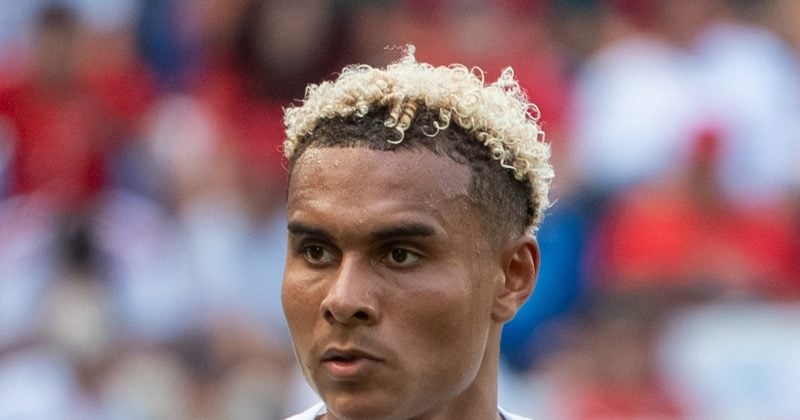
Antonio Nusa scores Norway’s first World Cup knockout goal in 88 years
The RB Leipzig winger's curling strike against Ivory Coast ended an almost nine-decade drought and put Norway ahead in the Round of 32
Norway hadn’t scored a goal in a World Cup knockout match since 1938. To put that in perspective, television was still a novelty, World War II hadn’t started yet, and the idea of a 48-team World Cup would have sounded like science fiction.
That drought ended on June 30, 2026, when 21-year-old Antonio Nusa curled a shot from the edge of the penalty area past Ivory Coast’s goalkeeper in the 39th minute. One swing of the boot, 88 years of history rewritten.
The goal and the moment
Nusa’s strike wasn’t a scrappy deflection or a penalty. It was the kind of goal you’d want for a moment like this: a curling effort from the edge of the box that gave Norway a 1-0 lead in their Round of 32 clash against Ivory Coast.
The match, played as part of the 2026 FIFA World Cup hosted across Canada, Mexico, and the United States, represented Norway’s first appearance in the knockout stage in decades. Getting there required work. Norway secured their spot with a 3-2 group-stage victory over Senegal, a result that looked shaky at times but ultimately proved decisive.
Nusa had been named to Norway’s 26-man squad on May 21, 2026. His inclusion wasn’t a surprise to anyone following European football, but his ability to deliver on the biggest stage confirmed what club watchers at RB Leipzig already knew: this kid is different.
The news moving money, markets, and the world—before your day starts.
Daily. Free. Join 34,000+ readers across crypto, finance, and policy.
Norway’s new generation
Under coach Ståle Solbakken, the squad has moved away from the rugged, physical style historically associated with Scandinavian football and toward something more technically refined.
Nusa is a perfect embodiment of that evolution. At 21, he’s part of a wave of young Norwegian talent that includes Martin Ødegaard, the midfielder who has been the face of Norway’s resurgence for years.
What this means for crypto and sports markets
Platforms like Sorare, which operates an NFT-based fantasy football game featuring digital player cards, tend to see trading volume spikes when relatively lesser-known players suddenly command global attention. Nusa’s card, likely undervalued before the tournament relative to established stars, could see significant price movement as collectors and speculators react to his World Cup performance.
Then there’s the memecoin angle. A NUSA memecoin has reportedly surfaced. The memecoin remains insignificant in market size, and investors should treat it with the same caution they’d apply to any token born purely from a trending moment rather than underlying utility.
The 2026 World Cup, expanded to 48 teams and spread across three countries, is generating more matches, more storylines, and more breakout moments than any previous tournament. That’s a larger surface area for platforms like Sorare to capture engagement, and for speculative markets to form around emerging players.