
Nexo Earn with Nexo
Nvidia concedes China’s AI chip market to Huawei, says CEO Jensen Huang

Nvidia concedes China’s AI chip market to Huawei, says CEO Jensen Huang

US export controls have effectively handed Huawei a monopoly on China's booming AI chip demand, with Nvidia's CEO acknowledging the company is 'largely shut out' of a market that once drove 20% of its data center revenue.

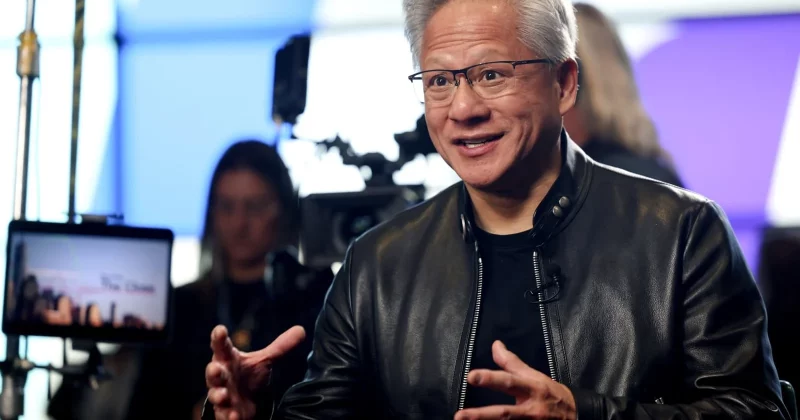
Jensen Huang said the quiet part out loud. In a CNBC interview on May 21, Nvidia’s CEO acknowledged that the company has “largely conceded” China’s advanced AI chip market to Huawei, the result of years of tightening US export controls that have slowly strangled Nvidia’s access to the world’s second-largest economy.

China once accounted for 20% of Nvidia’s data center revenue. That number has now cratered to the point where Huang described the company as “largely shut out” of the segment entirely. For a company that just posted $81.62 billion in revenue for Q1 2027, losing a fifth of its most lucrative business line is not trivial.

Huawei fills the vacuum

Huang was remarkably candid about the competitive reality. Huawei and other local firms are rapidly consolidating their grip on the Chinese AI infrastructure market, building out capabilities that would have been far harder to develop if Nvidia’s H100s and subsequent chips were still freely available for purchase in Shenzhen.

Advertisement

The restrictions trace back to 2022, when the US government began imposing increasingly stringent rules requiring licenses for sales of advanced chips to China. Each successive round of controls narrowed the window further, until Nvidia found itself designing progressively weaker China-specific chips that satisfied neither regulators nor customers.

The strategic calculus for Nvidia

Huawei’s Ascend chips have gone from punchline to production line in roughly three years. The company’s AI accelerators may still trail Nvidia’s latest offerings in raw performance, but they’re good enough for the domestic market.

Huang indicated a long-term willingness to return to the Chinese market. The diplomatic language signals that Nvidia hasn’t written off China forever, but the immediate reality is that local firms are running the show.

What this means for investors

Nvidia’s stock has been the de facto proxy for AI enthusiasm across global markets. Any recalibration of its revenue expectations, particularly around the China segment, could trigger broader sentiment shifts in tech-heavy portfolios. Analysts who had been modeling even a modest China recovery will need to adjust their forecasts given Huang’s frank concession.

Huawei’s dominance in Chinese AI chips means more investment flowing into China’s domestic tech stack from top to bottom. A parallel AI economy developing behind export control walls creates competitive dynamics that could accelerate innovation on both sides, or fragment global AI development in ways that make interoperability increasingly difficult.

Disclosure: This article was edited by Editorial Team. For more information on how we create and review content, see our Editorial Policy.

Nvidia concedes China’s AI chip market to Huawei, says CEO Jensen Huang

Nvidia concedes China’s AI chip market to Huawei, says CEO Jensen Huang

US export controls have effectively handed Huawei a monopoly on China's booming AI chip demand, with Nvidia's CEO acknowledging the company is 'largely shut out' of a market that once drove 20% of its data center revenue.

Jensen Huang said the quiet part out loud. In a CNBC interview on May 21, Nvidia’s CEO acknowledged that the company has “largely conceded” China’s advanced AI chip market to Huawei, the result of years of tightening US export controls that have slowly strangled Nvidia’s access to the world’s second-largest economy.

China once accounted for 20% of Nvidia’s data center revenue. That number has now cratered to the point where Huang described the company as “largely shut out” of the segment entirely. For a company that just posted $81.62 billion in revenue for Q1 2027, losing a fifth of its most lucrative business line is not trivial.

Huawei fills the vacuum

Huang was remarkably candid about the competitive reality. Huawei and other local firms are rapidly consolidating their grip on the Chinese AI infrastructure market, building out capabilities that would have been far harder to develop if Nvidia’s H100s and subsequent chips were still freely available for purchase in Shenzhen.

Advertisement

The restrictions trace back to 2022, when the US government began imposing increasingly stringent rules requiring licenses for sales of advanced chips to China. Each successive round of controls narrowed the window further, until Nvidia found itself designing progressively weaker China-specific chips that satisfied neither regulators nor customers.

The strategic calculus for Nvidia

Huawei’s Ascend chips have gone from punchline to production line in roughly three years. The company’s AI accelerators may still trail Nvidia’s latest offerings in raw performance, but they’re good enough for the domestic market.

Huang indicated a long-term willingness to return to the Chinese market. The diplomatic language signals that Nvidia hasn’t written off China forever, but the immediate reality is that local firms are running the show.

What this means for investors

Nvidia’s stock has been the de facto proxy for AI enthusiasm across global markets. Any recalibration of its revenue expectations, particularly around the China segment, could trigger broader sentiment shifts in tech-heavy portfolios. Analysts who had been modeling even a modest China recovery will need to adjust their forecasts given Huang’s frank concession.

Huawei’s dominance in Chinese AI chips means more investment flowing into China’s domestic tech stack from top to bottom. A parallel AI economy developing behind export control walls creates competitive dynamics that could accelerate innovation on both sides, or fragment global AI development in ways that make interoperability increasingly difficult.

Disclosure: This article was edited by Editorial Team. For more information on how we create and review content, see our Editorial Policy.