
Nexo Earn with Nexo
Nvidia reports $75.2B in data center revenue as AI demand nearly doubles its biggest business

Nvidia reports $75.2B in data center revenue as AI demand nearly doubles its biggest business

The chipmaker's data center segment now accounts for 92% of total revenue, up 92% year-over-year in a quarter that redefines what 'dominant' looks like.

Nvidia just posted $75.2 billion in data center revenue for its fiscal first quarter of 2027. That’s nearly double the $39.1 billion it reported in the same period a year ago, a 92% year-over-year jump that makes most growth stories in tech look quaint by comparison.

To put that number in perspective: the data center segment alone now represents roughly 92% of Nvidia’s total quarterly revenue of $81.6 billion. The rest of the company, gaming included, is essentially a rounding error on the AI business.

The AI machine keeps eating

The revenue surge traces directly to insatiable demand for AI infrastructure. Cloud providers, enterprise customers, and sovereign AI initiatives are all racing to build out compute capacity, and Nvidia sits at the tollbooth.

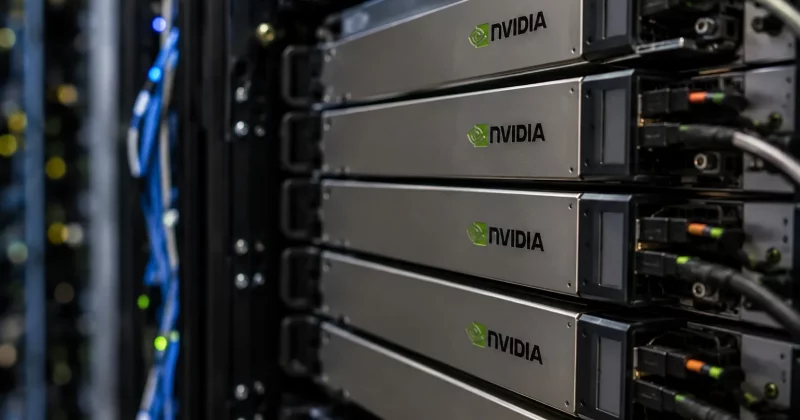
The company’s Hopper and Blackwell GPU platforms are driving the bulk of new orders. These aren’t just individual chips being shipped in boxes. We’re talking full-stack AI systems like DGX, paired with networking technologies such as InfiniBand that stitch thousands of GPUs together into massive training clusters.

In English: Nvidia isn’t just selling shovels in the AI gold rush. It’s selling the shovels, the mining carts, and the rails they run on.

The quarter also marked a 21% increase from the previous quarter, suggesting the growth trajectory isn’t flattening. Sequential gains of that magnitude, on a base already measured in tens of billions, are the kind of numbers that make CFOs at competing firms quietly update their resumes.

Advertisement

From crypto darling to AI kingmaker

It’s worth remembering where Nvidia was just a few years ago. The company rode high on crypto mining demand, then watched that revenue evaporate when GPU mining became less profitable and Ethereum moved to proof-of-stake. That chapter taught Nvidia a painful lesson about building on volatile demand.

The pivot to AI has been anything but volatile. Nvidia has systematically repositioned itself around generative AI training and inference workloads, two categories with structural demand that isn’t going away when sentiment shifts. Every major hyperscaler, from Microsoft to Google to Amazon, is locked into multi-year buildouts that require Nvidia’s silicon.

The company’s CUDA software ecosystem has created what amounts to a moat filled with developer lock-in. Millions of researchers and engineers have built their workflows around Nvidia’s tools, making it extraordinarily costly to switch to competing hardware even when alternatives exist.

Look, AMD and Intel are trying. Custom chips from Google (TPUs) and Amazon (Trainium) are gaining traction in specific use cases. But none of them have managed to dent Nvidia’s core market share in training large foundation models, the workload category that demands the most expensive hardware.

Supply constraints and what they signal

Here’s the thing about $75.2 billion in quarterly data center revenue: it might actually understate real demand. Analysts have flagged ongoing GPU shortages, particularly for Blackwell-class chips, suggesting Nvidia is supply-constrained rather than demand-constrained.

That distinction matters enormously. A company hitting revenue records while simultaneously unable to fulfill all orders is in a fundamentally different position than one that’s shipping everything it can produce. It means the backlog is building, not shrinking.

The supply tightness has ripple effects beyond Nvidia’s own financials. Companies that rely on GPU availability for adjacent businesses, including crypto mining operations that still use Nvidia hardware, face allocation challenges. When the world’s biggest cloud providers are writing billion-dollar purchase orders, smaller buyers get pushed to the back of the line.

Nvidia’s manufacturing partner TSMC is ramping production, but advanced chip fabrication doesn’t scale overnight. New capacity takes years to bring online, which means the supply-demand imbalance could persist well into 2026.

What this means for investors

Nvidia’s data center business is no longer a growth segment within a diversified chipmaker. It is the company. When 92% of revenue comes from a single category, the investment thesis lives or dies on one question: how durable is AI infrastructure spending?

The bull case is straightforward. Enterprise AI adoption is still in early innings, sovereign AI programs are multiplying globally, and inference workloads (running trained models in production) are scaling faster than training workloads. Each of these trends requires more GPUs, not fewer.

The bear case centers on concentration risk and cyclicality. Capital expenditure cycles in tech have historically been boom-and-bust. Hyperscalers are spending aggressively today, but if AI monetization disappoints, those budgets could tighten. Nvidia experienced exactly this dynamic with crypto. The scale is different now, but the pattern isn’t impossible to repeat.

There’s also the competitive question. Nvidia’s dominance invites both competition and regulation. Custom silicon from cloud providers could eventually erode margins in inference, even if training remains an Nvidia stronghold. And any export restrictions targeting advanced AI chips, particularly to China, would directly impact the top line.

The near-term trajectory, though, is hard to argue with. A company growing its core business at 92% year-over-year while constrained by supply rather than demand is operating in rare air. Investors watching Nvidia should pay close attention to two things: Blackwell supply ramp timelines, and whether hyperscaler capex guidance holds steady through the back half of the year. Those two signals will determine whether the next quarter looks like a continuation or a turning point.

Disclosure: This article was edited by Editorial Team. For more information on how we create and review content, see our Editorial Policy.

Nvidia reports $75.2B in data center revenue as AI demand nearly doubles its biggest business

Nvidia reports $75.2B in data center revenue as AI demand nearly doubles its biggest business

The chipmaker's data center segment now accounts for 92% of total revenue, up 92% year-over-year in a quarter that redefines what 'dominant' looks like.

Nvidia just posted $75.2 billion in data center revenue for its fiscal first quarter of 2027. That’s nearly double the $39.1 billion it reported in the same period a year ago, a 92% year-over-year jump that makes most growth stories in tech look quaint by comparison.

To put that number in perspective: the data center segment alone now represents roughly 92% of Nvidia’s total quarterly revenue of $81.6 billion. The rest of the company, gaming included, is essentially a rounding error on the AI business.

The AI machine keeps eating

The revenue surge traces directly to insatiable demand for AI infrastructure. Cloud providers, enterprise customers, and sovereign AI initiatives are all racing to build out compute capacity, and Nvidia sits at the tollbooth.

The company’s Hopper and Blackwell GPU platforms are driving the bulk of new orders. These aren’t just individual chips being shipped in boxes. We’re talking full-stack AI systems like DGX, paired with networking technologies such as InfiniBand that stitch thousands of GPUs together into massive training clusters.

In English: Nvidia isn’t just selling shovels in the AI gold rush. It’s selling the shovels, the mining carts, and the rails they run on.

The quarter also marked a 21% increase from the previous quarter, suggesting the growth trajectory isn’t flattening. Sequential gains of that magnitude, on a base already measured in tens of billions, are the kind of numbers that make CFOs at competing firms quietly update their resumes.

Advertisement

From crypto darling to AI kingmaker

It’s worth remembering where Nvidia was just a few years ago. The company rode high on crypto mining demand, then watched that revenue evaporate when GPU mining became less profitable and Ethereum moved to proof-of-stake. That chapter taught Nvidia a painful lesson about building on volatile demand.

The pivot to AI has been anything but volatile. Nvidia has systematically repositioned itself around generative AI training and inference workloads, two categories with structural demand that isn’t going away when sentiment shifts. Every major hyperscaler, from Microsoft to Google to Amazon, is locked into multi-year buildouts that require Nvidia’s silicon.

The company’s CUDA software ecosystem has created what amounts to a moat filled with developer lock-in. Millions of researchers and engineers have built their workflows around Nvidia’s tools, making it extraordinarily costly to switch to competing hardware even when alternatives exist.

Look, AMD and Intel are trying. Custom chips from Google (TPUs) and Amazon (Trainium) are gaining traction in specific use cases. But none of them have managed to dent Nvidia’s core market share in training large foundation models, the workload category that demands the most expensive hardware.

Supply constraints and what they signal

Here’s the thing about $75.2 billion in quarterly data center revenue: it might actually understate real demand. Analysts have flagged ongoing GPU shortages, particularly for Blackwell-class chips, suggesting Nvidia is supply-constrained rather than demand-constrained.

That distinction matters enormously. A company hitting revenue records while simultaneously unable to fulfill all orders is in a fundamentally different position than one that’s shipping everything it can produce. It means the backlog is building, not shrinking.

The supply tightness has ripple effects beyond Nvidia’s own financials. Companies that rely on GPU availability for adjacent businesses, including crypto mining operations that still use Nvidia hardware, face allocation challenges. When the world’s biggest cloud providers are writing billion-dollar purchase orders, smaller buyers get pushed to the back of the line.

Nvidia’s manufacturing partner TSMC is ramping production, but advanced chip fabrication doesn’t scale overnight. New capacity takes years to bring online, which means the supply-demand imbalance could persist well into 2026.

What this means for investors

Nvidia’s data center business is no longer a growth segment within a diversified chipmaker. It is the company. When 92% of revenue comes from a single category, the investment thesis lives or dies on one question: how durable is AI infrastructure spending?

The bull case is straightforward. Enterprise AI adoption is still in early innings, sovereign AI programs are multiplying globally, and inference workloads (running trained models in production) are scaling faster than training workloads. Each of these trends requires more GPUs, not fewer.

The bear case centers on concentration risk and cyclicality. Capital expenditure cycles in tech have historically been boom-and-bust. Hyperscalers are spending aggressively today, but if AI monetization disappoints, those budgets could tighten. Nvidia experienced exactly this dynamic with crypto. The scale is different now, but the pattern isn’t impossible to repeat.

There’s also the competitive question. Nvidia’s dominance invites both competition and regulation. Custom silicon from cloud providers could eventually erode margins in inference, even if training remains an Nvidia stronghold. And any export restrictions targeting advanced AI chips, particularly to China, would directly impact the top line.

The near-term trajectory, though, is hard to argue with. A company growing its core business at 92% year-over-year while constrained by supply rather than demand is operating in rare air. Investors watching Nvidia should pay close attention to two things: Blackwell supply ramp timelines, and whether hyperscaler capex guidance holds steady through the back half of the year. Those two signals will determine whether the next quarter looks like a continuation or a turning point.

Disclosure: This article was edited by Editorial Team. For more information on how we create and review content, see our Editorial Policy.