
Nexo Earn with Nexo
Nvidia posts strong earnings, boosts Bitcoin miners’ outlook

Nvidia posts strong earnings, boosts Bitcoin miners’ outlook

The chipmaker's record $68.1B quarter is rocket fuel for Bitcoin miners pivoting to AI infrastructure.

Nvidia just printed a quarter that would make most Fortune 500 CEOs weep with envy. The company reported record revenue of $68.1B for its fiscal Q1 2026, a 73% year-over-year increase driven almost entirely by insatiable demand for AI compute. The results beat Wall Street expectations and came with guidance that suggests the party isn’t slowing down anytime soon.

For crypto investors, the real story isn’t Nvidia itself. It’s the publicly listed Bitcoin miners who have been quietly transforming themselves into AI infrastructure companies, and who now look like some of the most interesting beneficiaries of this earnings blowout.

The miner pivot that’s actually working

Companies like Core Scientific and Hut 8 have recognized this overlap and are leaning into it hard. Rather than relying solely on SHA-256 mining revenue, which fluctuates with Bitcoin’s price and the halving cycle, these firms are increasingly leasing GPU infrastructure to AI laboratories and hyperscalers. The margins on AI hosting tend to be more favorable than traditional mining, which makes the economics compelling even when Bitcoin is cooperating.

Advertisement

The expected market for AI infrastructure is projected to reach $3-4 trillion by the end of the decade, with a 50-60% compound annual growth rate.

The stock market had other ideas, at least temporarily

Despite Nvidia’s strong earnings, several mining stocks actually dropped in the immediate aftermath. The disconnect comes down to broader market dynamics. Investor sentiment has been whipsawed by macroeconomic concerns, and a rotation out of tech-adjacent equities hit mining stocks even as Nvidia’s results validated their strategic direction.

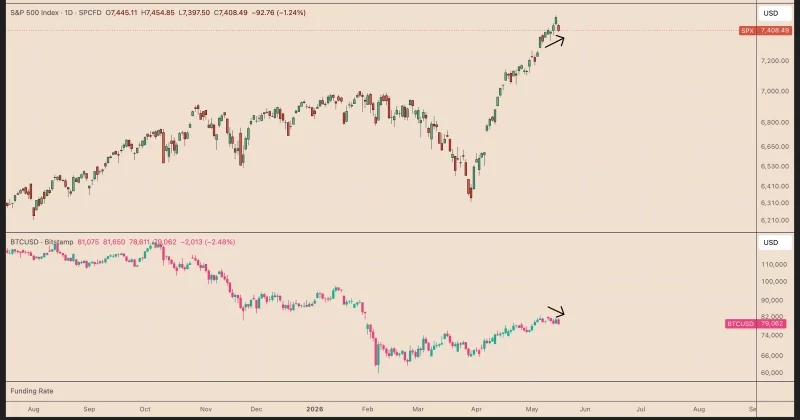
Bitcoin itself hasn’t been immune to the choppiness. Prices have been trading in a range between $77K and $94K, with slowing ETF inflows adding uncertainty to what had been a strong post-halving narrative.

What this means for investors

Core Scientific is perhaps the clearest example. The company emerged from bankruptcy and has repositioned itself as a provider of high-performance compute, with significant contracts tied to AI workloads. Hut 8 has pursued a similar strategy, leveraging its energy assets and data center expertise to attract non-mining clients.

The risk, of course, is execution. Building out GPU infrastructure requires capital, and the competitive landscape includes well-funded hyperscalers like Amazon, Microsoft, and Google who are perfectly capable of building their own facilities. Miners have a head start on power procurement and permitting, two of the biggest bottlenecks in data center development, but that advantage erodes if they can’t scale fast enough.

There’s also the question of how tightly correlated these stocks remain with Bitcoin. A miner generating 60% of its revenue from AI hosting and 40% from Bitcoin mining is a fundamentally different animal than a pure-play miner, but the market doesn’t always make that distinction in real time.

Disclosure: This article was edited by Editorial Team. For more information on how we create and review content, see our Editorial Policy.

Nvidia posts strong earnings, boosts Bitcoin miners’ outlook

Nvidia posts strong earnings, boosts Bitcoin miners’ outlook

The chipmaker's record $68.1B quarter is rocket fuel for Bitcoin miners pivoting to AI infrastructure.

Nvidia just printed a quarter that would make most Fortune 500 CEOs weep with envy. The company reported record revenue of $68.1B for its fiscal Q1 2026, a 73% year-over-year increase driven almost entirely by insatiable demand for AI compute. The results beat Wall Street expectations and came with guidance that suggests the party isn’t slowing down anytime soon.

For crypto investors, the real story isn’t Nvidia itself. It’s the publicly listed Bitcoin miners who have been quietly transforming themselves into AI infrastructure companies, and who now look like some of the most interesting beneficiaries of this earnings blowout.

The miner pivot that’s actually working

Companies like Core Scientific and Hut 8 have recognized this overlap and are leaning into it hard. Rather than relying solely on SHA-256 mining revenue, which fluctuates with Bitcoin’s price and the halving cycle, these firms are increasingly leasing GPU infrastructure to AI laboratories and hyperscalers. The margins on AI hosting tend to be more favorable than traditional mining, which makes the economics compelling even when Bitcoin is cooperating.

Advertisement

The expected market for AI infrastructure is projected to reach $3-4 trillion by the end of the decade, with a 50-60% compound annual growth rate.

The stock market had other ideas, at least temporarily

Despite Nvidia’s strong earnings, several mining stocks actually dropped in the immediate aftermath. The disconnect comes down to broader market dynamics. Investor sentiment has been whipsawed by macroeconomic concerns, and a rotation out of tech-adjacent equities hit mining stocks even as Nvidia’s results validated their strategic direction.

Bitcoin itself hasn’t been immune to the choppiness. Prices have been trading in a range between $77K and $94K, with slowing ETF inflows adding uncertainty to what had been a strong post-halving narrative.

What this means for investors

Core Scientific is perhaps the clearest example. The company emerged from bankruptcy and has repositioned itself as a provider of high-performance compute, with significant contracts tied to AI workloads. Hut 8 has pursued a similar strategy, leveraging its energy assets and data center expertise to attract non-mining clients.

The risk, of course, is execution. Building out GPU infrastructure requires capital, and the competitive landscape includes well-funded hyperscalers like Amazon, Microsoft, and Google who are perfectly capable of building their own facilities. Miners have a head start on power procurement and permitting, two of the biggest bottlenecks in data center development, but that advantage erodes if they can’t scale fast enough.

There’s also the question of how tightly correlated these stocks remain with Bitcoin. A miner generating 60% of its revenue from AI hosting and 40% from Bitcoin mining is a fundamentally different animal than a pure-play miner, but the market doesn’t always make that distinction in real time.

Disclosure: This article was edited by Editorial Team. For more information on how we create and review content, see our Editorial Policy.