
Nvidia unveils GB10 Grace Blackwell Superchip to challenge Apple and Intel in PC market
The new desktop AI superchip delivers 1 petaFLOP of performance, runs 200 billion parameter models locally, and ships with Dell, HP, and ASUS systems starting mid-2025.
Nvidia just did something it’s never really done before: built an entire computer chip designed to sit on your desk and run AI models that previously required a small data center. The GB10 Grace Blackwell Superchip, unveiled at CES 2025, pairs the company’s Grace CPU with its Blackwell GPU architecture into a single integrated package. It’s compact, it’s power-efficient, and it’s coming to PCs from Dell, ASUS, HP, Acer, Gigabyte, Lenovo, and MSI.
The sticker price starts between $3,000 and $4,000, with systems shipping from mid-2025. For context, that’s roughly the cost of a high-end MacBook Pro, except this thing delivers up to 1 petaFLOP of AI performance using FP4 precision. In English: it can process a quadrillion floating-point operations per second, which is the kind of math that makes large language models actually work.
What the GB10 actually does
The core selling point here is local AI execution. The GB10 can run and fine-tune AI models with up to 200 billion parameters without touching a cloud server. That’s significant because it eliminates latency, sidesteps compliance headaches around sensitive data, and removes the recurring costs of renting compute from AWS or Azure.
Backing all of that compute is 128GB of unified LPDDR5X memory. Unified memory means the CPU and GPU share the same memory pool, which cuts down on the bottleneck that typically happens when data has to shuttle between separate memory banks.
AI, tech, and the markets they move—in one daily briefing.
Daily. Free. Join 34,000+ readers across crypto, finance, and policy.
The chip uses an Arm-based architecture, which is the same instruction set that powers everything from your smartphone to Apple’s latest Macs. This is a deliberate departure from the x86 architecture that Intel and AMD have dominated for decades.
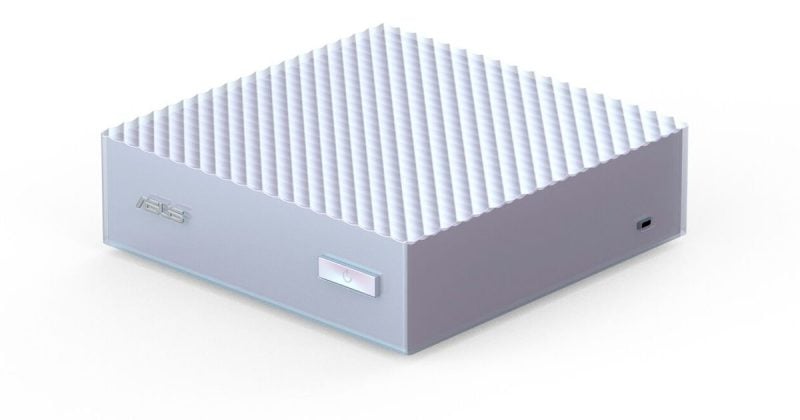
Nvidia originally introduced this concept under the name Project DIGITS, which has since evolved into the product line called DGX Spark. The first systems to hit the market will include Dell’s Pro Max and ASUS’s Ascent GX10, among others from the seven OEM partners.
Why this matters beyond the spec sheet
Nvidia isn’t stopping at the GB10. A more powerful variant called the GB300 Ultra is already planned for 2026. That chip scales up to 20 petaFLOPS, which is 20 times the performance of the GB10, and features up to 748GB of memory.