
Nexo Earn with Nexo
Nvidia CEO Jensen Huang assures investors on growth, $1T sales forecast

Nvidia CEO Jensen Huang assures investors on growth, $1T sales forecast

Huang doubled his AI chip order forecast to $1 trillion through 2027, calling the current infrastructure buildout the largest in history.

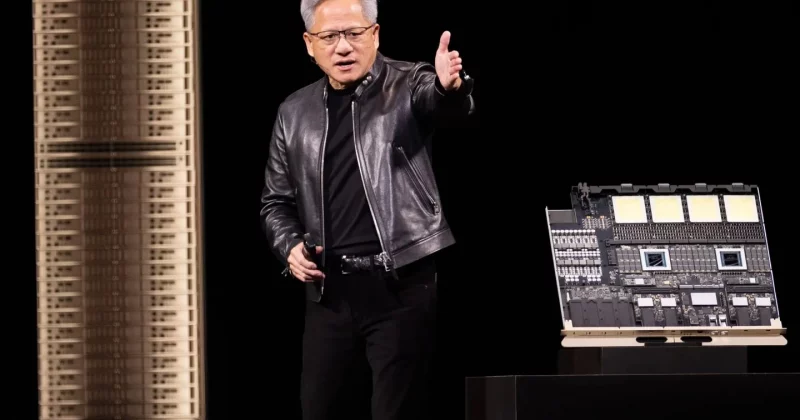
Jensen Huang wants you to know that Nvidia’s growth engine has plenty of fuel left in the tank. The company’s CEO told investors the chipmaker will sustain its momentum through a broad customer base and new product lines, with cumulative AI chip purchase orders expected to top $1 trillion through 2027.

That figure is double Nvidia’s previous forecast of $500 billion. In English: Huang looked at the demand picture, decided he’d been too conservative by half, and recalibrated accordingly.

The numbers behind the confidence

Nvidia’s fiscal Q1 revenue landed at $44.1 billion, a 69% increase year-over-year. The company projected $45 billion for the following quarter, suggesting the growth curve isn’t flattening anytime soon.

For context, $44.1 billion in a single quarter puts Nvidia’s revenue run rate in the neighborhood of small national economies. Total revenue for fiscal Q4 2026 hit $68.1 billion, representing 73% growth from the prior comparable period.

These aren’t the numbers of a company that’s peaking. They’re the numbers of a company still accelerating, which is exactly the narrative Huang is selling to Wall Street.

At a recent developer conference, Huang described Nvidia’s Blackwell GPU sales as “off the charts,” attributing the demand surge to an expansive and diversified client base. The Blackwell architecture, along with the upcoming Vera Rubin platform, represents Nvidia’s next generation of AI-optimized chips designed to handle increasingly complex workloads.

Advertisement

Here’s the thing about Nvidia’s position right now: it isn’t just riding one wave. Cloud hyperscalers, enterprise customers, sovereign AI initiatives, and startups are all competing for GPU allocations. That breadth of demand is what gives Huang the confidence to make trillion-dollar forecasts without blinking.

The trillion-dollar infrastructure thesis

Huang framed the current moment in characteristically grand terms. He described the AI-related investment cycle as “the largest infrastructure buildout in history,” estimating $85 trillion in spending over the next 15 years.

That number deserves some unpacking. Huang isn’t saying Nvidia will capture $85 trillion. He’s saying the total addressable market for AI infrastructure, including data centers, networking, power generation, cooling systems, and everything else required to run AI at scale, will reach that figure over a decade and a half.

Nvidia’s play is to be the indispensable component supplier for that buildout. Think of it like selling pickaxes during a gold rush, except the pickaxes cost hundreds of thousands of dollars each and the gold rush has a credible business case behind it.

The $1 trillion order forecast through 2027 represents Nvidia’s slice of the near-term pie. If Huang’s broader $85 trillion estimate holds even directionally true, the company’s current revenue trajectory could be just the opening act.

Of course, forecasts spanning 15 years should be taken with appropriate skepticism. A lot can change in that window: new competitors could emerge, alternative chip architectures could gain traction, or the AI spending cycle could slow as companies reassess their return on investment. But for the next two to three years at minimum, Nvidia appears to have a demand problem that most companies would envy: too much of it.

Risks worth watching

Not everything in Nvidia’s story is frictionless. US export restrictions have created headwinds for the company’s Chinese revenue, a market that was once a significant contributor to Nvidia’s top line. The regulatory environment remains unpredictable, and further tightening of export controls could chip away at Nvidia’s international growth story.

There’s also the competitive landscape to consider. AMD has been investing heavily in its MI-series accelerators, and custom silicon from hyperscalers like Google’s TPUs and Amazon’s Trainium chips represents a longer-term threat. None of these alternatives have dented Nvidia’s dominance yet, but the incentive for Nvidia’s biggest customers to reduce their dependency on a single supplier is enormous.

For investors, the key metric to monitor isn’t just revenue growth. It’s whether Nvidia can maintain its pricing power as supply catches up with demand. The company’s margins have been extraordinary precisely because GPUs have been scarce relative to demand. If that dynamic shifts, even modestly, it could compress the profitability that has made Nvidia one of the most valuable companies on Earth.

The $1 trillion order forecast through 2027 also carries implicit execution risk. Nvidia needs to manufacture and deliver chips at an unprecedented scale, manage supply chain complexity across multiple architectures, and keep its technology lead wide enough that customers don’t seriously consider alternatives. Huang’s track record suggests he can pull it off, but the degree of difficulty is rising with every new product generation.

Look, when a CEO doubles a sales forecast and calls it the biggest infrastructure buildout in human history, the natural instinct is to reach for the salt shaker. But Nvidia’s actual financial results keep validating the ambitious rhetoric, and that’s what makes this story different from the typical CEO optimism playbook.

Disclosure: This article was edited by Editorial Team. For more information on how we create and review content, see our Editorial Policy.

Nvidia CEO Jensen Huang assures investors on growth, $1T sales forecast

Nvidia CEO Jensen Huang assures investors on growth, $1T sales forecast

Huang doubled his AI chip order forecast to $1 trillion through 2027, calling the current infrastructure buildout the largest in history.

Jensen Huang wants you to know that Nvidia’s growth engine has plenty of fuel left in the tank. The company’s CEO told investors the chipmaker will sustain its momentum through a broad customer base and new product lines, with cumulative AI chip purchase orders expected to top $1 trillion through 2027.

That figure is double Nvidia’s previous forecast of $500 billion. In English: Huang looked at the demand picture, decided he’d been too conservative by half, and recalibrated accordingly.

The numbers behind the confidence

Nvidia’s fiscal Q1 revenue landed at $44.1 billion, a 69% increase year-over-year. The company projected $45 billion for the following quarter, suggesting the growth curve isn’t flattening anytime soon.

For context, $44.1 billion in a single quarter puts Nvidia’s revenue run rate in the neighborhood of small national economies. Total revenue for fiscal Q4 2026 hit $68.1 billion, representing 73% growth from the prior comparable period.

These aren’t the numbers of a company that’s peaking. They’re the numbers of a company still accelerating, which is exactly the narrative Huang is selling to Wall Street.

At a recent developer conference, Huang described Nvidia’s Blackwell GPU sales as “off the charts,” attributing the demand surge to an expansive and diversified client base. The Blackwell architecture, along with the upcoming Vera Rubin platform, represents Nvidia’s next generation of AI-optimized chips designed to handle increasingly complex workloads.

Advertisement

Here’s the thing about Nvidia’s position right now: it isn’t just riding one wave. Cloud hyperscalers, enterprise customers, sovereign AI initiatives, and startups are all competing for GPU allocations. That breadth of demand is what gives Huang the confidence to make trillion-dollar forecasts without blinking.

The trillion-dollar infrastructure thesis

Huang framed the current moment in characteristically grand terms. He described the AI-related investment cycle as “the largest infrastructure buildout in history,” estimating $85 trillion in spending over the next 15 years.

That number deserves some unpacking. Huang isn’t saying Nvidia will capture $85 trillion. He’s saying the total addressable market for AI infrastructure, including data centers, networking, power generation, cooling systems, and everything else required to run AI at scale, will reach that figure over a decade and a half.

Nvidia’s play is to be the indispensable component supplier for that buildout. Think of it like selling pickaxes during a gold rush, except the pickaxes cost hundreds of thousands of dollars each and the gold rush has a credible business case behind it.

The $1 trillion order forecast through 2027 represents Nvidia’s slice of the near-term pie. If Huang’s broader $85 trillion estimate holds even directionally true, the company’s current revenue trajectory could be just the opening act.

Of course, forecasts spanning 15 years should be taken with appropriate skepticism. A lot can change in that window: new competitors could emerge, alternative chip architectures could gain traction, or the AI spending cycle could slow as companies reassess their return on investment. But for the next two to three years at minimum, Nvidia appears to have a demand problem that most companies would envy: too much of it.

Risks worth watching

Not everything in Nvidia’s story is frictionless. US export restrictions have created headwinds for the company’s Chinese revenue, a market that was once a significant contributor to Nvidia’s top line. The regulatory environment remains unpredictable, and further tightening of export controls could chip away at Nvidia’s international growth story.

There’s also the competitive landscape to consider. AMD has been investing heavily in its MI-series accelerators, and custom silicon from hyperscalers like Google’s TPUs and Amazon’s Trainium chips represents a longer-term threat. None of these alternatives have dented Nvidia’s dominance yet, but the incentive for Nvidia’s biggest customers to reduce their dependency on a single supplier is enormous.

For investors, the key metric to monitor isn’t just revenue growth. It’s whether Nvidia can maintain its pricing power as supply catches up with demand. The company’s margins have been extraordinary precisely because GPUs have been scarce relative to demand. If that dynamic shifts, even modestly, it could compress the profitability that has made Nvidia one of the most valuable companies on Earth.

The $1 trillion order forecast through 2027 also carries implicit execution risk. Nvidia needs to manufacture and deliver chips at an unprecedented scale, manage supply chain complexity across multiple architectures, and keep its technology lead wide enough that customers don’t seriously consider alternatives. Huang’s track record suggests he can pull it off, but the degree of difficulty is rising with every new product generation.

Look, when a CEO doubles a sales forecast and calls it the biggest infrastructure buildout in human history, the natural instinct is to reach for the salt shaker. But Nvidia’s actual financial results keep validating the ambitious rhetoric, and that’s what makes this story different from the typical CEO optimism playbook.

Disclosure: This article was edited by Editorial Team. For more information on how we create and review content, see our Editorial Policy.