
Nvidia partners with LG to build humanoid robots and next-generation data centers
Jensen Huang flew to Seoul to announce a sweeping collaboration that puts Nvidia's AI factory platform inside LG's robotics and infrastructure ambitions.
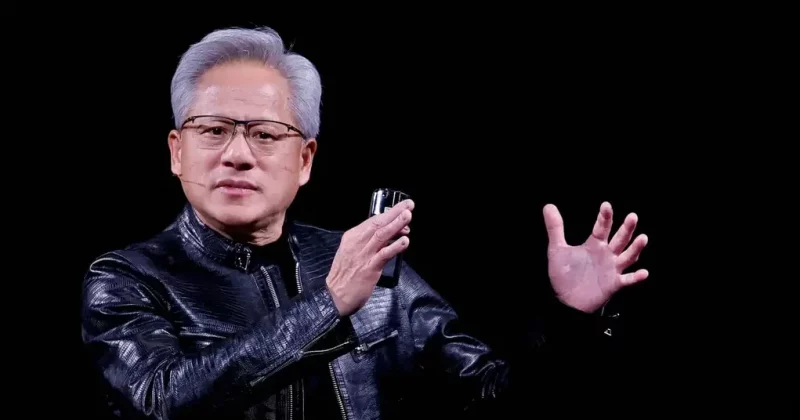
Nvidia CEO Jensen Huang met with LG Group Chairman Koo Kwang-mo in Seoul on June 8 to announce a partnership that spans humanoid robotics, autonomous driving, and the physical architecture of next-generation data centers. The deal pairs Nvidia’s full-stack AI factory platform with LG’s deep bench in hardware manufacturing, motor technology, and consumer electronics.
What the partnership actually covers
The collaboration targets what Nvidia calls “physical AI,” a term the company uses to describe artificial intelligence that operates in real-world environments rather than purely digital ones.
On the robotics side, Nvidia and LG will co-develop motor technology and mechanical systems for humanoid robots. Nvidia brings Isaac Sim and Isaac Lab, its simulation and training frameworks that let developers build, test, and refine robotic behaviors in virtual environments before deploying them in the real world.
The data center component includes collaboration on the architectural design of future data centers, covering cooling systems and power delivery. The partnership also extends to GPU cloud services and autonomous driving technologies.
Why Nvidia is chasing physical AI
Physical AI represents a significant expansion of Nvidia’s addressable market beyond GPU sales to cloud providers and enterprise customers. The LG partnership is a concrete step toward embedding Nvidia’s software and hardware stack into robots, autonomous vehicles, and smart factories.
The news moving money, markets, and the world—before your day starts.
Daily. Free. Join 34,000+ readers across crypto, finance, and policy.
LG’s subsidiary LG Electronics has been investing in robotics for years, deploying service robots through its CLOi platform in hotels, restaurants, and retail environments. The partnership builds on an existing relationship between the two companies, which also aligns with Nvidia’s broader ecosystem strategy including partnerships with Samsung and SK hynix.
South Korea is one of the world’s most robotics-dense nations by industrial robot installations per capita, and its government has been aggressively funding AI and automation initiatives. Huang’s decision to announce this partnership in Seoul signals how seriously Nvidia views the Korean market as a strategic hub.
What this means for investors
The data center architecture angle is particularly notable. Cooling and power delivery are the constraints that determine how many GPUs you can pack into a facility. If Nvidia can help design data centers optimized specifically for its hardware, it creates vertical integration that makes it harder for customers to switch to competing chips.
The inclusion of specific technical workstreams — motor systems, cooling architecture, Isaac platform integration — suggests this is more than a press release partnership. Execution risk in robotics is real, however, and no company has yet commercialized humanoid robots at scale.