
Nexo Earn with Nexo
Nvidia enters the personal computer market with a new AI chip, challenging Intel and AMD

Nvidia enters the personal computer market with a new AI chip, challenging Intel and AMD

The RTX Spark Superchip marks Nvidia's first serious attempt at a PC processor in over a decade, with Dell, HP, Lenovo, and Microsoft already signed on as launch partners.


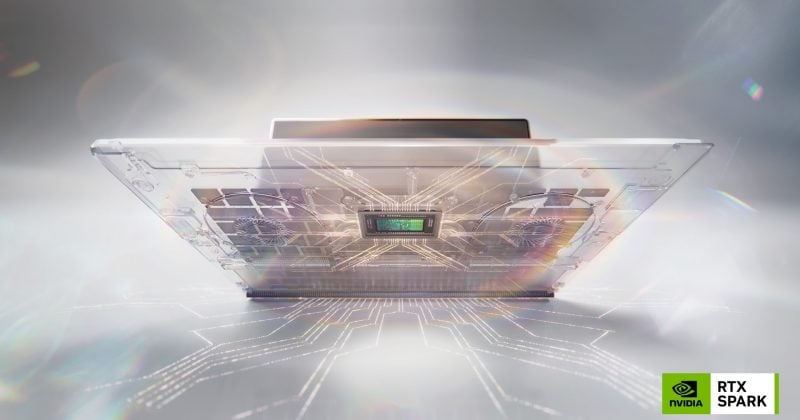
Nvidia just declared war on the two companies that have owned the PC processor market for decades. The GPU giant announced the RTX Spark Superchip at its GTC Taipei keynote on June 1, an Arm-based chip that combines CPU and GPU functions into a single package designed for on-device AI.

What the RTX Spark Superchip actually is

The Spark Superchip is built on Arm architecture, not the x86 instruction set that Intel and AMD have relied on for decades. It integrates both CPU and GPU capabilities into one chip, specifically engineered to run AI workloads locally on a personal computer.

Nvidia CEO Jensen Huang didn’t mince words about the ambition behind the product.

“This is going to be the new PC.”

Advertisement

The chip targets everything from traditional productivity and gaming to the more advanced local AI features that are increasingly becoming table stakes in modern computing. Specific performance benchmarks and pricing were not revealed during the keynote.

PCs powered by the RTX Spark Superchip are expected to hit shelves in fall 2026. The launch partner list reads like a who’s who of the PC industry: Dell, HP, Microsoft, Lenovo, ASUS, and MSI are all building Windows laptops and desktops around the new silicon.

The Microsoft partnership is particularly noteworthy. The two companies are collaborating to, as they put it, “reinvent the PC” for the AI era.

A second act, a decade in the making

This isn’t actually Nvidia’s first rodeo in the PC processor space. The company tried to break into the market over a decade ago and came up short. That earlier attempt faded into a footnote while Nvidia pivoted to what became its golden goose: GPUs for gaming and, eventually, for AI training in data centers.

The difference this time is context. When Nvidia last tried to sell PC processors, the AI revolution hadn’t happened yet. Apple proved with its M-series chips that Arm-based processors could outperform x86 designs in power efficiency while delivering competitive raw performance. Qualcomm has been pushing its own Arm-based Snapdragon X chips into Windows PCs.

What this means for investors

If the Spark gains meaningful traction, it could pressure Intel and AMD on two fronts simultaneously. First, it introduces a credible Arm-based alternative to their x86 offerings. Second, it bundles Nvidia’s GPU and AI technology directly into the main system processor, something neither competitor can replicate with the same level of AI pedigree.

For those watching the competitive landscape, Intel is the most exposed. The company has been struggling with manufacturing delays and losing data center market share to Nvidia for years. AMD, which has been gaining ground with its Ryzen processors and also sells discrete GPUs, faces a more nuanced threat.

The risk, of course, is execution. Nvidia has never shipped a mass-market PC processor at scale. Nvidia doesn’t control Windows. Microsoft does. That partnership will need to be airtight for the Spark to deliver on its promise.

Disclosure: This article was edited by Editorial Team. For more information on how we create and review content, see our Editorial Policy.

Nvidia enters the personal computer market with a new AI chip, challenging Intel and AMD

Nvidia enters the personal computer market with a new AI chip, challenging Intel and AMD

The RTX Spark Superchip marks Nvidia's first serious attempt at a PC processor in over a decade, with Dell, HP, Lenovo, and Microsoft already signed on as launch partners.

Nvidia just declared war on the two companies that have owned the PC processor market for decades. The GPU giant announced the RTX Spark Superchip at its GTC Taipei keynote on June 1, an Arm-based chip that combines CPU and GPU functions into a single package designed for on-device AI.

What the RTX Spark Superchip actually is

The Spark Superchip is built on Arm architecture, not the x86 instruction set that Intel and AMD have relied on for decades. It integrates both CPU and GPU capabilities into one chip, specifically engineered to run AI workloads locally on a personal computer.

Nvidia CEO Jensen Huang didn’t mince words about the ambition behind the product.

“This is going to be the new PC.”

Advertisement

The chip targets everything from traditional productivity and gaming to the more advanced local AI features that are increasingly becoming table stakes in modern computing. Specific performance benchmarks and pricing were not revealed during the keynote.

PCs powered by the RTX Spark Superchip are expected to hit shelves in fall 2026. The launch partner list reads like a who’s who of the PC industry: Dell, HP, Microsoft, Lenovo, ASUS, and MSI are all building Windows laptops and desktops around the new silicon.

The Microsoft partnership is particularly noteworthy. The two companies are collaborating to, as they put it, “reinvent the PC” for the AI era.

A second act, a decade in the making

This isn’t actually Nvidia’s first rodeo in the PC processor space. The company tried to break into the market over a decade ago and came up short. That earlier attempt faded into a footnote while Nvidia pivoted to what became its golden goose: GPUs for gaming and, eventually, for AI training in data centers.

The difference this time is context. When Nvidia last tried to sell PC processors, the AI revolution hadn’t happened yet. Apple proved with its M-series chips that Arm-based processors could outperform x86 designs in power efficiency while delivering competitive raw performance. Qualcomm has been pushing its own Arm-based Snapdragon X chips into Windows PCs.

What this means for investors

If the Spark gains meaningful traction, it could pressure Intel and AMD on two fronts simultaneously. First, it introduces a credible Arm-based alternative to their x86 offerings. Second, it bundles Nvidia’s GPU and AI technology directly into the main system processor, something neither competitor can replicate with the same level of AI pedigree.

For those watching the competitive landscape, Intel is the most exposed. The company has been struggling with manufacturing delays and losing data center market share to Nvidia for years. AMD, which has been gaining ground with its Ryzen processors and also sells discrete GPUs, faces a more nuanced threat.

The risk, of course, is execution. Nvidia has never shipped a mass-market PC processor at scale. Nvidia doesn’t control Windows. Microsoft does. That partnership will need to be airtight for the Spark to deliver on its promise.

Disclosure: This article was edited by Editorial Team. For more information on how we create and review content, see our Editorial Policy.