
Nexo Earn with Nexo
Nvidia’s Vera Rubin rack priced at $7.8M, nearly double the Blackwell generation

Nvidia’s Vera Rubin rack priced at $7.8M, nearly double the Blackwell generation

A 435% surge in memory costs is the biggest culprit behind the sticker shock on Nvidia's next-generation AI infrastructure.

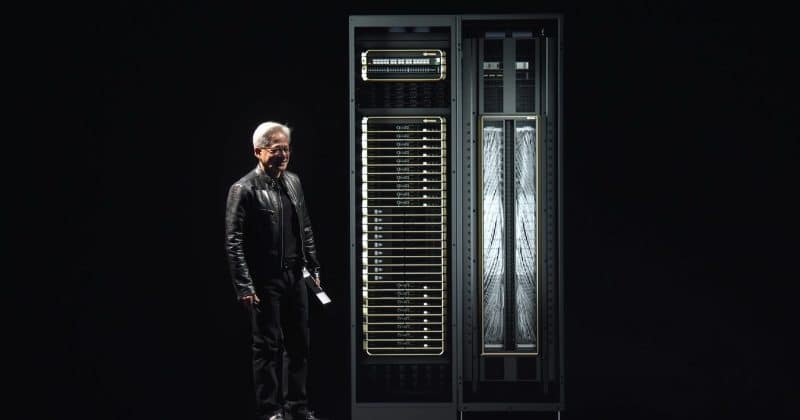
If you thought AI infrastructure was already expensive, Nvidia just raised the bar. The company’s upcoming Vera Rubin NVL72 rack, its next-generation AI supercomputing system, carries an estimated bill-of-materials cost of $7.8 million, according to Morgan Stanley analyst estimates.

That’s roughly double the $3.5 million to $4 million price tag attached to the current Blackwell NVL72 racks. And the single biggest reason for the jump isn’t the GPUs themselves. It’s the memory.

Memory costs are doing the heavy lifting

High-bandwidth memory, specifically HBM4 and LPDDR5X, has seen a 435% price increase in the new rack design. In dollar terms, memory components now account for approximately $2 million per rack, representing about 25-26% of the total system cost.

Advertisement

GPU costs haven’t stayed flat either, climbing 57% compared to the Blackwell generation. Other components piled on: printed circuit boards saw increases of up to 233%. Memory demand is driven by robust demand and persistent supply constraints in the semiconductor ecosystem.

Each Vera Rubin rack packs 72 Rubin GPUs paired with 36 Vera CPUs, a configuration that demands significantly more memory content than its predecessor.

What you get for $7.8 million

The Vera Rubin platform represents a fundamental shift toward what the company calls full-stack AI systems, integrating its next-generation Rubin GPUs with proprietary Vera CPUs in a single rack-scale design optimized for agentic AI workloads.

The performance claims are significant. Nvidia says the system can handle Mixture-of-Experts training, a popular architecture behind frontier AI models, with four times fewer GPUs than the Blackwell series. Inference costs, meanwhile, are reportedly ten times lower per million tokens compared to Blackwell.

Initial shipments of Vera CPU racks have already gone out to Anthropic, OpenAI, SpaceX, and Oracle. Volume production is targeted for Q4 2026, following initial deliveries planned for Q3 of the same year.

The bigger picture for AI infrastructure spending

Memory suppliers are in an enviable position. HBM4 is a cutting-edge technology with limited manufacturing capacity, and every major AI chip designer wants as much of it as they can get. That supply-demand imbalance is showing up directly in rack-level pricing. When memory goes from a supporting role to 25% of a rack’s total cost, that’s a structural shift in where profits accumulate.

Disclosure: This article was edited by Editorial Team. For more information on how we create and review content, see our Editorial Policy.

Nvidia’s Vera Rubin rack priced at $7.8M, nearly double the Blackwell generation

Nvidia’s Vera Rubin rack priced at $7.8M, nearly double the Blackwell generation

A 435% surge in memory costs is the biggest culprit behind the sticker shock on Nvidia's next-generation AI infrastructure.

If you thought AI infrastructure was already expensive, Nvidia just raised the bar. The company’s upcoming Vera Rubin NVL72 rack, its next-generation AI supercomputing system, carries an estimated bill-of-materials cost of $7.8 million, according to Morgan Stanley analyst estimates.

That’s roughly double the $3.5 million to $4 million price tag attached to the current Blackwell NVL72 racks. And the single biggest reason for the jump isn’t the GPUs themselves. It’s the memory.

Memory costs are doing the heavy lifting

High-bandwidth memory, specifically HBM4 and LPDDR5X, has seen a 435% price increase in the new rack design. In dollar terms, memory components now account for approximately $2 million per rack, representing about 25-26% of the total system cost.

Advertisement

GPU costs haven’t stayed flat either, climbing 57% compared to the Blackwell generation. Other components piled on: printed circuit boards saw increases of up to 233%. Memory demand is driven by robust demand and persistent supply constraints in the semiconductor ecosystem.

Each Vera Rubin rack packs 72 Rubin GPUs paired with 36 Vera CPUs, a configuration that demands significantly more memory content than its predecessor.

What you get for $7.8 million

The Vera Rubin platform represents a fundamental shift toward what the company calls full-stack AI systems, integrating its next-generation Rubin GPUs with proprietary Vera CPUs in a single rack-scale design optimized for agentic AI workloads.

The performance claims are significant. Nvidia says the system can handle Mixture-of-Experts training, a popular architecture behind frontier AI models, with four times fewer GPUs than the Blackwell series. Inference costs, meanwhile, are reportedly ten times lower per million tokens compared to Blackwell.

Initial shipments of Vera CPU racks have already gone out to Anthropic, OpenAI, SpaceX, and Oracle. Volume production is targeted for Q4 2026, following initial deliveries planned for Q3 of the same year.

The bigger picture for AI infrastructure spending

Memory suppliers are in an enviable position. HBM4 is a cutting-edge technology with limited manufacturing capacity, and every major AI chip designer wants as much of it as they can get. That supply-demand imbalance is showing up directly in rack-level pricing. When memory goes from a supporting role to 25% of a rack’s total cost, that’s a structural shift in where profits accumulate.

Disclosure: This article was edited by Editorial Team. For more information on how we create and review content, see our Editorial Policy.