
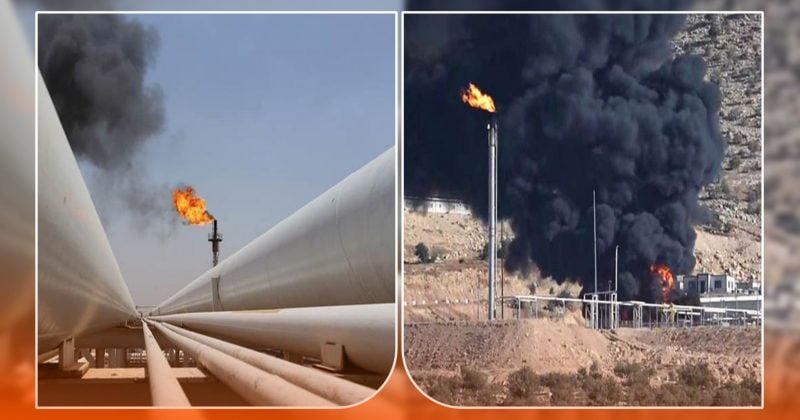
International oil firms halt production in Iraq’s Kurdistan amid US-Iran tensions

International oil firms halt production in Iraq’s Kurdistan amid US-Iran tensions

Major operators suspend roughly 125,000 barrels per day as geopolitical risk ripples through energy markets and beyond

Three major international oil companies shut down operations across Iraq’s Kurdistan region after escalating military tensions between the US and Iran turned the area into a no-go zone for energy producers. The suspensions removed approximately 125,000 barrels per day from global supply, roughly 45% of the region’s pre-conflict output.

Norway’s DNO, the UK’s Gulf Keystone Petroleum, and US-based HKN Energy all pulled the plug on production as a precautionary measure following missile strikes tied to the broader US-Iran confrontation.

Advertisement

What got shut down, and how much it matters

DNO announced its suspension on February 28, 2026, citing the deteriorating security environment. Gulf Keystone halted its Shaikan field, which had been producing around 41,500 barrels per day. HKN Energy shut down operations at both its Atrush and Sarsang sites.

Iraq completely suspended Kirkuk crude production, which had previously averaged around 220,000 barrels per day, to mitigate risks from regional attacks. Combined with the Kurdistan shutdowns, that’s roughly 345,000 barrels per day removed from the market in a matter of days.

By June 2026, Iraqi authorities had instructed oil companies to resume operations in Kurdistan, signaling a potential return to normalcy. By March 2026, some firms had already received directives to restart their operations.

Disclosure: This article was edited by Editorial Team. For more information on how we create and review content, see our Editorial Policy.

International oil firms halt production in Iraq’s Kurdistan amid US-Iran tensions

International oil firms halt production in Iraq’s Kurdistan amid US-Iran tensions

Major operators suspend roughly 125,000 barrels per day as geopolitical risk ripples through energy markets and beyond

Three major international oil companies shut down operations across Iraq’s Kurdistan region after escalating military tensions between the US and Iran turned the area into a no-go zone for energy producers. The suspensions removed approximately 125,000 barrels per day from global supply, roughly 45% of the region’s pre-conflict output.

Norway’s DNO, the UK’s Gulf Keystone Petroleum, and US-based HKN Energy all pulled the plug on production as a precautionary measure following missile strikes tied to the broader US-Iran confrontation.

Advertisement

What got shut down, and how much it matters

DNO announced its suspension on February 28, 2026, citing the deteriorating security environment. Gulf Keystone halted its Shaikan field, which had been producing around 41,500 barrels per day. HKN Energy shut down operations at both its Atrush and Sarsang sites.

Iraq completely suspended Kirkuk crude production, which had previously averaged around 220,000 barrels per day, to mitigate risks from regional attacks. Combined with the Kurdistan shutdowns, that’s roughly 345,000 barrels per day removed from the market in a matter of days.

By June 2026, Iraqi authorities had instructed oil companies to resume operations in Kurdistan, signaling a potential return to normalcy. By March 2026, some firms had already received directives to restart their operations.

Disclosure: This article was edited by Editorial Team. For more information on how we create and review content, see our Editorial Policy.