
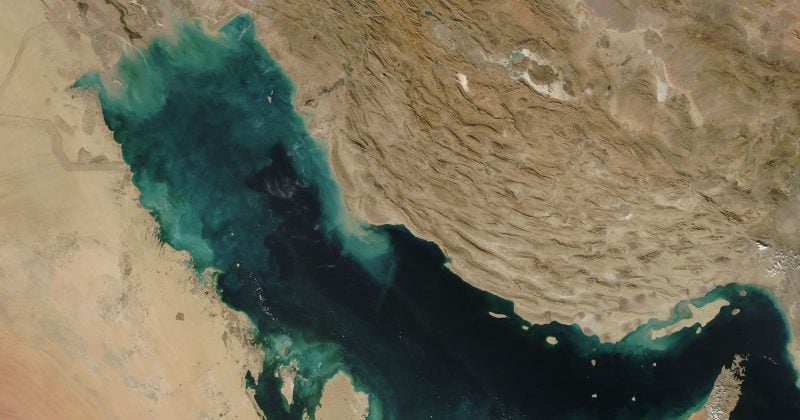
Oil tanker disabled by fire in Persian Gulf as Strait of Hormuz threat level hits ‘severe’

Oil tanker disabled by fire in Persian Gulf as Strait of Hormuz threat level hits ‘severe’

The latest escalation in the US-Iran standoff is rattling oil markets and pushing Iran toward digital currency workarounds for strait transit fees.

At least three commercial oil tankers were struck by projectiles while transiting the Strait of Hormuz on July 7, with one vessel catching fire after a hit to its port side engine room near Limah, Oman. The Joint Maritime Information Center responded by raising the threat level in the strait to “severe,” a classification that carries real consequences for global energy flows and, increasingly, for crypto markets.

No casualties were reported. But the incident marks a sharp escalation in the standoff between the US and Iran over a naval blockade that has been disrupting one of the world’s most critical oil chokepoints since April.

What happened and why it matters

The US-led naval blockade of Iranian ports launched in April 2026 was designed to choke off Tehran’s oil revenue. Iran has responded by challenging the blockade repeatedly, leading to multiple incidents involving disabled vessels over the past several months. The July 7 attack fits that pattern, but the severity is new.

Advertisement

One tanker ignited after a projectile penetrated its engine room. Two others were also hit. The JMIC noted that an expanded southern route near Oman remained available for commercial vessels.

Washington revoked a license for Iranian oil sales shortly before the attacks, a move that likely accelerated the confrontation.

The crypto angle hiding in plain sight

Iran has been demanding payments in digital currencies or Chinese yuan from vessels seeking safe passage through the Strait of Hormuz. This has been happening throughout 2026 as tensions have escalated.

When you’re under heavy US sanctions and your banking system is largely cut off from SWIFT, traditional payment rails don’t work. Crypto does.

The precedent matters. Every time a sanctioned nation successfully uses crypto to facilitate real economic activity, it validates the technology’s utility as a parallel financial system. It also gives regulators in Washington and Brussels fresh ammunition for tighter oversight of on-chain transactions.

What investors should watch

Watch on-chain flows to Iranian-linked wallets. Blockchain analytics firms have been tracking sanctioned entity transactions with increasing sophistication, and a spike in inflows to known Iranian addresses would confirm that the digital payment channel for strait transit is scaling.

Traders positioning around this event should focus less on the attack itself and more on the policy response. If Washington moves to crack down on crypto payments tied to Iranian transit fees, specific tokens and platforms with high exposure to non-KYC volume could face pressure.

Disclosure: This article was edited by Editorial Team. For more information on how we create and review content, see our Editorial Policy.

Oil tanker disabled by fire in Persian Gulf as Strait of Hormuz threat level hits ‘severe’

Oil tanker disabled by fire in Persian Gulf as Strait of Hormuz threat level hits ‘severe’

The latest escalation in the US-Iran standoff is rattling oil markets and pushing Iran toward digital currency workarounds for strait transit fees.

At least three commercial oil tankers were struck by projectiles while transiting the Strait of Hormuz on July 7, with one vessel catching fire after a hit to its port side engine room near Limah, Oman. The Joint Maritime Information Center responded by raising the threat level in the strait to “severe,” a classification that carries real consequences for global energy flows and, increasingly, for crypto markets.

No casualties were reported. But the incident marks a sharp escalation in the standoff between the US and Iran over a naval blockade that has been disrupting one of the world’s most critical oil chokepoints since April.

What happened and why it matters

The US-led naval blockade of Iranian ports launched in April 2026 was designed to choke off Tehran’s oil revenue. Iran has responded by challenging the blockade repeatedly, leading to multiple incidents involving disabled vessels over the past several months. The July 7 attack fits that pattern, but the severity is new.

Advertisement

One tanker ignited after a projectile penetrated its engine room. Two others were also hit. The JMIC noted that an expanded southern route near Oman remained available for commercial vessels.

Washington revoked a license for Iranian oil sales shortly before the attacks, a move that likely accelerated the confrontation.

The crypto angle hiding in plain sight

Iran has been demanding payments in digital currencies or Chinese yuan from vessels seeking safe passage through the Strait of Hormuz. This has been happening throughout 2026 as tensions have escalated.

When you’re under heavy US sanctions and your banking system is largely cut off from SWIFT, traditional payment rails don’t work. Crypto does.

The precedent matters. Every time a sanctioned nation successfully uses crypto to facilitate real economic activity, it validates the technology’s utility as a parallel financial system. It also gives regulators in Washington and Brussels fresh ammunition for tighter oversight of on-chain transactions.

What investors should watch

Watch on-chain flows to Iranian-linked wallets. Blockchain analytics firms have been tracking sanctioned entity transactions with increasing sophistication, and a spike in inflows to known Iranian addresses would confirm that the digital payment channel for strait transit is scaling.

Traders positioning around this event should focus less on the attack itself and more on the policy response. If Washington moves to crack down on crypto payments tied to Iranian transit fees, specific tokens and platforms with high exposure to non-KYC volume could face pressure.

Disclosure: This article was edited by Editorial Team. For more information on how we create and review content, see our Editorial Policy.