
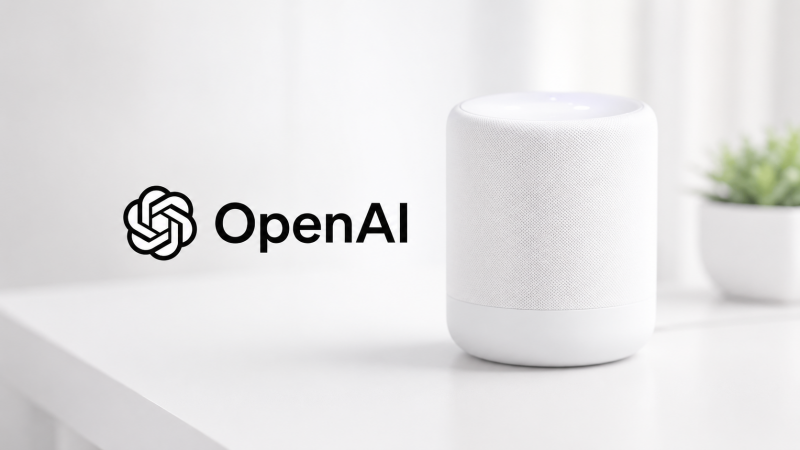
OpenAI plans screen free smart speaker as first consumer device
The portable device will use cameras and sensors to understand its surroundings as OpenAI moves deeper into competition with Apple Google and Amazon.


OpenAI plans to enter the consumer hardware market with a portable screen free smart speaker designed to bring ChatGPT into the home, according to a Bloomberg report.
The device is expected to control smart home appliances, play media, answer questions and respond to messages. It will include a camera and other sensors that allow it to understand its surroundings and provide responses based on a user’s immediate context.
A rechargeable battery will allow users to carry the speaker between rooms rather than keeping it permanently connected in one location. OpenAI reportedly wants the product to become more personalized and proactive as it learns about its owner over time.
The company views the device as a new type of home computer rather than a conventional smart speaker. It is designed to anticipate user needs, surface information and act as a physical extension of ChatGPT.
OpenAI plans to unveil the device this year before releasing it in 2027, although the schedule could change as development continues. Earlier reports said the speaker would not begin shipping before February 2027.
AI, tech, and the markets they move—in one daily briefing.
Daily. Free. Join 34,000+ readers across crypto, finance, and policy.
The product is being developed with former Apple design chief Jony Ive and his design studio LoveFrom. OpenAI completed its acquisition of io Products last year in a deal valued at approximately $6.5 billion, bringing the startup’s hardware and engineering team into the company.
Ive and LoveFrom retained their independence while taking on broader design and creative responsibilities across OpenAI. The io team was founded by Ive alongside former Apple designers Scott Cannon, Evans Hankey and Tang Tan.
The speaker is expected to be the first of several products under development at OpenAI’s hardware division. The company has also explored wearable devices, home robotics and a mobile AI product that could eventually compete more directly with smartphones.
The hardware push comes as Apple sues OpenAI and two former employees, alleging that the company used misappropriated trade secrets to accelerate its consumer device plans. Apple is seeking court action that could delay OpenAI’s hardware rollout.
OpenAI has rejected the allegations, saying it has no interest in other companies’ trade secrets and is focused on developing its own technology.