
Nexo Earn with Nexo
OpenAI aims for speedy IPO amid competitive landscape

OpenAI aims for speedy IPO amid competitive landscape

The ChatGPT maker plans to file as early as September, targeting up to $60 billion in what could become the largest tech IPO in history.

OpenAI is preparing to go public, and it’s not exactly tiptoeing toward the exit. The company behind ChatGPT plans to confidentially file for a US IPO as early as September, with a public debut targeted for fall 2026 and a fundraising goal of up to $60 billion.

To put that number in perspective, Saudi Aramco’s 2019 IPO raised about $25.6 billion and held the record for years. OpenAI is aiming to more than double that figure, which would make it the largest tech IPO ever attempted, and one of the biggest public offerings of any kind.

From nonprofit to trillion-dollar ambition

The path to an IPO has required OpenAI to fundamentally reinvent its corporate identity. The company is in the process of transitioning from a nonprofit to a for-profit public benefit corporation, a structural shift that has drawn scrutiny from critics who question whether the move betrays OpenAI’s founding mission of developing AI “for the benefit of humanity.”

Advertisement

Current valuations for the company sit somewhere between $500 billion and $850 billion, depending on whose math you trust. Some projections suggest OpenAI could surpass a $1 trillion valuation after listing. That would place it in the same neighborhood as the world’s most valuable public companies, a rarefied club that currently includes Apple, Microsoft, Nvidia, and a handful of others.

Microsoft, for its part, holds a significant minority stake in OpenAI and has invested tens of billions into the company’s development. The IPO will have meaningful economic implications for that partnership, though the exact mechanics of how Microsoft’s stake converts in a public market structure remain a subject of close attention from investors.

The competitive pressure driving the timeline

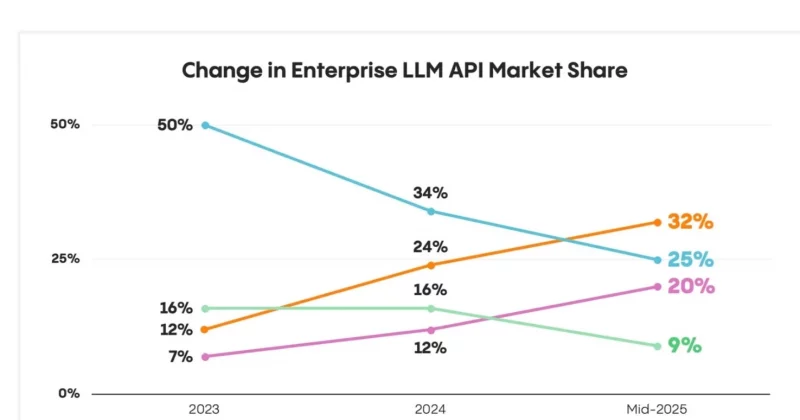
OpenAI’s urgency isn’t hard to decode. The AI landscape has gotten dramatically more crowded since ChatGPT first captured public imagination in late 2022.

Google has been aggressively scaling its Gemini models. Meta is pouring resources into open-source AI through its Llama family of models. Anthropic, backed by Amazon and Google, has positioned Claude as a serious enterprise competitor.

What this means for crypto and AI-adjacent investors

OpenAI has no native crypto token and has given no indication it plans to issue one. For the crypto market, the IPO’s relevance is indirect but real.

AI-themed tokens have become one of the most actively traded narrative sectors in digital assets. Projects building decentralized compute networks, AI agent frameworks, and machine learning marketplaces have seen significant speculative interest, much of it riding the coattails of OpenAI’s cultural dominance. A successful IPO that validates OpenAI at a trillion-dollar-plus valuation would likely amplify that narrative further, giving traders another reason to bid up tokens loosely associated with artificial intelligence.

The corporate structure transition also introduces governance questions. Public benefit corporations have a legal obligation to balance shareholder returns with broader social impact, a dual mandate that sounds noble but can create tension in practice. Investors will want clarity on how OpenAI plans to navigate that balance, especially when decisions about model safety, access, and pricing could pit profitability against the company’s stated mission.

Disclosure: This article was edited by Editorial Team. For more information on how we create and review content, see our Editorial Policy.

OpenAI aims for speedy IPO amid competitive landscape

OpenAI aims for speedy IPO amid competitive landscape

The ChatGPT maker plans to file as early as September, targeting up to $60 billion in what could become the largest tech IPO in history.

OpenAI is preparing to go public, and it’s not exactly tiptoeing toward the exit. The company behind ChatGPT plans to confidentially file for a US IPO as early as September, with a public debut targeted for fall 2026 and a fundraising goal of up to $60 billion.

To put that number in perspective, Saudi Aramco’s 2019 IPO raised about $25.6 billion and held the record for years. OpenAI is aiming to more than double that figure, which would make it the largest tech IPO ever attempted, and one of the biggest public offerings of any kind.

From nonprofit to trillion-dollar ambition

The path to an IPO has required OpenAI to fundamentally reinvent its corporate identity. The company is in the process of transitioning from a nonprofit to a for-profit public benefit corporation, a structural shift that has drawn scrutiny from critics who question whether the move betrays OpenAI’s founding mission of developing AI “for the benefit of humanity.”

Advertisement

Current valuations for the company sit somewhere between $500 billion and $850 billion, depending on whose math you trust. Some projections suggest OpenAI could surpass a $1 trillion valuation after listing. That would place it in the same neighborhood as the world’s most valuable public companies, a rarefied club that currently includes Apple, Microsoft, Nvidia, and a handful of others.

Microsoft, for its part, holds a significant minority stake in OpenAI and has invested tens of billions into the company’s development. The IPO will have meaningful economic implications for that partnership, though the exact mechanics of how Microsoft’s stake converts in a public market structure remain a subject of close attention from investors.

The competitive pressure driving the timeline

OpenAI’s urgency isn’t hard to decode. The AI landscape has gotten dramatically more crowded since ChatGPT first captured public imagination in late 2022.

Google has been aggressively scaling its Gemini models. Meta is pouring resources into open-source AI through its Llama family of models. Anthropic, backed by Amazon and Google, has positioned Claude as a serious enterprise competitor.

What this means for crypto and AI-adjacent investors

OpenAI has no native crypto token and has given no indication it plans to issue one. For the crypto market, the IPO’s relevance is indirect but real.

AI-themed tokens have become one of the most actively traded narrative sectors in digital assets. Projects building decentralized compute networks, AI agent frameworks, and machine learning marketplaces have seen significant speculative interest, much of it riding the coattails of OpenAI’s cultural dominance. A successful IPO that validates OpenAI at a trillion-dollar-plus valuation would likely amplify that narrative further, giving traders another reason to bid up tokens loosely associated with artificial intelligence.

The corporate structure transition also introduces governance questions. Public benefit corporations have a legal obligation to balance shareholder returns with broader social impact, a dual mandate that sounds noble but can create tension in practice. Investors will want clarity on how OpenAI plans to navigate that balance, especially when decisions about model safety, access, and pricing could pit profitability against the company’s stated mission.

Disclosure: This article was edited by Editorial Team. For more information on how we create and review content, see our Editorial Policy.