
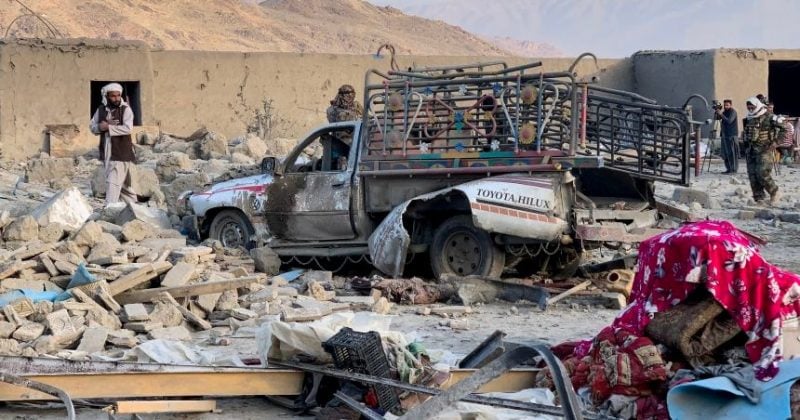
Pakistan launches air strikes in Afghanistan, reigniting tensions across the region
Deadly strikes in three Afghan provinces kill at least 13 civilians according to Taliban officials, while Pakistan claims 26 militants eliminated in targeted operations.
Pakistan launched a series of air strikes across three Afghan provinces on June 10, 2026, marking another violent escalation in a conflict that has been simmering for months. The strikes hit targets in Khost, Kunar, and Paktika provinces, and the casualty numbers, as usual, depend entirely on who you ask.
The Afghan Taliban reported at least 13 people killed, including 11 children, one woman, and one elderly man, with another 14 injured in what they describe as strikes on residential areas. Pakistan’s military tells a very different story: 26 militants killed across seven camps linked to the Tehrik-i-Taliban Pakistan, or TTP. The gap between “26 militants” and “11 children” is not just a discrepancy. It’s the entire conflict in miniature.
A conflict that keeps escalating
This didn’t come out of nowhere. Pakistan conducted air strikes in Afghanistan back in late February 2026, an operation severe enough that the Taliban declared what amounted to “open war” in response. Pakistan then launched Operation Ghazab lil Haq, a military campaign aimed at rooting out TTP fighters it says are sheltering across the border in Afghan territory.
The TTP is a Pakistani militant group that has carried out numerous attacks inside Pakistan over the years. Pakistan’s central grievance is straightforward: the Afghan Taliban government either can’t or won’t stop TTP fighters from using Afghan soil as a staging ground for cross-border attacks.
Previous clashes were reported as recently as October 2025, meaning these two neighbors have been trading fire for the better part of a year.
The news moving money, markets, and the world—before your day starts.
Daily. Free. Join 34,000+ readers across crypto, finance, and policy.
The bigger geopolitical picture
Pakistan frames its strikes as precision operations against known militant infrastructure. Seven TTP-linked camps targeted, 26 fighters killed. The Taliban’s version, 11 dead children in residential neighborhoods, tells the story of indiscriminate bombardment of civilian areas.
What’s notable is the trajectory. From isolated border skirmishes to full-scale air strikes across multiple provinces, with a named military operation underway, this is no longer a low-level border dispute. It’s an active military conflict between a recognized state and a de facto government, with civilians caught in between.
What this means for crypto markets and investors
No tokens were referenced in connection with these events, and crypto markets haven’t shown measurable reactions to the escalation so far.
Pakistan’s economy has been navigating IMF bailout conditions, currency instability, and inflation pressures. A sustained military campaign adds fiscal strain, and any deterioration in Pakistan’s economic outlook could influence regional capital flows. The Pakistan-Afghanistan corridor handles significant cross-border money flows, much of it informal. If formal channels tighten further due to conflict, alternative rails become more attractive.