
Nexo Earn with Nexo
Palestinian Football Association head stuck in Mexico City awaiting US visa for World Cup

Palestinian Football Association head stuck in Mexico City awaiting US visa for World Cup

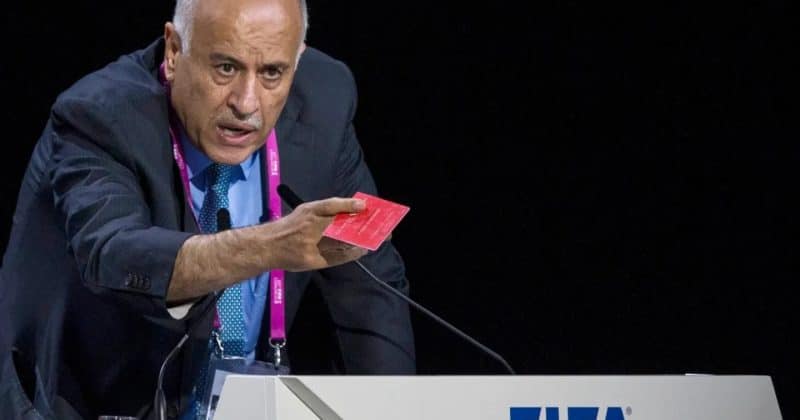
Jibril Rajoub attended the tournament's opening match but remains unable to cross into the United States as visa delays highlight the collision of sports and geopolitics at the 2026 World Cup.

The 2026 FIFA World Cup is supposed to be the biggest, most inclusive edition of the tournament ever staged. Forty-eight teams, three host nations, and a whole lot of rhetoric about football uniting the world. But for the head of the Palestinian Football Association, the “united” part is proving aspirational at best.

Jibril Rajoub, the PFA’s president, is currently stranded in Mexico City, waiting for the United States to grant him a visa so he can attend World Cup matches on American soil. He was present at the tournament’s opening match on June 12, a contest between Mexico and South Africa. But crossing the border northward? That requires paperwork the US government hasn’t been in a rush to process.

A pattern, not an isolated incident

This isn’t the first time Rajoub and his colleagues have hit a wall trying to attend FIFA events in North America this year. Back in April, Canada denied visas to three PFA officials, including Rajoub, who were attempting to attend the FIFA Congress in Vancouver on April 30.

Advertisement

The PFA has reached out to FIFA for help in both cases, essentially asking the sport’s global governing body to use whatever leverage it has with host nation governments.

FIFA President Gianni Infantino addressed the situation publicly on June 10, two days before the tournament kicked off. His message was a diplomatic two-step: FIFA is committed to resolving these matters, but it is ultimately bound by the travel restrictions imposed by host nations.

FIFA accreditation vs. government authority

Rajoub holds FIFA accreditation for the World Cup. But accreditation and a visa are two very different documents issued by two very different authorities. One comes from a Swiss-based sports organization. The other comes from a national government with its own security protocols, foreign policy considerations, and political calculations.

The 2026 World Cup, spread across the US, Canada, and Mexico, introduces a layer of complexity that single-host tournaments don’t face. Officials and fans need to navigate up to three different immigration systems, each with its own rules and each capable of independently blocking access.

Where sports meets geopolitics

Rajoub himself is not just a football administrator. He’s a prominent Palestinian political figure, which makes his visa applications inherently more complicated than those of other federation heads.

The US government has not publicly commented on the specific reasons for the delay. Visa processing decisions are typically treated as confidential matters, and the State Department rarely explains individual cases in public.

FIFA made inclusion a central selling point of its expanded 48-team format. That narrative gets complicated when the president of a member association can’t get into one of the three host countries. Infantino’s June 10 comments acknowledged as much, even if they stopped short of criticizing any government directly.

Disclosure: This article was edited by Editorial Team. For more information on how we create and review content, see our Editorial Policy.

Palestinian Football Association head stuck in Mexico City awaiting US visa for World Cup

Palestinian Football Association head stuck in Mexico City awaiting US visa for World Cup

Jibril Rajoub attended the tournament's opening match but remains unable to cross into the United States as visa delays highlight the collision of sports and geopolitics at the 2026 World Cup.

The 2026 FIFA World Cup is supposed to be the biggest, most inclusive edition of the tournament ever staged. Forty-eight teams, three host nations, and a whole lot of rhetoric about football uniting the world. But for the head of the Palestinian Football Association, the “united” part is proving aspirational at best.

Jibril Rajoub, the PFA’s president, is currently stranded in Mexico City, waiting for the United States to grant him a visa so he can attend World Cup matches on American soil. He was present at the tournament’s opening match on June 12, a contest between Mexico and South Africa. But crossing the border northward? That requires paperwork the US government hasn’t been in a rush to process.

A pattern, not an isolated incident

This isn’t the first time Rajoub and his colleagues have hit a wall trying to attend FIFA events in North America this year. Back in April, Canada denied visas to three PFA officials, including Rajoub, who were attempting to attend the FIFA Congress in Vancouver on April 30.

Advertisement

The PFA has reached out to FIFA for help in both cases, essentially asking the sport’s global governing body to use whatever leverage it has with host nation governments.

FIFA President Gianni Infantino addressed the situation publicly on June 10, two days before the tournament kicked off. His message was a diplomatic two-step: FIFA is committed to resolving these matters, but it is ultimately bound by the travel restrictions imposed by host nations.

FIFA accreditation vs. government authority

Rajoub holds FIFA accreditation for the World Cup. But accreditation and a visa are two very different documents issued by two very different authorities. One comes from a Swiss-based sports organization. The other comes from a national government with its own security protocols, foreign policy considerations, and political calculations.

The 2026 World Cup, spread across the US, Canada, and Mexico, introduces a layer of complexity that single-host tournaments don’t face. Officials and fans need to navigate up to three different immigration systems, each with its own rules and each capable of independently blocking access.

Where sports meets geopolitics

Rajoub himself is not just a football administrator. He’s a prominent Palestinian political figure, which makes his visa applications inherently more complicated than those of other federation heads.

The US government has not publicly commented on the specific reasons for the delay. Visa processing decisions are typically treated as confidential matters, and the State Department rarely explains individual cases in public.

FIFA made inclusion a central selling point of its expanded 48-team format. That narrative gets complicated when the president of a member association can’t get into one of the three host countries. Infantino’s June 10 comments acknowledged as much, even if they stopped short of criticizing any government directly.

Disclosure: This article was edited by Editorial Team. For more information on how we create and review content, see our Editorial Policy.