
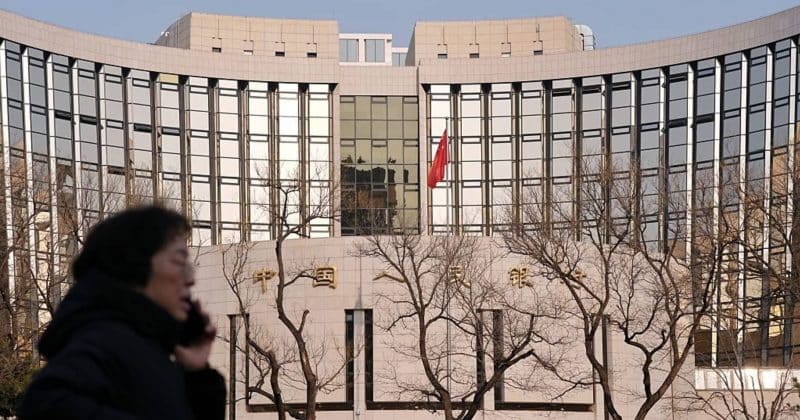
People’s Bank of China injects $44B in debut overnight reverse repo

People’s Bank of China injects $44B in debut overnight reverse repo

China's central bank launches a new short-term liquidity tool, initially withholding the interest rate in a move that caught markets off guard

The People’s Bank of China just added a new weapon to its monetary policy arsenal. On June 29, the PBOC executed its first-ever overnight reverse repo operation, pumping 300 billion yuan, roughly $44 billion, into China’s financial system.

Here’s the thing that rattled traders: the central bank didn’t specify the interest rate. Market observers had been expecting something in the 1.25% to 1.35% range, so the silence was, to put it mildly, conspicuous. The rate was later set at 1.25%, according to Reuters, landing at the floor of analyst expectations.

What an overnight reverse repo actually means

Think of a reverse repo as the central bank lending money to commercial banks for a very short period, using government bonds as collateral. The “overnight” part is new here. Previously, the PBOC’s shortest standard tool was its seven-day reverse repo, which it also conducted on June 29 at a steady rate of 1.4%, injecting an additional 157.5 billion yuan.

Advertisement

This matters because liquidity crunches in China’s interbank market tend to be sharpest at predictable pressure points, like month-end and quarter-end, when banks scramble to meet regulatory requirements. An overnight facility gives the PBOC much finer control over those spikes without having to send broader monetary policy signals that might be misinterpreted by global markets.

The PBOC had flagged this change four days earlier, announcing on June 25 that the overnight reverse repo was coming. So the tool itself wasn’t a surprise. The missing rate, however, was a different story.

Why the rate silence matters

The eventual 1.25% rate sits 15 basis points below the seven-day reverse repo rate of 1.4%. That spread is consistent with how overnight rates typically trade relative to weekly rates in most major economies, since shorter lending periods carry less risk. It suggests the PBOC is building a rate corridor that mirrors frameworks used by the Federal Reserve, the European Central Bank, and other major central banks.

What this means for investors

The seven-day reverse repo rate holding steady at 1.4% suggests the PBOC isn’t ready for an outright rate cut but wants more tactical flexibility. The overnight tool lets it respond to short-term stress without adjusting the headline policy rate, which would carry much larger signaling consequences for currency markets and capital flows.

For investors watching Chinese equities, the overnight repo should help reduce the kind of sudden liquidity squeezes that occasionally cause sharp but temporary selloffs in Shanghai and Shenzhen markets.

Disclosure: This article was edited by Editorial Team. For more information on how we create and review content, see our Editorial Policy.

People’s Bank of China injects $44B in debut overnight reverse repo

People’s Bank of China injects $44B in debut overnight reverse repo

China's central bank launches a new short-term liquidity tool, initially withholding the interest rate in a move that caught markets off guard

The People’s Bank of China just added a new weapon to its monetary policy arsenal. On June 29, the PBOC executed its first-ever overnight reverse repo operation, pumping 300 billion yuan, roughly $44 billion, into China’s financial system.

Here’s the thing that rattled traders: the central bank didn’t specify the interest rate. Market observers had been expecting something in the 1.25% to 1.35% range, so the silence was, to put it mildly, conspicuous. The rate was later set at 1.25%, according to Reuters, landing at the floor of analyst expectations.

What an overnight reverse repo actually means

Think of a reverse repo as the central bank lending money to commercial banks for a very short period, using government bonds as collateral. The “overnight” part is new here. Previously, the PBOC’s shortest standard tool was its seven-day reverse repo, which it also conducted on June 29 at a steady rate of 1.4%, injecting an additional 157.5 billion yuan.

Advertisement

This matters because liquidity crunches in China’s interbank market tend to be sharpest at predictable pressure points, like month-end and quarter-end, when banks scramble to meet regulatory requirements. An overnight facility gives the PBOC much finer control over those spikes without having to send broader monetary policy signals that might be misinterpreted by global markets.

The PBOC had flagged this change four days earlier, announcing on June 25 that the overnight reverse repo was coming. So the tool itself wasn’t a surprise. The missing rate, however, was a different story.

Why the rate silence matters

The eventual 1.25% rate sits 15 basis points below the seven-day reverse repo rate of 1.4%. That spread is consistent with how overnight rates typically trade relative to weekly rates in most major economies, since shorter lending periods carry less risk. It suggests the PBOC is building a rate corridor that mirrors frameworks used by the Federal Reserve, the European Central Bank, and other major central banks.

What this means for investors

The seven-day reverse repo rate holding steady at 1.4% suggests the PBOC isn’t ready for an outright rate cut but wants more tactical flexibility. The overnight tool lets it respond to short-term stress without adjusting the headline policy rate, which would carry much larger signaling consequences for currency markets and capital flows.

For investors watching Chinese equities, the overnight repo should help reduce the kind of sudden liquidity squeezes that occasionally cause sharp but temporary selloffs in Shanghai and Shenzhen markets.

Disclosure: This article was edited by Editorial Team. For more information on how we create and review content, see our Editorial Policy.