
Nexo Earn with Nexo
Peaq showcases delivery robot making onchain payments using USDT

Peaq showcases delivery robot making onchain payments using USDT

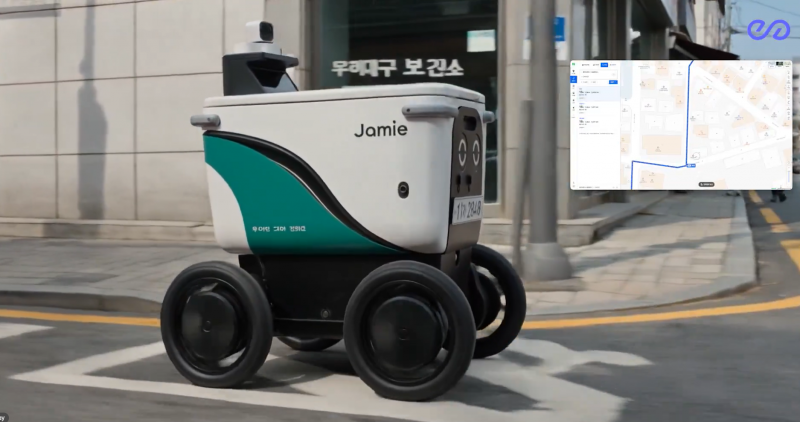
A simulated delivery robot navigated Seoul streets and settled payments autonomously onchain, marking a step toward machines that earn and spend without human involvement.


A delivery robot just paid for something onchain. No human wallet holder, no manual approval, no traditional invoicing. Just a machine completing a task in a simulated Seoul environment and settling the bill in USDT on its own.

The demonstration, announced on May 12, 2026, by peaq, a Layer 1 blockchain built for what it calls the “Machine Economy,” featured a Serve Robotics delivery bot navigating a simulated urban landscape via NAVER Maps, completing deliveries, and processing payments onchain using Tether’s Wallet Development Kit and Solana as a settlement layer. It’s one of those demos that sounds like science fiction until you realize the underlying infrastructure already exists.

How it actually works

The robot operated under peaqOS, the operating system peaq has developed for autonomous machines. Think of peaqOS as an Android for robots, except instead of running apps and syncing your calendar, it handles decentralized identity activation, embedded wallets, cryptographic attestations for trust verification, real-time task orchestration, and telemetry checks.

In English: the robot gets a blockchain-native identity, a built-in wallet, and the ability to verify that it actually did the job before collecting payment. All without calling home to a central server.

The Serve Robotics delivery bot wasn’t the only star of the show. A companion demonstration featured LG’s CLOi ServeBot operating within LG’s CLOiSim simulation environment. That robot handled a simulated hotel room service scenario, coordinating tasks, verifying telemetry data, and executing what peaq described as the first onchain transaction by an autonomous robot. Payments were settled in USDT using Tether’s Wallet Development Kit, which provides the embedded machine wallets that make this possible.

Advertisement

The concept peaq is pushing here is “pay-per-skill robotics.” Rather than a company purchasing a robot fleet and billing customers through traditional invoicing, each machine monetizes its individual capabilities directly. A robot delivers food, it gets paid. A robot cleans a hotel room, it gets paid. Each transaction is recorded onchain with a full audit trail.

It’s the gig economy, but the gig workers are machines and the payments settle in seconds on a blockchain.

The broader peaq ecosystem

Peaq positions itself as the infrastructure layer for Decentralized Physical Infrastructure Networks, commonly known as DePIN. The project says it hosts over 60 applications spanning more than 20 industries, with millions of devices connected onchain. That’s a sweeping claim, but the trajectory of the DePIN sector over the past two years lends it some plausibility.

The choice of Tether’s USDT for settlement is strategic rather than incidental. Stablecoins eliminate the volatility problem that would make autonomous machine payments impractical. A delivery robot can’t absorb a 15% price swing between accepting a job and getting paid. USDT provides the predictability that makes the entire model workable.

Similarly, the reference to Solana as a settlement layer in various workflows reflects a practical consideration. Solana’s low transaction fees and high throughput make it suitable for the kind of micro-transactions that would define a machine economy, where thousands of robots might be settling small payments every few minutes across a city.

The integration with NAVER Maps is worth noting for geographic context. NAVER is South Korea’s dominant search and mapping platform, roughly analogous to Google in the US. Building delivery robot navigation on NAVER Maps signals that peaq is thinking about real-world deployment in Asian markets, not just abstract proofs of concept.

What this means for investors

Here’s the thing. Demonstrations in simulated environments are not the same as robots autonomously transacting in live city streets. The gap between “it worked in simulation” and “it works at scale in the real world” has swallowed plenty of ambitious tech projects. Regulatory frameworks for autonomous machines handling financial transactions barely exist in most jurisdictions. Insurance, liability, edge cases where a robot fails mid-delivery: none of these are solved by a compelling demo.

That said, the demonstration represents a meaningful proof of architecture. The technical stack, from decentralized identity to embedded wallets to onchain settlement, is functional. The question is no longer whether machines can transact autonomously onchain. The question is when the regulatory and commercial infrastructure catches up.

For the DePIN sector broadly, this type of demonstration validates the thesis that blockchain’s killer app might not be finance or gaming but physical infrastructure. Machines that can autonomously identify themselves, verify their work, and collect payment represent a fundamentally different economic model than traditional robotics-as-a-service. If the model scales, the demand for stablecoins in machine-to-machine commerce could become a significant new use case, one that doesn’t depend on retail speculation or trading volume.

The competitive landscape is also worth watching. Peaq isn’t the only project building DePIN infrastructure, but the combination of peaqOS with major hardware partners like LG and Serve Robotics gives it a tangible integration story that many competitors lack. Whether that translates to sustained adoption and token demand for PEAQ depends on whether these partnerships move from simulation to production deployments.

Look, a robot paying for things onchain is inherently cool. But the investment case hinges on a much harder question: can autonomous machine commerce scale beyond controlled demonstrations into messy, regulated, real-world urban environments? The companies and protocols that solve that problem first will likely capture enormous value. Whether peaq is the one to do it remains an open bet, but the architecture is no longer theoretical.

Disclosure: This article was edited by Editorial Team. For more information on how we create and review content, see our Editorial Policy.

Peaq showcases delivery robot making onchain payments using USDT

Peaq showcases delivery robot making onchain payments using USDT

A simulated delivery robot navigated Seoul streets and settled payments autonomously onchain, marking a step toward machines that earn and spend without human involvement.

A delivery robot just paid for something onchain. No human wallet holder, no manual approval, no traditional invoicing. Just a machine completing a task in a simulated Seoul environment and settling the bill in USDT on its own.

The demonstration, announced on May 12, 2026, by peaq, a Layer 1 blockchain built for what it calls the “Machine Economy,” featured a Serve Robotics delivery bot navigating a simulated urban landscape via NAVER Maps, completing deliveries, and processing payments onchain using Tether’s Wallet Development Kit and Solana as a settlement layer. It’s one of those demos that sounds like science fiction until you realize the underlying infrastructure already exists.

How it actually works

The robot operated under peaqOS, the operating system peaq has developed for autonomous machines. Think of peaqOS as an Android for robots, except instead of running apps and syncing your calendar, it handles decentralized identity activation, embedded wallets, cryptographic attestations for trust verification, real-time task orchestration, and telemetry checks.

In English: the robot gets a blockchain-native identity, a built-in wallet, and the ability to verify that it actually did the job before collecting payment. All without calling home to a central server.

The Serve Robotics delivery bot wasn’t the only star of the show. A companion demonstration featured LG’s CLOi ServeBot operating within LG’s CLOiSim simulation environment. That robot handled a simulated hotel room service scenario, coordinating tasks, verifying telemetry data, and executing what peaq described as the first onchain transaction by an autonomous robot. Payments were settled in USDT using Tether’s Wallet Development Kit, which provides the embedded machine wallets that make this possible.

Advertisement

The concept peaq is pushing here is “pay-per-skill robotics.” Rather than a company purchasing a robot fleet and billing customers through traditional invoicing, each machine monetizes its individual capabilities directly. A robot delivers food, it gets paid. A robot cleans a hotel room, it gets paid. Each transaction is recorded onchain with a full audit trail.

It’s the gig economy, but the gig workers are machines and the payments settle in seconds on a blockchain.

The broader peaq ecosystem

Peaq positions itself as the infrastructure layer for Decentralized Physical Infrastructure Networks, commonly known as DePIN. The project says it hosts over 60 applications spanning more than 20 industries, with millions of devices connected onchain. That’s a sweeping claim, but the trajectory of the DePIN sector over the past two years lends it some plausibility.

The choice of Tether’s USDT for settlement is strategic rather than incidental. Stablecoins eliminate the volatility problem that would make autonomous machine payments impractical. A delivery robot can’t absorb a 15% price swing between accepting a job and getting paid. USDT provides the predictability that makes the entire model workable.

Similarly, the reference to Solana as a settlement layer in various workflows reflects a practical consideration. Solana’s low transaction fees and high throughput make it suitable for the kind of micro-transactions that would define a machine economy, where thousands of robots might be settling small payments every few minutes across a city.

The integration with NAVER Maps is worth noting for geographic context. NAVER is South Korea’s dominant search and mapping platform, roughly analogous to Google in the US. Building delivery robot navigation on NAVER Maps signals that peaq is thinking about real-world deployment in Asian markets, not just abstract proofs of concept.

What this means for investors

Here’s the thing. Demonstrations in simulated environments are not the same as robots autonomously transacting in live city streets. The gap between “it worked in simulation” and “it works at scale in the real world” has swallowed plenty of ambitious tech projects. Regulatory frameworks for autonomous machines handling financial transactions barely exist in most jurisdictions. Insurance, liability, edge cases where a robot fails mid-delivery: none of these are solved by a compelling demo.

That said, the demonstration represents a meaningful proof of architecture. The technical stack, from decentralized identity to embedded wallets to onchain settlement, is functional. The question is no longer whether machines can transact autonomously onchain. The question is when the regulatory and commercial infrastructure catches up.

For the DePIN sector broadly, this type of demonstration validates the thesis that blockchain’s killer app might not be finance or gaming but physical infrastructure. Machines that can autonomously identify themselves, verify their work, and collect payment represent a fundamentally different economic model than traditional robotics-as-a-service. If the model scales, the demand for stablecoins in machine-to-machine commerce could become a significant new use case, one that doesn’t depend on retail speculation or trading volume.

The competitive landscape is also worth watching. Peaq isn’t the only project building DePIN infrastructure, but the combination of peaqOS with major hardware partners like LG and Serve Robotics gives it a tangible integration story that many competitors lack. Whether that translates to sustained adoption and token demand for PEAQ depends on whether these partnerships move from simulation to production deployments.

Look, a robot paying for things onchain is inherently cool. But the investment case hinges on a much harder question: can autonomous machine commerce scale beyond controlled demonstrations into messy, regulated, real-world urban environments? The companies and protocols that solve that problem first will likely capture enormous value. Whether peaq is the one to do it remains an open bet, but the architecture is no longer theoretical.

Disclosure: This article was edited by Editorial Team. For more information on how we create and review content, see our Editorial Policy.