
Nexo Earn with Nexo
Philadelphia Fed manufacturing index crashes from 26.7 to -0.4 in May

Philadelphia Fed manufacturing index crashes from 26.7 to -0.4 in May

The sharpest monthly decline in the regional manufacturing gauge raises fresh questions about US economic momentum and what it means for crypto markets.

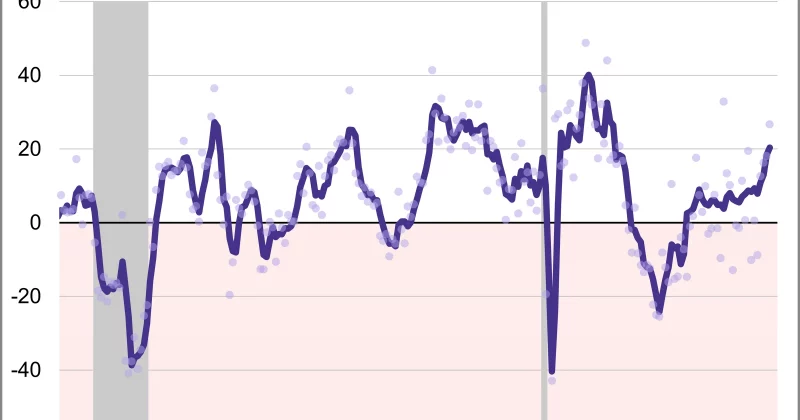
The Philadelphia Fed manufacturing index, one of the oldest and most-watched regional economic barometers in the US, just posted a reading of -0.4 for May. That’s down from 26.7 in April. For those keeping score, that’s a swing of roughly 27 points in a single month.

To put it plainly: manufacturers in the Third Federal Reserve District went from confidently expanding to essentially standing still, with a slight lean toward contraction. It’s the kind of whiplash that makes economists reach for a second cup of coffee.

What the numbers actually mean

The Philly Fed index works on a simple principle. Readings above zero indicate manufacturing expansion. Readings below zero signal contraction. Think of it like a thermometer for factory activity across eastern Pennsylvania, southern New Jersey, and Delaware.

April’s 26.7 reading had been the highest since January 2025, with strong growth in general activity, new orders, and shipments. The mood was upbeat, even though the employment sub-index was already flashing negative. Hiring wasn’t keeping up with the optimism.

Fast forward one month, and the entire picture has inverted. A reading of -0.4 isn’t catastrophic on its own. It’s basically flat. But the velocity of the decline is what matters here. Going from the strongest reading in months to effectively zero suggests that whatever was driving April’s confidence, whether it was front-loaded orders, temporary demand spikes, or post-tariff inventory building, didn’t stick around.

Regional Fed surveys like this one serve as early warning systems. They don’t carry the same weight as national GDP figures or the Bureau of Labor Statistics employment report. But they tend to be timely, arriving well before harder data catches up. When multiple regional surveys start telling the same story, the Federal Reserve pays attention.

Advertisement

Why crypto traders should care (a little)

Here’s the thing about manufacturing data and crypto: the connection is indirect, but it exists. The transmission mechanism runs through monetary policy expectations.

Weak economic data, in theory, gives the Federal Reserve more room to cut interest rates or at least hold off on further tightening. Lower rates tend to push investors toward riskier assets. Bitcoin, Ethereum, and the broader crypto market have historically benefited when the macro backdrop tilts toward easier financial conditions.

A single regional manufacturing survey isn’t going to move Bitcoin by 5%. That’s not how this works. But it feeds into a mosaic. If the Philly Fed reading is followed by similarly soft data from the Empire State survey, the ISM manufacturing index, or the jobs report, the cumulative narrative starts to shift. Markets price in probabilities, and each data point nudges those probabilities in one direction or another.

The -0.4 reading, taken in isolation, is a minor data point for crypto. Taken alongside a broader pattern of cooling economic activity, it becomes one more brick in the wall for those arguing the Fed will need to ease sooner rather than later.

For Bitcoin specifically, the macro sensitivity has grown over the past couple of years. Institutional adoption, spot ETF flows, and the growing correlation between BTC and risk-on equity positioning mean that macro data matters more to crypto than it did during the more retail-driven cycles of 2017 or 2021.

The bigger picture

Manufacturing has been a volatile sector in the US economy for years now. The post-pandemic boom-bust cycle in goods demand, ongoing supply chain adjustments, and shifting trade policy have created an environment where month-to-month readings can swing wildly.

April’s strong showing may have reflected temporary factors. Companies might have pulled orders forward in anticipation of tariff changes or price increases, creating artificial strength that was bound to fade. That pattern has shown up repeatedly in manufacturing data over the past few years: a burst of activity followed by a hangover.

The employment sub-index was already negative in April even as the headline number surged. That’s a tell. When companies are seeing strong orders but aren’t hiring to match, they’re signaling that they don’t trust the demand to last. May’s headline number suggests they were right to be cautious.

For the Federal Reserve, this kind of data creates a complicated picture. Inflation remains a concern, and the central bank has been reluctant to signal rate cuts prematurely. But manufacturing weakness, if it persists, adds to the argument that the economy is cooling enough to justify a policy shift.

Crypto investors watching for rate cut catalysts should track whether the next round of economic releases confirms or contradicts the Philly Fed’s signal. One month of weak data is noise. Two or three months is a trend. And trends are what move markets.

The risk, as always, cuts both ways. If manufacturing weakness deepens into something more systemic, risk assets including crypto could face selling pressure as recession fears override rate-cut optimism. The sweet spot for Bitcoin and its peers is the “soft landing” scenario: enough economic cooling to bring rate cuts, but not so much that it triggers a broader risk-off move. A 27-point drop in a single month doesn’t exactly scream “gentle deceleration.”

Disclosure: This article was edited by Editorial Team. For more information on how we create and review content, see our Editorial Policy.

Philadelphia Fed manufacturing index crashes from 26.7 to -0.4 in May

Philadelphia Fed manufacturing index crashes from 26.7 to -0.4 in May

The sharpest monthly decline in the regional manufacturing gauge raises fresh questions about US economic momentum and what it means for crypto markets.

The Philadelphia Fed manufacturing index, one of the oldest and most-watched regional economic barometers in the US, just posted a reading of -0.4 for May. That’s down from 26.7 in April. For those keeping score, that’s a swing of roughly 27 points in a single month.

To put it plainly: manufacturers in the Third Federal Reserve District went from confidently expanding to essentially standing still, with a slight lean toward contraction. It’s the kind of whiplash that makes economists reach for a second cup of coffee.

What the numbers actually mean

The Philly Fed index works on a simple principle. Readings above zero indicate manufacturing expansion. Readings below zero signal contraction. Think of it like a thermometer for factory activity across eastern Pennsylvania, southern New Jersey, and Delaware.

April’s 26.7 reading had been the highest since January 2025, with strong growth in general activity, new orders, and shipments. The mood was upbeat, even though the employment sub-index was already flashing negative. Hiring wasn’t keeping up with the optimism.

Fast forward one month, and the entire picture has inverted. A reading of -0.4 isn’t catastrophic on its own. It’s basically flat. But the velocity of the decline is what matters here. Going from the strongest reading in months to effectively zero suggests that whatever was driving April’s confidence, whether it was front-loaded orders, temporary demand spikes, or post-tariff inventory building, didn’t stick around.

Regional Fed surveys like this one serve as early warning systems. They don’t carry the same weight as national GDP figures or the Bureau of Labor Statistics employment report. But they tend to be timely, arriving well before harder data catches up. When multiple regional surveys start telling the same story, the Federal Reserve pays attention.

Advertisement

Why crypto traders should care (a little)

Here’s the thing about manufacturing data and crypto: the connection is indirect, but it exists. The transmission mechanism runs through monetary policy expectations.

Weak economic data, in theory, gives the Federal Reserve more room to cut interest rates or at least hold off on further tightening. Lower rates tend to push investors toward riskier assets. Bitcoin, Ethereum, and the broader crypto market have historically benefited when the macro backdrop tilts toward easier financial conditions.

A single regional manufacturing survey isn’t going to move Bitcoin by 5%. That’s not how this works. But it feeds into a mosaic. If the Philly Fed reading is followed by similarly soft data from the Empire State survey, the ISM manufacturing index, or the jobs report, the cumulative narrative starts to shift. Markets price in probabilities, and each data point nudges those probabilities in one direction or another.

The -0.4 reading, taken in isolation, is a minor data point for crypto. Taken alongside a broader pattern of cooling economic activity, it becomes one more brick in the wall for those arguing the Fed will need to ease sooner rather than later.

For Bitcoin specifically, the macro sensitivity has grown over the past couple of years. Institutional adoption, spot ETF flows, and the growing correlation between BTC and risk-on equity positioning mean that macro data matters more to crypto than it did during the more retail-driven cycles of 2017 or 2021.

The bigger picture

Manufacturing has been a volatile sector in the US economy for years now. The post-pandemic boom-bust cycle in goods demand, ongoing supply chain adjustments, and shifting trade policy have created an environment where month-to-month readings can swing wildly.

April’s strong showing may have reflected temporary factors. Companies might have pulled orders forward in anticipation of tariff changes or price increases, creating artificial strength that was bound to fade. That pattern has shown up repeatedly in manufacturing data over the past few years: a burst of activity followed by a hangover.

The employment sub-index was already negative in April even as the headline number surged. That’s a tell. When companies are seeing strong orders but aren’t hiring to match, they’re signaling that they don’t trust the demand to last. May’s headline number suggests they were right to be cautious.

For the Federal Reserve, this kind of data creates a complicated picture. Inflation remains a concern, and the central bank has been reluctant to signal rate cuts prematurely. But manufacturing weakness, if it persists, adds to the argument that the economy is cooling enough to justify a policy shift.

Crypto investors watching for rate cut catalysts should track whether the next round of economic releases confirms or contradicts the Philly Fed’s signal. One month of weak data is noise. Two or three months is a trend. And trends are what move markets.

The risk, as always, cuts both ways. If manufacturing weakness deepens into something more systemic, risk assets including crypto could face selling pressure as recession fears override rate-cut optimism. The sweet spot for Bitcoin and its peers is the “soft landing” scenario: enough economic cooling to bring rate cuts, but not so much that it triggers a broader risk-off move. A 27-point drop in a single month doesn’t exactly scream “gentle deceleration.”

Disclosure: This article was edited by Editorial Team. For more information on how we create and review content, see our Editorial Policy.