
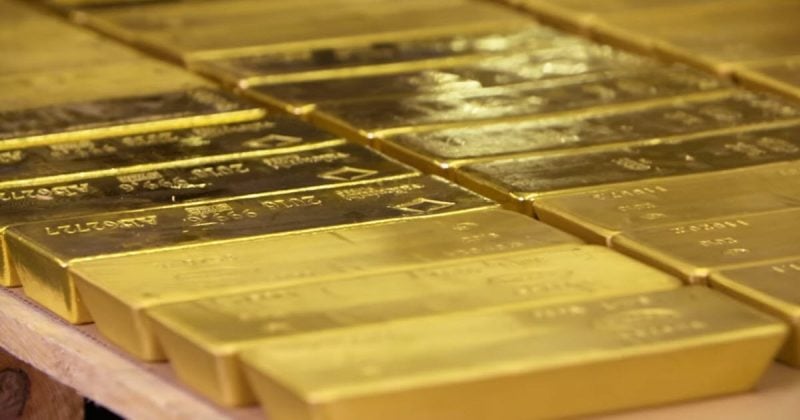
National Bank of Poland buys billions in gold as prices dip
Poland's central bank scooped up 27 tonnes of gold in two months, racing toward a 700-tonne reserve target that would place it among the world's top holders
While most buyers hesitate when prices wobble, Poland’s central bank reached for its wallet. The National Bank of Poland (NBP) purchased roughly 13 tonnes of gold in March 2026, timing the buy to coincide with a notable market decline, then followed up with another 14 tonnes in April.
That 27-tonne, two-month shopping spree is part of a much larger plan. In January 2026, the NBP’s board approved a strategy to add 150 tonnes of gold to its reserves, targeting a total of 700 tonnes. The April purchase alone made Poland the single largest central bank buyer of gold that month.
Poland’s gold rush by the numbers
Year-to-date gold purchases through April 2026 reached 45 tonnes, bringing the NBP’s total reserves to approximately 595 tonnes. That gold now represents about 30% of Poland’s overall reserves, up from 28% at the end of 2025.
For context, Poland added 102 tonnes of gold in 2025 alone, making it the largest central bank gold buyer globally that year. The country ended 2025 with 550 tonnes. So in roughly 16 months, Poland has added nearly 150 tonnes.
The 700-tonne target would place Poland firmly among the top ten gold-holding nations on earth.
Macro, rates, and crypto—what moved markets and what matters next.
Daily. Free. Join 34,000+ readers across crypto, finance, and policy.
Why Poland is stacking gold like it’s going out of style
NBP Governor Adam Glapiński has been remarkably blunt about the strategy. Market prices, he’s said, are not a primary concern for their purchasing decisions.
The motivation is geopolitical. Poland sits on NATO’s eastern flank, sharing a border with Ukraine, Belarus, and Russia’s Kaliningrad exclave. Gold, in the central banking world, functions as the ultimate insurance policy. It can’t be frozen by sanctions, it doesn’t depend on any single counterparty, and it holds value across centuries of political upheaval.
The broader trend isn’t unique to Poland, but Poland is leading it. Central banks globally have been net buyers of gold for years, but the pace accelerated sharply after Western nations froze roughly $300 billion in Russian central bank assets following the 2022 invasion of Ukraine.
What this means for gold markets and investors
Poland’s strategy is particularly notable because of its transparency. Most central bank gold purchases are only revealed months after the fact through IMF reporting. The NBP has been unusually open about both its targets and its rationale, which gives the market a rare forward-looking signal.
Investors should watch monthly IMF reserve data and NBP disclosures to track whether the pace of purchases accelerates, holds steady, or shows any signs of slowing as Poland closes in on its 700-tonne target.