
Nexo Earn with Nexo
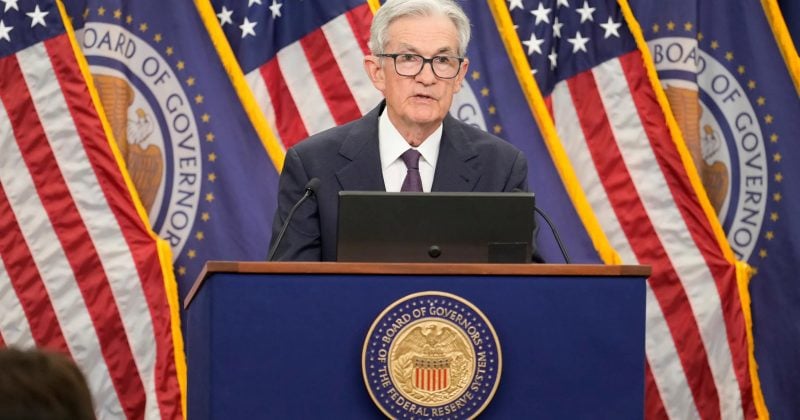
Jay Powell says the Federal Reserve is undergoing its own stress test

Jay Powell says the Federal Reserve is undergoing its own stress test

The Fed chair acknowledged mounting pressures on the central bank as it simultaneously overhauls how it stress-tests the nation's largest banks.

The Federal Reserve is navigating an increasingly complicated landscape of legal challenges, regulatory overhauls, and political scrutiny as it undertakes a sweeping rethink of how it conducts annual stress tests on major US banks.

The stress test overhaul, explained

Bank stress tests run hypothetical disaster scenarios — severe recessions, housing crashes, or market meltdowns — to check whether big banks have enough capital to survive without taxpayer bailouts. These tests have been a cornerstone of financial oversight since the 2008 crisis.

Major bank advocacy groups sued the Fed in December 2024 over the stress testing process, arguing it lacked sufficient transparency and produced volatile, unpredictable capital buffer requirements.

The Fed responded on December 23, 2024, announcing plans to seek public comment on significant changes to the testing framework. Powell discussed proposals for stress test model transparency at a Board meeting on October 24, 2025.

Advertisement

Two key deadlines are now on the calendar. Comments on the 2026 severely adverse scenario are due by December 1, 2025. Broader feedback on the transparency of the models themselves has a deadline of January 22, 2026.

Among the most significant proposed changes: publishing the models used in stress tests for public commentary, and averaging results over two years rather than relying on a single annual snapshot. Updated capital buffer regulations have been pushed back to 2027.

Why the Fed is feeling the heat

The legal challenges arrived alongside a broader shift in administrative law following the end of Chevron deference, the longstanding legal doctrine that gave federal agencies the benefit of the doubt when interpreting ambiguous statutes. Without that cushion, agencies like the Fed are more vulnerable to lawsuits arguing they’ve overstepped their authority.

By opening up models to public scrutiny and extending comment periods, the Fed is building a more robust administrative record. If a bank challenges a capital requirement, the Fed can point to a transparent, well-documented process and argue it followed proper procedure.

What this means for investors

The two-year averaging approach is particularly significant. Under the current system, a single bad stress test result can force a bank to dramatically increase its capital buffer overnight, creating uncertainty for investors trying to model earnings and capital returns.

The extended timeline, with capital buffer regulations now delayed until 2027, suggests this transition won’t be quick or clean.

The Fed’s stress test overhaul is squarely focused on traditional banking institutions and their resilience during economic downturns. The broader reforms are intended to fortify the resilience of stress tests against potential legal opposition while ensuring that large banks maintain adequate capital reserves to weather significant economic downturns.

Disclosure: This article was edited by Editorial Team. For more information on how we create and review content, see our Editorial Policy.

Jay Powell says the Federal Reserve is undergoing its own stress test

Jay Powell says the Federal Reserve is undergoing its own stress test

The Fed chair acknowledged mounting pressures on the central bank as it simultaneously overhauls how it stress-tests the nation's largest banks.

The Federal Reserve is navigating an increasingly complicated landscape of legal challenges, regulatory overhauls, and political scrutiny as it undertakes a sweeping rethink of how it conducts annual stress tests on major US banks.

The stress test overhaul, explained

Bank stress tests run hypothetical disaster scenarios — severe recessions, housing crashes, or market meltdowns — to check whether big banks have enough capital to survive without taxpayer bailouts. These tests have been a cornerstone of financial oversight since the 2008 crisis.

Major bank advocacy groups sued the Fed in December 2024 over the stress testing process, arguing it lacked sufficient transparency and produced volatile, unpredictable capital buffer requirements.

The Fed responded on December 23, 2024, announcing plans to seek public comment on significant changes to the testing framework. Powell discussed proposals for stress test model transparency at a Board meeting on October 24, 2025.

Advertisement

Two key deadlines are now on the calendar. Comments on the 2026 severely adverse scenario are due by December 1, 2025. Broader feedback on the transparency of the models themselves has a deadline of January 22, 2026.

Among the most significant proposed changes: publishing the models used in stress tests for public commentary, and averaging results over two years rather than relying on a single annual snapshot. Updated capital buffer regulations have been pushed back to 2027.

Why the Fed is feeling the heat

The legal challenges arrived alongside a broader shift in administrative law following the end of Chevron deference, the longstanding legal doctrine that gave federal agencies the benefit of the doubt when interpreting ambiguous statutes. Without that cushion, agencies like the Fed are more vulnerable to lawsuits arguing they’ve overstepped their authority.

By opening up models to public scrutiny and extending comment periods, the Fed is building a more robust administrative record. If a bank challenges a capital requirement, the Fed can point to a transparent, well-documented process and argue it followed proper procedure.

What this means for investors

The two-year averaging approach is particularly significant. Under the current system, a single bad stress test result can force a bank to dramatically increase its capital buffer overnight, creating uncertainty for investors trying to model earnings and capital returns.

The extended timeline, with capital buffer regulations now delayed until 2027, suggests this transition won’t be quick or clean.

The Fed’s stress test overhaul is squarely focused on traditional banking institutions and their resilience during economic downturns. The broader reforms are intended to fortify the resilience of stress tests against potential legal opposition while ensuring that large banks maintain adequate capital reserves to weather significant economic downturns.

Disclosure: This article was edited by Editorial Team. For more information on how we create and review content, see our Editorial Policy.