
Nexo Earn with Nexo
Putin and Lukashenko oversee joint nuclear drills via videolink as NATO tensions escalate

Putin and Lukashenko oversee joint nuclear drills via videolink as NATO tensions escalate

Russia and Belarus conducted large-scale tactical nuclear exercises, the latest in a series of military signals aimed at the West over Ukraine support.

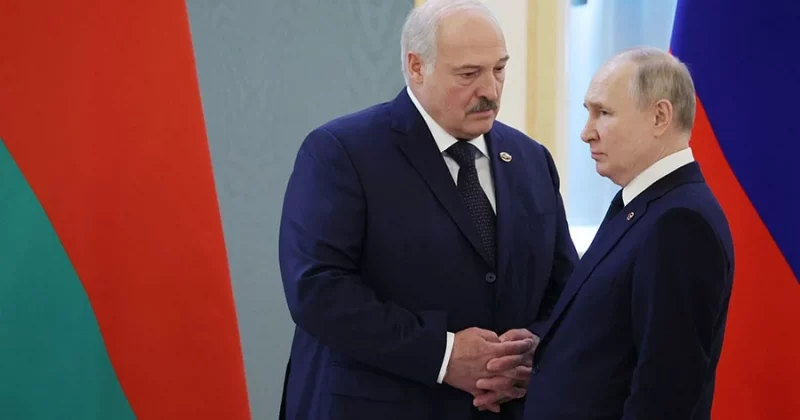
Vladimir Putin and Alexander Lukashenko just ran a joint nuclear drill over video call. The kind of meeting where “can you see my screen” carries a slightly different weight.

The Russian and Belarusian leaders oversaw large-scale tactical nuclear exercises involving dual-capable missile and aviation systems, including the Iskander-M missile platform and nuclear-capable aircraft stationed across both countries. The drills focused specifically on the preparation and deployment of tactical nuclear weapons, a category of shorter-range, lower-yield warheads designed for battlefield use rather than intercontinental strikes.

What the drills actually involved

These weren’t abstract tabletop simulations. The exercises utilized real military hardware positioned on Belarusian territory, where Russian tactical nuclear warheads have been stationed since 2023.

Lukashenko confirmed the arrival of those warheads that year, claiming they are “three times more powerful than Hiroshima and Nagasaki.” Whether that specific comparison holds up to independent verification is another matter, but the messaging is clearly designed for maximum psychological impact.

The Iskander-M system at the center of the drills is a mobile short-range ballistic missile platform with a range of roughly 500 kilometers. It’s capable of carrying both conventional and nuclear payloads, which makes it precisely the kind of dual-use asset that keeps Western defense planners up at night. Pair that with nuclear-capable aircraft and you have a rehearsal for a tactical nuclear strike chain, from authorization down to delivery.

Advertisement

The videolink format is itself notable. Putin has used remote participation in military exercises before, but doing so alongside Lukashenko reinforces the image of coordinated nuclear command between Moscow and Minsk. It’s a deliberate visual: two heads of state, two countries, one nuclear umbrella.

Why now, and what the Kremlin says

The Kremlin framed the exercises as a direct response to what it describes as NATO provocations and escalations related to Western military support for Ukraine. That framing has been consistent for over two years now. Every new tranche of Western weapons to Kyiv gets answered with some form of nuclear signaling from Moscow.

This is part of a pattern. Russia has conducted multiple rounds of tactical nuclear drills since its full-scale invasion of Ukraine in February 2022, each timed to coincide with moments of perceived Western escalation. New missile deliveries, expanded training programs for Ukrainian forces, or discussions about long-range strike permissions have all triggered corresponding Russian military theater.

The inclusion of Belarus adds a geographic dimension that matters. Belarusian territory sits directly on NATO’s eastern flank, bordering Poland, Lithuania, and Latvia. Hosting Russian tactical nuclear weapons there effectively moves the nuclear threat closer to NATO capitals, a fact that is not lost on anyone in Warsaw or Vilnius.

Lukashenko’s role in all of this is complicated. Belarus functions as a military satellite of Russia in practical terms, having allowed its territory to serve as a staging ground for the initial invasion of Ukraine. Participating in joint nuclear drills deepens that integration and makes it harder for Minsk to ever walk back its alignment with Moscow, even if it wanted to.

What this means for markets and risk sentiment

Here’s the thing. Nuclear drills don’t have a direct line to any specific asset class, crypto or otherwise. There’s no token that tracks geopolitical nuclear risk, and Bitcoin doesn’t have a built-in Geiger counter.

But the indirect effects are real and well-documented. Geopolitical escalation, particularly anything involving the word “nuclear,” feeds into broader risk-on/risk-off dynamics across global markets. When institutional investors get nervous about tail risks, they adjust portfolio allocations. Sometimes that means fleeing to traditional safe havens like gold and US Treasuries. Sometimes, increasingly, it means a bid for Bitcoin as a non-sovereign store of value.

The relationship is messy and inconsistent. Bitcoin has rallied during some geopolitical crises and sold off during others. What matters more than the event itself is the macro context surrounding it. If these drills coincide with a period of already-elevated market anxiety, say a stalled ceasefire negotiation or a new round of sanctions, the compounding effect on volatility can be meaningful.

For crypto investors specifically, the thing to watch isn’t the drill itself. It’s the second-order effects: how European energy markets respond, whether defense spending narratives accelerate, and whether any resulting sanctions activity touches crypto infrastructure or stablecoin flows. Russia has been increasingly exploring digital assets as a mechanism for sanctions evasion, and every escalation cycle renews regulatory attention on that vector.

The broader pattern here is that geopolitical risk is becoming a permanent feature of the investment landscape rather than an episodic disruption. Markets have partially priced in the Russia-Ukraine conflict as background noise, but nuclear exercises have a way of cutting through that complacency. The gap between “priced in” and “oh wait, that’s actually serious” is where volatility lives.

Investors who treat these events as irrelevant to digital asset portfolios are making an implicit bet that nuclear signaling will remain purely theatrical. That’s probably the right bet. But “probably” is doing a lot of heavy lifting in that sentence.

Disclosure: This article was edited by Editorial Team. For more information on how we create and review content, see our Editorial Policy.

Putin and Lukashenko oversee joint nuclear drills via videolink as NATO tensions escalate

Putin and Lukashenko oversee joint nuclear drills via videolink as NATO tensions escalate

Russia and Belarus conducted large-scale tactical nuclear exercises, the latest in a series of military signals aimed at the West over Ukraine support.

Vladimir Putin and Alexander Lukashenko just ran a joint nuclear drill over video call. The kind of meeting where “can you see my screen” carries a slightly different weight.

The Russian and Belarusian leaders oversaw large-scale tactical nuclear exercises involving dual-capable missile and aviation systems, including the Iskander-M missile platform and nuclear-capable aircraft stationed across both countries. The drills focused specifically on the preparation and deployment of tactical nuclear weapons, a category of shorter-range, lower-yield warheads designed for battlefield use rather than intercontinental strikes.

What the drills actually involved

These weren’t abstract tabletop simulations. The exercises utilized real military hardware positioned on Belarusian territory, where Russian tactical nuclear warheads have been stationed since 2023.

Lukashenko confirmed the arrival of those warheads that year, claiming they are “three times more powerful than Hiroshima and Nagasaki.” Whether that specific comparison holds up to independent verification is another matter, but the messaging is clearly designed for maximum psychological impact.

The Iskander-M system at the center of the drills is a mobile short-range ballistic missile platform with a range of roughly 500 kilometers. It’s capable of carrying both conventional and nuclear payloads, which makes it precisely the kind of dual-use asset that keeps Western defense planners up at night. Pair that with nuclear-capable aircraft and you have a rehearsal for a tactical nuclear strike chain, from authorization down to delivery.

Advertisement

The videolink format is itself notable. Putin has used remote participation in military exercises before, but doing so alongside Lukashenko reinforces the image of coordinated nuclear command between Moscow and Minsk. It’s a deliberate visual: two heads of state, two countries, one nuclear umbrella.

Why now, and what the Kremlin says

The Kremlin framed the exercises as a direct response to what it describes as NATO provocations and escalations related to Western military support for Ukraine. That framing has been consistent for over two years now. Every new tranche of Western weapons to Kyiv gets answered with some form of nuclear signaling from Moscow.

This is part of a pattern. Russia has conducted multiple rounds of tactical nuclear drills since its full-scale invasion of Ukraine in February 2022, each timed to coincide with moments of perceived Western escalation. New missile deliveries, expanded training programs for Ukrainian forces, or discussions about long-range strike permissions have all triggered corresponding Russian military theater.

The inclusion of Belarus adds a geographic dimension that matters. Belarusian territory sits directly on NATO’s eastern flank, bordering Poland, Lithuania, and Latvia. Hosting Russian tactical nuclear weapons there effectively moves the nuclear threat closer to NATO capitals, a fact that is not lost on anyone in Warsaw or Vilnius.

Lukashenko’s role in all of this is complicated. Belarus functions as a military satellite of Russia in practical terms, having allowed its territory to serve as a staging ground for the initial invasion of Ukraine. Participating in joint nuclear drills deepens that integration and makes it harder for Minsk to ever walk back its alignment with Moscow, even if it wanted to.

What this means for markets and risk sentiment

Here’s the thing. Nuclear drills don’t have a direct line to any specific asset class, crypto or otherwise. There’s no token that tracks geopolitical nuclear risk, and Bitcoin doesn’t have a built-in Geiger counter.

But the indirect effects are real and well-documented. Geopolitical escalation, particularly anything involving the word “nuclear,” feeds into broader risk-on/risk-off dynamics across global markets. When institutional investors get nervous about tail risks, they adjust portfolio allocations. Sometimes that means fleeing to traditional safe havens like gold and US Treasuries. Sometimes, increasingly, it means a bid for Bitcoin as a non-sovereign store of value.

The relationship is messy and inconsistent. Bitcoin has rallied during some geopolitical crises and sold off during others. What matters more than the event itself is the macro context surrounding it. If these drills coincide with a period of already-elevated market anxiety, say a stalled ceasefire negotiation or a new round of sanctions, the compounding effect on volatility can be meaningful.

For crypto investors specifically, the thing to watch isn’t the drill itself. It’s the second-order effects: how European energy markets respond, whether defense spending narratives accelerate, and whether any resulting sanctions activity touches crypto infrastructure or stablecoin flows. Russia has been increasingly exploring digital assets as a mechanism for sanctions evasion, and every escalation cycle renews regulatory attention on that vector.

The broader pattern here is that geopolitical risk is becoming a permanent feature of the investment landscape rather than an episodic disruption. Markets have partially priced in the Russia-Ukraine conflict as background noise, but nuclear exercises have a way of cutting through that complacency. The gap between “priced in” and “oh wait, that’s actually serious” is where volatility lives.

Investors who treat these events as irrelevant to digital asset portfolios are making an implicit bet that nuclear signaling will remain purely theatrical. That’s probably the right bet. But “probably” is doing a lot of heavy lifting in that sentence.

Disclosure: This article was edited by Editorial Team. For more information on how we create and review content, see our Editorial Policy.