
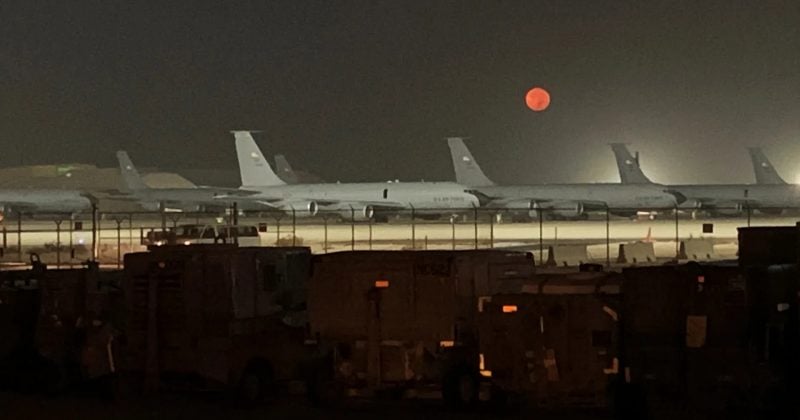
Qatar intercepts Iranian missiles targeting Al Udeid Air Base amid rising regional tensions

Qatar intercepts Iranian missiles targeting Al Udeid Air Base amid rising regional tensions

Qatar's air defenses have now beaten back multiple Iranian missile and drone attacks since late 2025, with the strategically vital Al Udeid Air Base at the center of the conflict.

Qatar’s Ministry of Defence confirmed on April 8, 2026, that its armed forces successfully intercepted a combined assault of ballistic missiles and drones launched by Iran. All incoming threats were neutralized. No damage was reported, and Qatari officials stated there were no casualties.

This was not a one-off incident. It was at least the third such interception in a matter of weeks, following similar events on March 18 and April 5, 2026. Iran has been running what amounts to a sustained aerial pressure campaign against one of the most strategically loaded pieces of real estate in the Middle East.

Why Al Udeid matters

The target in each of these attacks is Al Udeid Air Base, located outside Doha. It functions as a major operational hub for U.S. forces in the region, making it a logical pressure point for Iran in any broader conflict with Washington.

Advertisement

Qatar’s air defense architecture includes Patriot missile systems and F-15QA fighter jets, both of which have been actively employed in downing incoming threats during these engagements.

Qatari officials have been consistent in their public messaging: every threat during these recent incidents was neutralized before causing harm.

The geopolitical backdrop

Iran’s decision to target Al Udeid specifically, rather than other regional assets, suggests a calculated strategic logic. The base represents U.S. power projection in a very tangible, physical form.

For Qatar, the situation is diplomatically complex. The country has historically maintained relatively open channels with Iran compared to some of its Gulf neighbors, partly due to shared interests around the massive North Field gas reservoir, the largest natural gas field in the world, which Qatar and Iran share.

The Ministry of Defence’s public statements have been measured and factual, neither escalatory in tone nor dismissive of the threat.

What this means for markets and investors

Qatar is one of the world’s largest exporters of liquefied natural gas. Any scenario in which its energy infrastructure or operational stability becomes genuinely threatened sends ripples through global commodity markets.

Disclosure: This article was edited by Editorial Team. For more information on how we create and review content, see our Editorial Policy.

Qatar intercepts Iranian missiles targeting Al Udeid Air Base amid rising regional tensions

Qatar intercepts Iranian missiles targeting Al Udeid Air Base amid rising regional tensions

Qatar's air defenses have now beaten back multiple Iranian missile and drone attacks since late 2025, with the strategically vital Al Udeid Air Base at the center of the conflict.

Qatar’s Ministry of Defence confirmed on April 8, 2026, that its armed forces successfully intercepted a combined assault of ballistic missiles and drones launched by Iran. All incoming threats were neutralized. No damage was reported, and Qatari officials stated there were no casualties.

This was not a one-off incident. It was at least the third such interception in a matter of weeks, following similar events on March 18 and April 5, 2026. Iran has been running what amounts to a sustained aerial pressure campaign against one of the most strategically loaded pieces of real estate in the Middle East.

Why Al Udeid matters

The target in each of these attacks is Al Udeid Air Base, located outside Doha. It functions as a major operational hub for U.S. forces in the region, making it a logical pressure point for Iran in any broader conflict with Washington.

Advertisement

Qatar’s air defense architecture includes Patriot missile systems and F-15QA fighter jets, both of which have been actively employed in downing incoming threats during these engagements.

Qatari officials have been consistent in their public messaging: every threat during these recent incidents was neutralized before causing harm.

The geopolitical backdrop

Iran’s decision to target Al Udeid specifically, rather than other regional assets, suggests a calculated strategic logic. The base represents U.S. power projection in a very tangible, physical form.

For Qatar, the situation is diplomatically complex. The country has historically maintained relatively open channels with Iran compared to some of its Gulf neighbors, partly due to shared interests around the massive North Field gas reservoir, the largest natural gas field in the world, which Qatar and Iran share.

The Ministry of Defence’s public statements have been measured and factual, neither escalatory in tone nor dismissive of the threat.

What this means for markets and investors

Qatar is one of the world’s largest exporters of liquefied natural gas. Any scenario in which its energy infrastructure or operational stability becomes genuinely threatened sends ripples through global commodity markets.

Disclosure: This article was edited by Editorial Team. For more information on how we create and review content, see our Editorial Policy.