
England’s World Cup defense takes a hit as Quansah ban exposes betting market volatility ahead of Norway clash

England’s World Cup defense takes a hit as Quansah ban exposes betting market volatility ahead of Norway clash

A two-game suspension for the defender has shifted odds and reignited debate about how disciplinary decisions ripple through crypto-powered prediction markets.

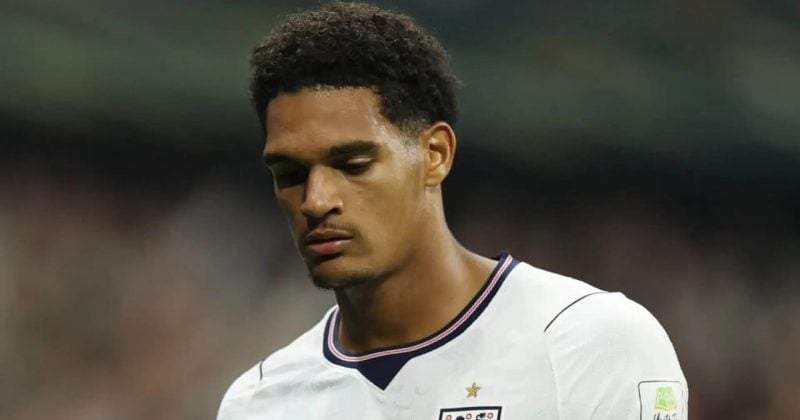
England will be without defender Jarell Quansah for their 2026 World Cup quarter-final against Norway on July 11 after FIFA confirmed a two-match suspension following his straight red card against Mexico. The ban, handed down on July 9, gives Thomas Tuchel’s squad roughly 48 hours to reorganize a defensive unit that just lost one of its key pieces at the worst possible moment.

What happened and why it matters beyond the pitch

Quansah picked up the red card in the 54th minute of England’s round-of-16 match against Mexico for a studs-up challenge on Jesús Gallardo. FIFA classified it as serious foul play, which automatically triggers a minimum two-match ban under tournament rules.

England, playing the final 36 minutes a man down, still managed to win 3-2.

Advertisement

The suspension means Quansah, currently on loan at Bayer Leverkusen from Liverpool, misses both the Norway quarter-final and a potential semi-final. He could only return if England reaches the final. England sources have reportedly expressed frustration with both the length of the suspension and the speed of the disciplinary process, though FIFA’s rules on serious foul play leave little room for appeal.

The prediction market angle

Platforms like Polymarket, Azuro, and various decentralized betting protocols have turned major sporting events into some of the most liquid prediction markets in crypto. The 2026 World Cup has been no exception. England’s odds to win the tournament have been actively traded across multiple platforms since the group stage, and events like a key defender’s suspension create the kind of rapid repricing that traders live for.

In traditional sports betting, this kind of adjustment happens behind closed doors at bookmakers’ risk desks. In crypto prediction markets, it happens on-chain, in real time, with full transparency.

Tuchel’s tactical headache and squad depth questions

Thomas Tuchel now faces a decision tree that didn’t exist 72 hours ago. England’s defensive depth will be tested in a knockout match in Miami, where the heat and humidity already factor into squad management.

The Quansah situation also highlights a broader vulnerability. Tournament squads are built with redundancy in mind, but losing a player to suspension is different from losing one to injury. There’s no gradual return timeline, no fitness updates to monitor. He’s simply unavailable for two of the most important matches of England’s campaign.

Disclosure: This article was edited by Editorial Team. For more information on how we create and review content, see our Editorial Policy.

England’s World Cup defense takes a hit as Quansah ban exposes betting market volatility ahead of Norway clash

England’s World Cup defense takes a hit as Quansah ban exposes betting market volatility ahead of Norway clash

A two-game suspension for the defender has shifted odds and reignited debate about how disciplinary decisions ripple through crypto-powered prediction markets.

England will be without defender Jarell Quansah for their 2026 World Cup quarter-final against Norway on July 11 after FIFA confirmed a two-match suspension following his straight red card against Mexico. The ban, handed down on July 9, gives Thomas Tuchel’s squad roughly 48 hours to reorganize a defensive unit that just lost one of its key pieces at the worst possible moment.

What happened and why it matters beyond the pitch

Quansah picked up the red card in the 54th minute of England’s round-of-16 match against Mexico for a studs-up challenge on Jesús Gallardo. FIFA classified it as serious foul play, which automatically triggers a minimum two-match ban under tournament rules.

England, playing the final 36 minutes a man down, still managed to win 3-2.

Advertisement

The suspension means Quansah, currently on loan at Bayer Leverkusen from Liverpool, misses both the Norway quarter-final and a potential semi-final. He could only return if England reaches the final. England sources have reportedly expressed frustration with both the length of the suspension and the speed of the disciplinary process, though FIFA’s rules on serious foul play leave little room for appeal.

The prediction market angle

Platforms like Polymarket, Azuro, and various decentralized betting protocols have turned major sporting events into some of the most liquid prediction markets in crypto. The 2026 World Cup has been no exception. England’s odds to win the tournament have been actively traded across multiple platforms since the group stage, and events like a key defender’s suspension create the kind of rapid repricing that traders live for.

In traditional sports betting, this kind of adjustment happens behind closed doors at bookmakers’ risk desks. In crypto prediction markets, it happens on-chain, in real time, with full transparency.

Tuchel’s tactical headache and squad depth questions

Thomas Tuchel now faces a decision tree that didn’t exist 72 hours ago. England’s defensive depth will be tested in a knockout match in Miami, where the heat and humidity already factor into squad management.

The Quansah situation also highlights a broader vulnerability. Tournament squads are built with redundancy in mind, but losing a player to suspension is different from losing one to injury. There’s no gradual return timeline, no fitness updates to monitor. He’s simply unavailable for two of the most important matches of England’s campaign.

Disclosure: This article was edited by Editorial Team. For more information on how we create and review content, see our Editorial Policy.