
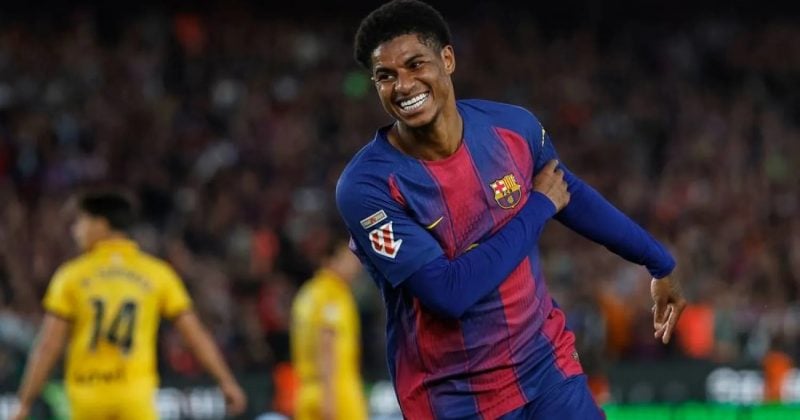
Marcus Rashford’s £40M exit clause expires, forcing Manchester United into open negotiations
The transfer market just got more complicated for one of England's most marketable athletes, and the ripple effects extend beyond the pitch.
Manchester United forward Marcus Rashford is no longer available at a fixed price. The £40 million release clause that would have let most clubs sign him with a simple contractual trigger has expired, meaning any deal now requires negotiation between buying clubs and United’s front office.
What happened and why it matters
Barcelona previously held a €30 million option to sign Rashford permanently, a remnant of his loan arrangement during the 2025-26 season. That option lapsed on June 15, 2026.
Following that expiration, a separate £40 million release clause became active for other interested clubs, though notably excluding Premier League rivals Manchester City and Liverpool. That clause has now also passed its window, according to reports from The Athletic and transfer journalist Fabrizio Romano.
Rashford remains under contract with Manchester United until 2028. That’s important leverage for the club, which no longer has to accept a below-market fee dictated by contractual fine print.
Rashford is currently with the England national team at the 2026 FIFA World Cup. His performances on that stage will inevitably influence his perceived market value. Manchester United’s new manager Michael Carrick adds another variable, as discussions regarding Rashford’s future and potential pre-season plans are anticipated following the tournament.
The news moving money, markets, and the world—before your day starts.
Daily. Free. Join 34,000+ readers across crypto, finance, and policy.
The exclusion of Manchester City and Liverpool from the original release clause is a structural mechanism designed to prevent value from flowing to direct competitors, potentially heightening competition among other Premier League and European clubs.
Why crypto-adjacent investors should pay attention
Fan tokens and sports-linked digital assets have become a meaningful niche in the broader crypto ecosystem. Clubs like Barcelona and PSG have launched tokens on platforms like Socios that fluctuate based on club news, transfer rumors, and match results.
Fantasy sports platforms built on blockchain infrastructure also react to transfer news. Player valuations on platforms like Sorare shift in response to where athletes end up playing, what league they’re in, and how much playing time they’re likely to receive. A Rashford move from the Premier League to La Liga would recalibrate his value across these platforms.