
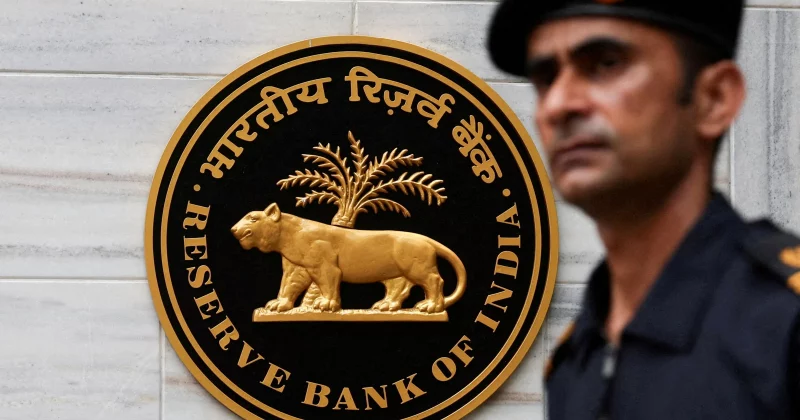
Reserve Bank of India revives pre-market intervention to support rupee
India's central bank is back to its old playbook, deploying aggressive dollar sales before markets even open to halt the rupee's slide to record lows.
The Reserve Bank of India has resumed active intervention in currency markets to prevent the rupee from weakening further, dusting off a strategy that signals just how seriously policymakers are taking the currency’s recent slide.
The rupee had fallen to a record low of 96.39 per US dollar before the RBI stepped in with force. The result was the largest single-day gain for the currency in over 12 years. Think of it as the central bank pulling the emergency brake on a car that was rolling downhill with increasing speed.
What the RBI is actually doing
The central bank’s approach involves intervening in the foreign-exchange market before regular trading hours even begin. In English: the RBI is selling dollars and executing swaps in the pre-market window, effectively setting the tone for the trading day before most participants have finished their morning chai.
This is not a subtle move. Pre-market intervention is one of the more muscular tools in a central bank’s arsenal, designed to send an unmistakable signal to currency traders and speculators that further bets against the rupee will be expensive.
The RBI has also been active in both spot and forward markets, a two-pronged approach that targets immediate currency levels while also influencing expectations about where the rupee will trade weeks and months from now. When a central bank operates on both fronts simultaneously, it is telling the market it has both the resources and the resolve to hold the line.
Beyond direct market operations, the RBI introduced new regulations capping banks’ net open positions in rupees at $100 million. That rule took effect on April 10 and is specifically designed to limit how much speculative exposure banks can build against the currency. Smaller position limits mean less room for traders to pile on short bets against the rupee, which reduces the kind of momentum selling that can turn an orderly decline into a rout.
Why the rupee was under pressure
The rupee’s weakness did not emerge from nowhere. Global crude oil prices surpassing $90 per barrel have been a major factor, and for India, that connection is particularly painful. The country is one of the world’s largest oil importers, meaning higher crude prices directly increase the number of dollars flowing out of India to pay for energy. More dollar demand, less rupee demand, weaker currency. It is almost mechanical.
Geopolitical tensions affecting oil supply chains have compounded the problem. When markets get nervous about crude supply disruptions, oil prices tend to spike, and oil-importing economies like India absorb the blow through their currencies.
The combination of these forces pushed the rupee from what had been a relatively managed decline into territory that clearly made the RBI uncomfortable. A currency falling to all-time lows tends to generate its own momentum, as traders and hedgers rush to protect themselves, creating a feedback loop that can accelerate the depreciation.
Here’s the thing about the RBI’s relationship with the rupee: India’s central bank has historically been one of the most interventionist in Asia when it comes to managing currency volatility. The RBI maintains substantial foreign-exchange reserves precisely for moments like these. The pre-market intervention strategy is a throwback to periods when the central bank felt it needed to be especially assertive about defending the currency.
The sharp rebound following the intervention, the biggest single-day gain in more than 12 years, suggests the RBI’s actions were effective at least in the short term. Speculators who had been positioned for further rupee weakness got caught on the wrong side of a violent reversal, which is exactly the kind of pain the central bank wants to inflict to discourage future bets against the currency.
What this means for investors
For foreign investors holding Indian equities and bonds, the rupee’s trajectory is not just background noise. Currency depreciation erodes returns for dollar-based investors even when the underlying assets perform well. A stock that gains 10% in rupee terms but loses 8% on the currency translation is not exactly a winning trade.
The RBI’s willingness to intervene aggressively provides some reassurance that the central bank has a floor in mind, even if it has not stated one explicitly. But intervention has limits. Foreign-exchange reserves, while substantial, are finite. And if the underlying forces pushing the rupee lower, particularly elevated oil prices and broad dollar strength, persist, the RBI will face an ongoing drain on its reserves.
There are indications the central bank may consider additional measures beyond direct market intervention. Re-opening special deposit schemes for non-resident Indians and offering tax incentives for foreign investors in Indian assets are both options that have been deployed in previous episodes of rupee stress. These tools work by attracting dollar inflows into India, addressing the root cause of currency weakness rather than just treating the symptoms in the FX market.
The $100 million cap on banks’ net open rupee positions is worth watching closely. Position limits are a regulatory tool that changes market structure, not just prices. By constraining how much risk banks can take against the rupee, the RBI is reducing the market’s capacity for speculative attacks. But tighter limits can also reduce liquidity, making the currency more volatile in thin trading conditions. It is a trade-off, and one the RBI has clearly decided favors stability over market depth right now.
For investors considering India exposure, the signal from the RBI is clear: the central bank is not going to sit back and let the rupee fall without a fight. Whether that fight is ultimately winnable depends on factors largely outside the RBI’s control, particularly global energy prices and the trajectory of the US dollar. If crude oil retreats and global risk appetite improves, the RBI’s intervention could mark the turning point. If oil stays elevated and the dollar stays strong, the central bank may find itself spending reserves to slow a decline it cannot stop.