
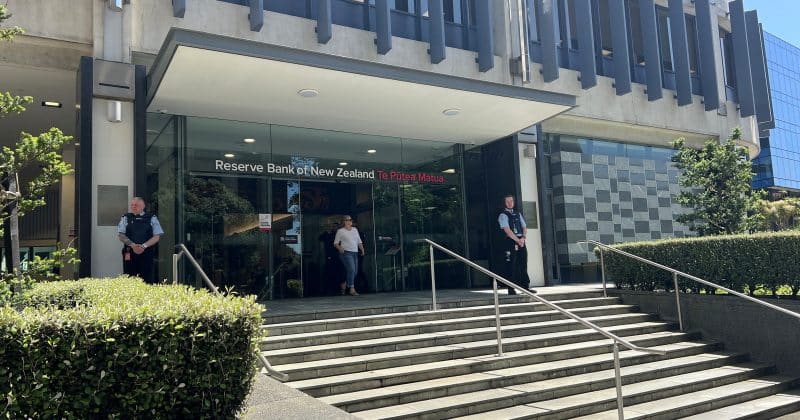
Reserve Bank of New Zealand raises key interest rate for first time in three years

Reserve Bank of New Zealand raises key interest rate for first time in three years

The RBNZ hiked its official cash rate to 2.5% as Middle East-driven energy costs push inflation toward 4.3%, sending ripples through currency and bond markets

New Zealand’s central bank just hit the brakes on its easing cycle and slammed the car into reverse. The Reserve Bank of New Zealand raised its Official Cash Rate by 25 basis points to 2.5% on July 8, marking the first rate hike in three years.

The culprit is familiar: inflation that won’t stay down. Geopolitical tensions in the Middle East have pushed energy and input costs higher, forcing the RBNZ’s hand even as the global economy navigates an already fragile recovery.

A split committee, a decisive governor

This wasn’t exactly a surprise, but the path here was messy. Back in May, the RBNZ’s Monetary Policy Committee deadlocked 3-3 on whether to move rates. Governor Anna Breman cast the tiebreaker vote to hold steady at 2.25%.

But even while voting to pause, the central bank telegraphed what was coming. The May statement warned that rate hikes would likely need to arrive “sooner and more aggressively” than earlier projections suggested.

Advertisement

The International Monetary Fund added external pressure, publicly urging the RBNZ to raise rates fast enough to reach a neutral level by year-end.

The RBNZ now projects headline inflation peaking at 4.3% in the third quarter of 2026 before gradually drifting back toward its 2% target midpoint by mid-2027.

What the rate hike means for markets and mortgages

New Zealand’s housing market, which has been sensitive to rate movements for years, will feel the squeeze as mortgage costs tick higher.

Currency traders are also paying attention. A rate hike typically strengthens the local currency, and the New Zealand Dollar could see upward pressure as the yield differential shifts in its favor. A stronger NZD cuts both ways, though. It makes imports cheaper (helpful when your inflation problem is partly driven by energy costs), but it also makes New Zealand’s exports less competitive abroad.

The next OCR review is scheduled for September 2, 2026, giving markets roughly two months to digest this move and position accordingly.

Why crypto investors should care about a small country’s interest rate

For crypto markets, the direction of global interest rates remains one of the most important macro variables. Higher rates across developed economies tighten liquidity, making risk assets, including Bitcoin and altcoins, relatively less attractive compared to yield-bearing instruments. When you can earn 2.5% risk-free in New Zealand government securities, the opportunity cost of holding non-yielding crypto assets increases.

The RBNZ’s projected timeline is also worth watching. If inflation really does peak in Q3 2026 and slide back to 2% by mid-2027, the rate hiking cycle could be brief.

The September review will be critical. If the RBNZ signals another hike or revises its inflation forecast upward, it would confirm a more aggressive tightening trajectory.

Disclosure: This article was edited by Editorial Team. For more information on how we create and review content, see our Editorial Policy.

Reserve Bank of New Zealand raises key interest rate for first time in three years

Reserve Bank of New Zealand raises key interest rate for first time in three years

The RBNZ hiked its official cash rate to 2.5% as Middle East-driven energy costs push inflation toward 4.3%, sending ripples through currency and bond markets

New Zealand’s central bank just hit the brakes on its easing cycle and slammed the car into reverse. The Reserve Bank of New Zealand raised its Official Cash Rate by 25 basis points to 2.5% on July 8, marking the first rate hike in three years.

The culprit is familiar: inflation that won’t stay down. Geopolitical tensions in the Middle East have pushed energy and input costs higher, forcing the RBNZ’s hand even as the global economy navigates an already fragile recovery.

A split committee, a decisive governor

This wasn’t exactly a surprise, but the path here was messy. Back in May, the RBNZ’s Monetary Policy Committee deadlocked 3-3 on whether to move rates. Governor Anna Breman cast the tiebreaker vote to hold steady at 2.25%.

But even while voting to pause, the central bank telegraphed what was coming. The May statement warned that rate hikes would likely need to arrive “sooner and more aggressively” than earlier projections suggested.

Advertisement

The International Monetary Fund added external pressure, publicly urging the RBNZ to raise rates fast enough to reach a neutral level by year-end.

The RBNZ now projects headline inflation peaking at 4.3% in the third quarter of 2026 before gradually drifting back toward its 2% target midpoint by mid-2027.

What the rate hike means for markets and mortgages

New Zealand’s housing market, which has been sensitive to rate movements for years, will feel the squeeze as mortgage costs tick higher.

Currency traders are also paying attention. A rate hike typically strengthens the local currency, and the New Zealand Dollar could see upward pressure as the yield differential shifts in its favor. A stronger NZD cuts both ways, though. It makes imports cheaper (helpful when your inflation problem is partly driven by energy costs), but it also makes New Zealand’s exports less competitive abroad.

The next OCR review is scheduled for September 2, 2026, giving markets roughly two months to digest this move and position accordingly.

Why crypto investors should care about a small country’s interest rate

For crypto markets, the direction of global interest rates remains one of the most important macro variables. Higher rates across developed economies tighten liquidity, making risk assets, including Bitcoin and altcoins, relatively less attractive compared to yield-bearing instruments. When you can earn 2.5% risk-free in New Zealand government securities, the opportunity cost of holding non-yielding crypto assets increases.

The RBNZ’s projected timeline is also worth watching. If inflation really does peak in Q3 2026 and slide back to 2% by mid-2027, the rate hiking cycle could be brief.

The September review will be critical. If the RBNZ signals another hike or revises its inflation forecast upward, it would confirm a more aggressive tightening trajectory.

Disclosure: This article was edited by Editorial Team. For more information on how we create and review content, see our Editorial Policy.