
Rigetti Computing signs letter of intent for $100M funding from US Department of Commerce
The quantum hardware company secures a path to significant federal backing as Washington doubles down on superconducting quantum computing.
Rigetti Computing just locked in one of the largest public commitments to quantum hardware development in recent memory. The Nasdaq-listed company has signed a letter of intent with the US Department of Commerce for up to $100 million in funding aimed at advancing superconducting quantum computing.
For a company that reported record revenue of $4.4 million in Q1 2026, a potential $100M federal lifeline is transformational. That’s roughly 23 times its best-ever quarterly revenue, arriving in the form of a government handshake rather than a dilutive equity raise.
What Rigetti actually does, and why Washington cares
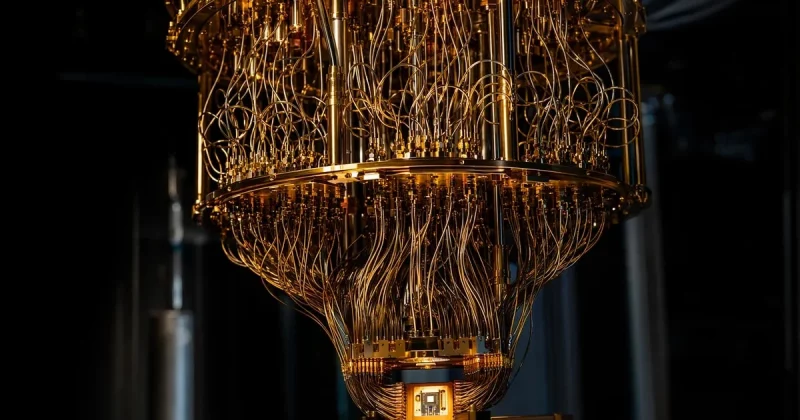
Rigetti builds gate-based, superconducting qubit processors. In English: the company designs the physical chips that make quantum computers work, using superconducting circuits cooled to near absolute zero. These aren’t the theoretical quantum computers of academic papers. They’re real hardware, accessible through Rigetti’s Quantum Cloud Services platform.
The “gate-based” part matters. Gate-based quantum computers are generally considered the most versatile architecture for eventually running complex algorithms. Think of them as the general-purpose CPUs of the quantum world, compared to more specialized approaches that can only handle narrow problem sets.
Washington’s interest here isn’t charity. Quantum computing sits at the intersection of national security, economic competitiveness, and technological sovereignty. The US, China, and the EU have all been pouring resources into quantum R&D, and the race is intensifying. A 2021 CIFAR report noted the growing pattern of governments utilizing direct funding for strategically important projects, with quantum technologies sitting high on that list.
The Department of Commerce has been a central player in this push. By channeling up to $100M toward Rigetti, the federal government is essentially placing a bet that superconducting qubits, Rigetti’s specialty, represent a viable path to scalable quantum advantage.
The fine print: what a letter of intent actually means
Here’s the thing. A letter of intent is not a signed check. It’s a formal expression of serious interest, a signal that both parties intend to finalize a deal, but the money hasn’t moved yet. LOIs typically precede final agreements that come with milestones, compliance requirements, and performance benchmarks.
That said, LOIs at this scale from a federal department aren’t casual. The Department of Commerce doesn’t sign $100M letters of intent as conversation starters. The signal to the market, and to Rigetti’s competitors, is unmistakable: Washington views this company as a strategic asset worth backing.
The news moving money, markets, and the world—before your day starts.
Daily. Free. Join 34,000+ readers across crypto, finance, and policy.
For Rigetti, the implications extend beyond the direct capital injection. Federal funding of this magnitude tends to attract additional private investment, partnerships, and talent. It also provides a degree of financial stability that most quantum startups, burning cash while chasing breakthroughs that may be years away, can only dream about.
Rigetti trades on Nasdaq under the ticker RGTI. The company has no crypto tokens, no on-chain products, and no DeFi integrations. It’s a pure-play quantum hardware and cloud services company, which makes its relevance to crypto markets more indirect but no less important.
Why crypto investors should pay attention
The quantum computing question that keeps cryptographers up at night is straightforward: when will quantum computers be powerful enough to break the public-key cryptography that secures Bitcoin, Ethereum, and virtually every blockchain in existence?
The current expert consensus is reassuring, but not infinitely so. Most researchers estimate that existing public-key cryptography standards will remain secure for at least another decade. The operative phrase there is “at least.” Timelines in quantum computing have a habit of shifting as breakthroughs arrive in unpredictable bursts.
A $100M federal investment in superconducting quantum computing doesn’t change that timeline overnight. Look, Rigetti isn’t going to crack RSA encryption next quarter. But each major funding round, each new generation of more stable qubits, each improvement in error correction brings the industry incrementally closer to the threshold where quantum computers pose a real threat to current cryptographic standards.
The crypto industry’s response has been a slow but accelerating migration toward quantum-resistant cryptography. NIST finalized its first set of post-quantum cryptographic standards in recent years, and several blockchain projects have begun exploring or integrating lattice-based and hash-based signature schemes designed to withstand quantum attacks.
For investors holding long-duration crypto positions, the calculus is about probability-weighted timelines. The more funding that flows into quantum hardware, the faster those timelines potentially compress. A decade of runway sounds comfortable until you realize that major blockchain protocol upgrades often take years of development, testing, and contentious governance debates to implement.
The competitive landscape in quantum computing is also worth watching. Rigetti isn’t alone. IBM, Google, IonQ, and several well-funded startups are all pursuing different qubit architectures. Federal backing for Rigetti’s superconducting approach doesn’t crown a winner, but it does validate the technology path and ensure that at least one US-based company has the resources to push hard on scaling.
For crypto markets specifically, the near-term impact is negligible. No one is repricing Bitcoin because Rigetti signed an LOI. But the medium-term signal is clear: governments are accelerating quantum development with real money, not just white papers and press conferences. The window for the crypto industry to implement quantum-resistant solutions is open, but it’s not infinite. And every $100M check brings the closing date a little closer.